
Bu rehberde · 17 bölümler
- First, the thing that changes everything: the clock, and the calendar
- Montevideo at a glance
- The five spots
- 1. La Rambla
- 2. Parque de los Aliados (Parque Batlle)
- 3. Playa Ramírez and Playa de los Ingleses (Parque Rodó)
- 4. Dehiok Cruising Bar (Ciudad Vieja)
- 5. Cine Multisex (Centro)
- When to go
- Getting around at night
- The apps
- The law in Uruguay
- Safety: the honest version, and it's not what you think
- Health, including the urgent bit
- A bit of history, because Uruguay earned it
- If Montevideo feels small
- Keep this page honest
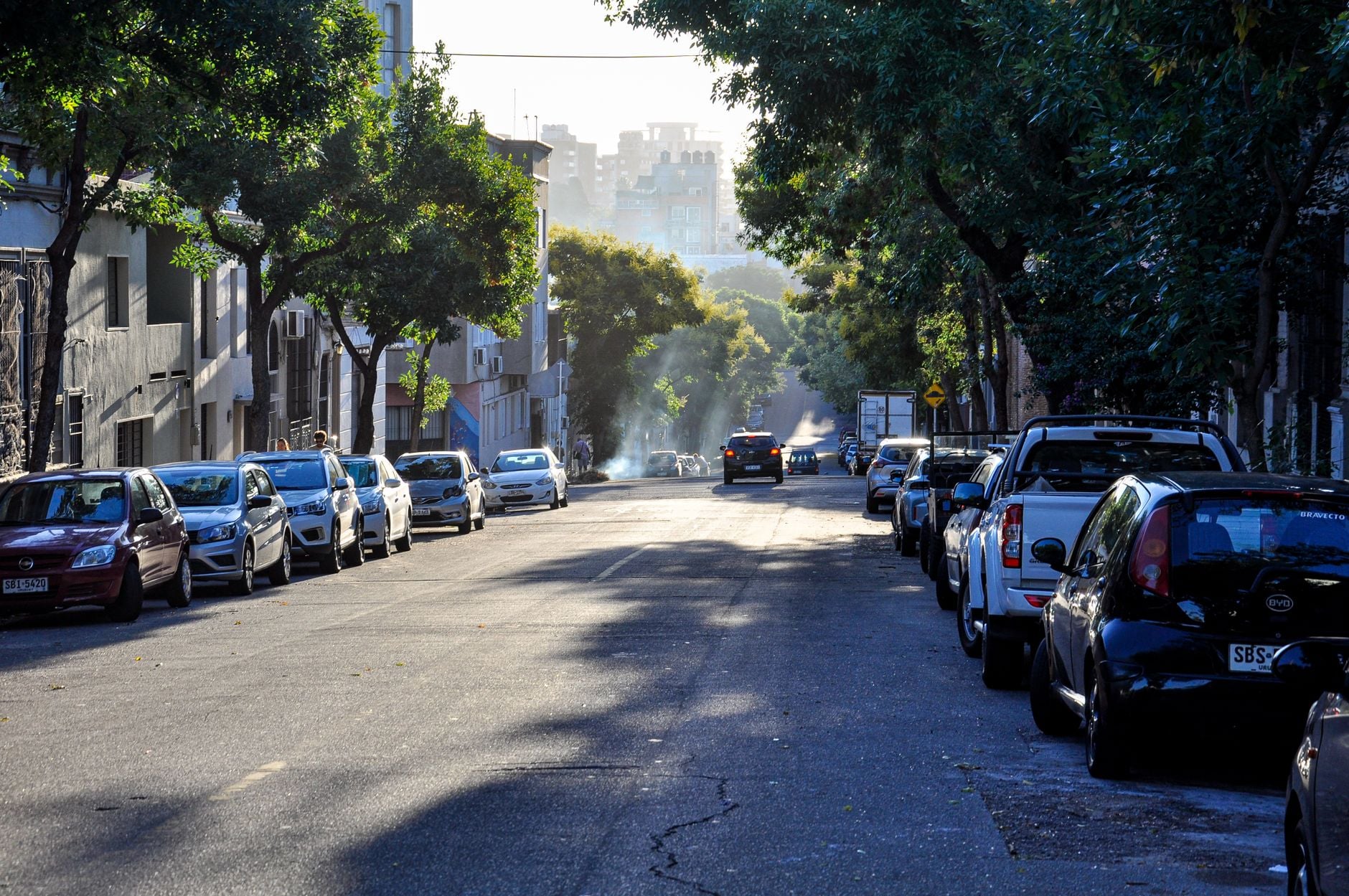
Montevideo is the city Buenos Aires looks at across the river and calls sleepy. It's small, flat, unhurried, and everyone in it is carrying a thermos of hot water under one arm at all times, including at 2am, including on the beach. It is also, and this is the part the guidebooks bury, one of the most relaxed places in the Americas to be a gay man. Uruguay decriminalised homosexuality in 1934, passed anti-discrimination law in 2004, legalised marriage in 2013, and the police have not been interested in who you're kissing for a very long time.
So the scene is small, but nobody's hiding. That's the whole personality of cruising here: a four-kilometre seafront promenade, one park everyone names first, a men's bar behind a black door with no sign, and a couple of cinemas that never got the memo that the 90s ended.
This guide covers the five places currently verified on GayOut's Montevideo cruising page, what each is like, when to go, how to get home, what the law says, and the things you'd only know if you'd lived here through one damp winter.
First, the thing that changes everything: the clock, and the calendar
Two things, actually.
The clock. Nothing in Montevideo happens at the time you think. Dinner is at 10pm. Bars fill after midnight. Dehiok, the cruising bar, doesn't get busy until well past 1am and runs to 6am on weekends. If you turn up at a park at 9pm expecting the London model, you'll find dog walkers and couples sharing mate. The night here is long and it starts late. Nap first. Everyone else does.
The calendar. You're in the southern hemisphere, so summer is December to February, and that's when the city is at its best and its emptiest at the same time. The beaches and the Rambla are packed, the nights are warm, and a large chunk of the population has left for Punta del Este or the coast. January in particular can feel like the city belongs to whoever stayed. Carnaval runs from late January through most of February (the longest in the world, and the murgas are the best free show in South America), and the Marcha por la Diversidad in late September is the biggest gay week of the year, with the whole of 18 de Julio turned over to it. It's worth saying that the Marcha isn't a party with a political footnote; it's a political march that has a party attached, and it draws far beyond the gay community. If your one goal is to meet locals in the most open, unguarded mood the city ever gets into, that's the week.
Winter, June to August, is a different city: grey, damp, a wind off the river that gets into your bones, and sunset around 5.30pm. The outdoor spots go quiet and the indoor ones carry the season. Montevideo winters aren't cold by European standards. They're just relentless.
And then there's the sudestada. Between roughly May and September, a south-easterly storm can come in off the river with almost no warning: the temperature drops, the wind picks up to something that makes walking difficult, the rain arrives sideways, and the Rambla empties completely within minutes. If you're on the seafront and the sky over the water goes a particular flat grey and the wind shifts, don't be brave about it. Get indoors. It'll blow through in a day or two, and the city will act like nothing happened.
Montevideo at a glance
- 5 verified cruising areas: the Rambla, Parque de los Aliados, Playa Ramírez/Playa de los Ingleses, Dehiok, Cine Multisex
- 6 gay bars and clubs: Montevideo bars page
- 2 gay saunas: saunas page. Yes, two. A luxury Stockholm can only dream of
- 12 gay-friendly hotels: hotels page
- 1 LGBTQ+ organisation: organisations
- One gay heritage listing, and it's a good one
- Take nothing you'd miss. Old phone if you have one, a bit of cash, no watch, no cards you can't cancel.
- Phone away in the park. Not in your hand. Not in your back pocket.
- Taxi to Dehiok's door, taxi from Dehiok's door. Don't walk Ciudad Vieja at 4am to save six dollars.
- The Rambla is fine. Busy, lit, patrolled. The problem is the thirty metres between the Rambla and wherever you're going.
- Tell someone. The usual. Especially for Los Aliados.
- Slow is not no. If you've come from Buenos Aires, recalibrate. Uruguayans are the quiet cousins: less drama, less volume, less flirting at full beam. A conversation that would be a proposition in Palermo is small talk here, and what looks like coolness is usually just the national setting. Give it ten minutes. The botija who barely looked at you at the wall is probably still at the wall.
- It's fine to feel awkward. Uruguayans are warm but not fast, and the park runs on eye contact and patience. If it's empty or the mood's wrong, walk back out to Avenida Italia and get an ice cream. Nobody expects you to stay. Tranquilo.
- This list is written for men, and the risk isn't equal. Uruguay's trans rights law is one of the best in the world on paper, but a dark park after midnight is a different calculation for queer women and trans people than for cis men, and street harassment is a real thing in Parque Batlle at night. If that's you, Dehiok is men-only anyway; the bars and the Rambla are the spaces that actually work, and the saunas won't be an option either.
- Take your rubbish. Uruguay is proud of its parks and the neighbours notice.
- The thermos under the arm is not a signal. Everyone has one. It's just mate. But mate does have rules, and they're the closest thing Uruguay has to a secret handshake. If someone passes you the gourd, that's an offer of friendship, and you drink the whole thing through the straw (the bombilla), don't stir it, don't wipe the straw, and pass it back to the person who poured it. And the golden rule: only say gracias when you hand it back if you mean "thank you, I'm done." Gracias means no more. Say it too early and the circle quietly closes around you.
- Buenos Aires: two to three hours across the river by Buquebus or Colonia Express, and one of the biggest gay scenes in the world. A lot of Montevideo's gay men treat it as a suburb
- Montevideo gay saunas: two of them, and the easiest fallback in winter
- Montevideo gay bars: six, most of them within walking distance of each other, and the fastest way to hear what's actually active this month
- Uruguay overview: Punta del Este in summer has its own thing going on
City overview: gayout.com/south-america/uruguay/montevideo

The five spots
1. La Rambla
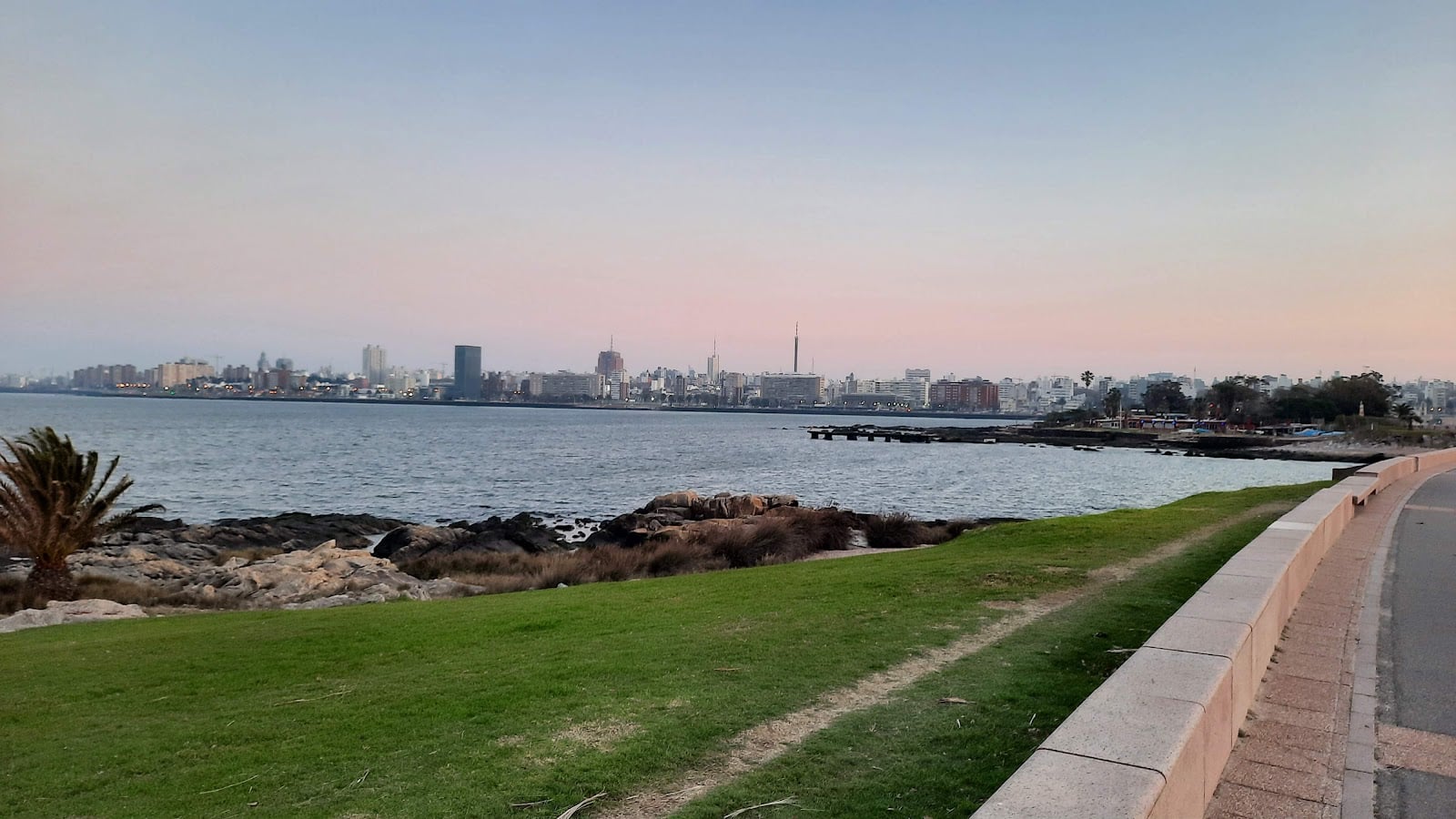
The Rambla is not a cruising spot. It's the reason the city works. A promenade along the whole southern edge of Montevideo, twenty-odd kilometres end to end, and the four-kilometre stretch from Ciudad Vieja through Parque Rodó to Pocitos is where the entire city goes to walk, run, sit on the wall, drink mate and look at the water.
Which means it's the connective tissue of everything else on this list. Playa Ramírez is on it. Parque Rodó is behind it. The walk from the beach to Parque Batlle and Parque de los Aliados starts on it.
But go for the thing itself, not just the geography. Sit on the stone wall, which has been there for a century and is still warm from the afternoon at 8pm in January. Somebody nearby has a Patricia, the local beer, sweating in a paper bag. Somebody else has a portable grill going on the grass behind you and the whole stretch smells faintly of asado. The sun goes down over the water in front of you, and the water is brown, because it's the Río de la Plata and it's a river, and nobody here calls it the sea or swims in it with any enthusiasm, and none of that matters at all when the light goes orange. A meaningful share of the city's gay men are somewhere along this wall on a warm evening, not cruising exactly, but available to a conversation. The wall is where the evening starts. Everything else is where it goes.

2. Parque de los Aliados (Parque Batlle)
Parque de los Aliados is the one every local names first. It's the wooded section of the big Parque Batlle complex, the same park as the Estadio Centenario, and the tree cover is dense enough that you're out of sight of the paths within a few metres.
Active after dark, which in summer means from about 10pm, and busiest late. Weeknights are quieter than you'd expect for the main spot in a capital city; weekends after the bars is when it fills. Crowd is local, mixed ages, more working men than students.
Two practical warnings. First, the park has no lighting once you leave the main avenues, and the ground is roots and dry leaves; bring a torch, don't point it at anyone. Second, and this is the bigger one: the risk in this park is not the police and not homophobes. It's phone snatchers. Parque Batlle after midnight is exactly where an arrebato happens. Leave the phone in the hotel or keep it in a zipped front pocket and don't take it out to check Grindr under a tree. More on that below.
Bus lines along Avenida Italia and Bulevar Artigas run reasonably late. After 1am you're in a taxi or an Uber, and both work fine here.
"Los Aliados is the park. Everyone knows, nobody says. Just don't bring your phone out under the trees, that's the only rule that matters." (Local, paraphrased)
3. Playa Ramírez and Playa de los Ingleses (Parque Rodó)
The Ramírez / Ingleses strip is the city's traditional gay beach hangout, on the Rambla directly in front of Parque Rodó. Playa Ramírez is the main beach; Playa de los Ingleses is the smaller cove to the west, and the rocks and wall between them are where the gay crowd has settled for decades.
This is a daytime social scene, not a hard cruising ground. Sunbathing, mate, people who know each other, and on summer weekends it's genuinely busy. The move is to spend the late afternoon here and then walk the Rambla at sunset; the transition from beach to promenade to whatever happens later is the standard Montevideo Saturday.
Summer only in any real sense. December to early March. In winter it's a beach with a wind on it.

4. Dehiok Cruising Bar (Ciudad Vieja)
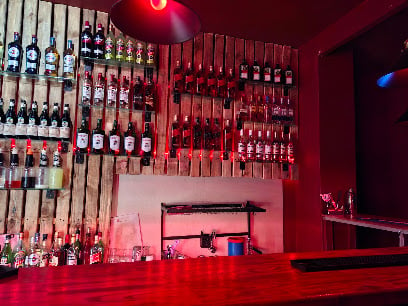
Dehiok is the indoor anchor: a men-only cruising bar in Ciudad Vieja behind an unmarked black door, with lockers, cabins, dark zones and a glass-dome ceiling that is genuinely lovely at 4am when you look up and remember you're in a 19th-century building.
The crowd lands very late. Turning up at midnight on a Saturday is turning up early. It runs to 6am Friday and Saturday, and the sweet spot is roughly 2am to 5am. Weeknights are a different, quieter animal. It's the closest thing Montevideo has to a Berlin-style venue and it's the place to go if the outdoor spots feel like too much effort or the weather has ruled them out.
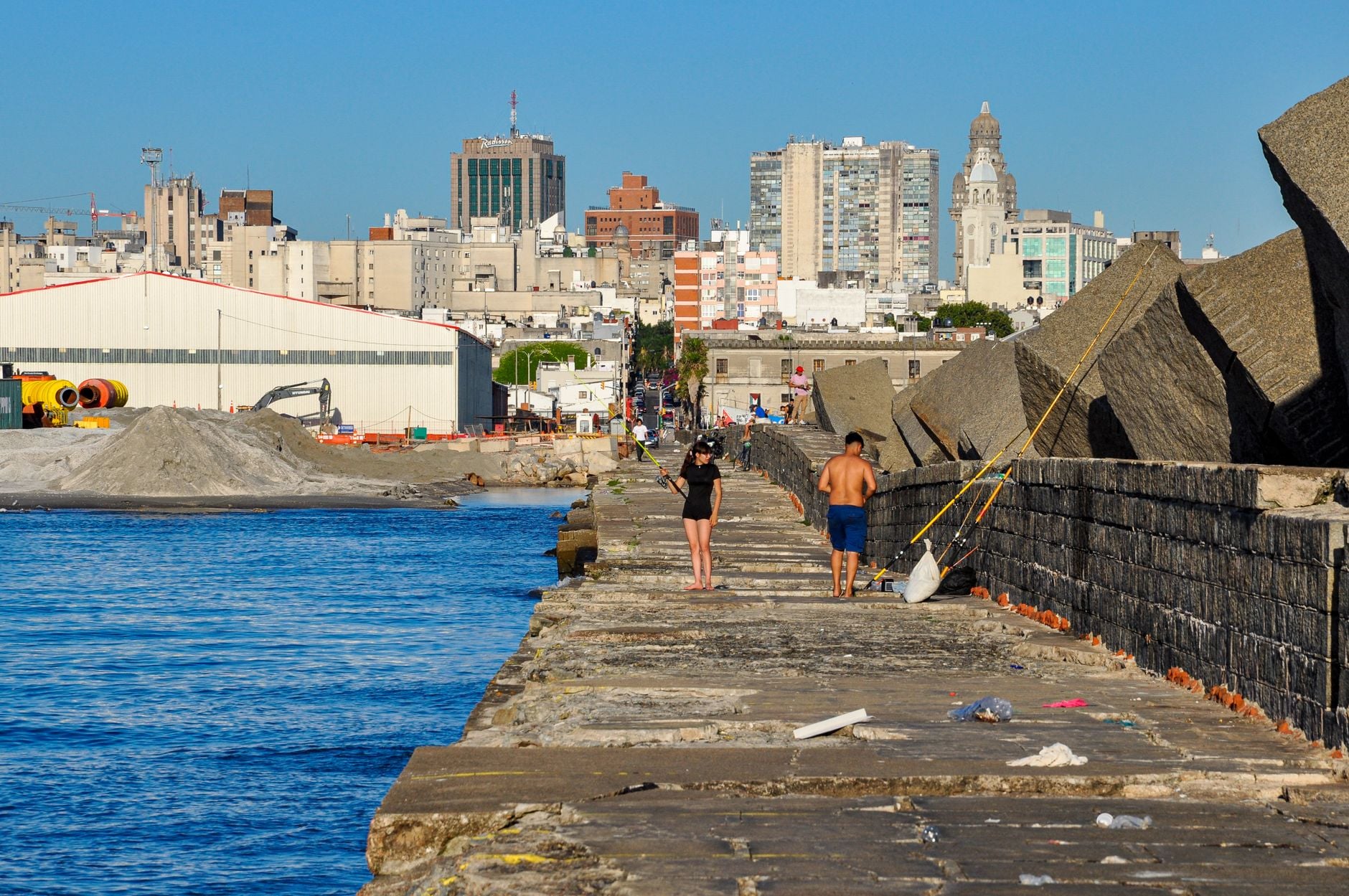
Getting there and back: Ciudad Vieja is the old town, and you need to understand what it becomes at night. By day it's banks, ministries and lunch spots. From about 8pm on a weeknight, and all weekend, it is a ghost town in the literal sense: shuttered, unlit, echoing, with nobody on the streets but the occasional dog and whoever is walking to or from the one bar that's open. That's not atmosphere, that's the reason the streets between Dehiok and Plaza Independencia at 4am are the other place in this guide where ordinary street crime is a real thing. Get a taxi or Uber to the door and from the door, and have it come to the door, not the corner. Don't walk to the Rambla to find one.
"Dehiok before two is an empty room with a nice ceiling. Dehiok at four is the reason you came to Montevideo." (Local, paraphrased)
5. Cine Multisex (Centro)
Cine Multisex is a surviving cine condicionado in Centro, an old-school adult cinema where the cruising happens in the dark rows, the way it did in every city in the world before the internet. A second Multisex location operates nearby. Reviews run through mid-2025, so check it's still open before you build an evening around it.
Afternoon and early evening is the time, which makes it the one spot on this list that works before dinner. The crowd is older, local and unbothered. If you've never done a cinema, the etiquette is the same as a labyrinth: slow, quiet, and a no means no the first time.
It's not the future of anything. It is a piece of the past that's still switched on, and there's something about that worth seeing while it lasts.

When to go
| Spot | Season | Best time | Crowd | Getting home |
|---|---|---|---|---|
| La Rambla | All year, best in summer | Sunset onwards | Everyone | Walk or bus |
| Parque de los Aliados | All year, busiest in summer | After dark, late | Locals, mixed ages | Taxi/Uber after 1am |
| Playa Ramírez / Ingleses | December to March | Afternoon to sunset | Social, regulars | Walk the Rambla |
| Dehiok | All year | 2am to 5am, Fri/Sat | Broad, late-night | Taxi/Uber to the door |
| Cine Multisex | All year | Afternoon, early evening | Older, local | Walk, it's central |
Getting around at night
Montevideo is flat and walkable, but the distances along the Rambla are longer than they look on a map. From Ciudad Vieja to Pocitos is an hour on foot. Buses are cheap, cover the city and run late on the main corridors (18 de Julio, Avenida Italia, the Rambla itself), thinning out a lot after midnight. Get an STM card from a kiosk on day one: it's a rechargeable tap card and the fare is noticeably cheaper than paying the driver in cash. If you do pay cash, don't expect change for a big note.
Uber and Cabify both work and are cheap by European standards, and unlike in Europe, paying the driver in cash is a normal option in the app, which is handy if you've followed the advice below and left your cards in the hotel. Taxis are fine and metered. For Parque de los Aliados after midnight and Dehiok at any hour, get a car. For the beach and the Rambla, walk.
There are no shared scooters worth relying on. Bring shoes you can walk in.

The apps
Grindr runs the city, as it does everywhere in South America, and it's how most of what happens at Los Aliados and Dehiok is arranged in advance. Hornet has a real user base here, more than in Europe. Sniffies exists but is thin. Uruguayans are direct on the apps in a way that surprises Europeans, and "¿dónde estás?" within the first three messages is normal, not rude. So is "ta", which is Uruguayan for "ok, got it, fine", and which will make up roughly a third of every chat you have here.
The caveat that matters more here than anywhere else in this series: the app is on a phone, and the phone is the thing that gets stolen. Check it before you enter the park, put it away, and don't take it out under the trees.
The law in Uruguay
Uruguay is, on paper, one of the most progressive countries on earth for gay men, and in practice it lives up to it. Homosexuality has been legal since 1934. Same-sex marriage since 2013. The police have no interest in gay cruising and there's no history of entrapment or raids at the spots on this list.
That said, public sex remains technically an offence under the Penal Code (the relevant charge is "ultraje público al pudor", public outrage to decency), so the normal discretion applies outdoors. In practice the complaints come from families in the park, not from the state. Ciudad Vieja and Parque Batlle both have a police presence at night that's there for street crime, and if anything they're an asset to you rather than a threat.
Cannabis is legal for residents and you'll smell it everywhere. It is not legal for tourists to buy and it's not worth the hassle.
Safety: the honest version, and it's not what you think
Every guide in this series has a safety section. This is the one where it actually matters, and not for the reason you'd assume.
The risk in Montevideo is ordinary urban crime. Phone-snatching (arrebatos), sometimes from a passing motorbike, sometimes on foot, is the standard crime of the city, and it happens most in exactly the places on this list: dark parks after midnight and Ciudad Vieja after the offices empty. Montevideo is safer than Buenos Aires and much safer than most of the continent, but "safer than Buenos Aires" is doing a lot of work in that sentence.
Health, including the urgent bit
For routine testing, Uruguay's public health system offers free HIV and STI testing, and the LGBT organisation Ovejas Negras can point you to the friendliest options. Hospital de Clínicas is the big public teaching hospital.
For the urgent bit: PEP works if you start it within 72 hours, and the sooner the better. In Montevideo, go to the emergency department of a public hospital. Hospital Maciel is in Ciudad Vieja, a few blocks from Dehiok; Hospital de Clínicas is on Avenida Italia, not far from Parque Batlle. Say "PEP" or "profilaxis post-exposición" at the desk. Don't wait until you're back home.
Condoms are cheap in any pharmacy and pharmacies are everywhere. Bring some anyway.
A bit of history, because Uruguay earned it
Uruguay decriminalised homosexuality in 1934, decades before Britain, Germany or most of the United States. In 2005 it put up the Plaza de la Diversidad Sexual in Ciudad Vieja, the first public monument to sexual diversity in Latin America, a small triangular plaza with a granite monolith a couple of blocks from where Dehiok now sits. The Montevideo gay heritage listing covers it. It's worth the five-minute detour, ideally in daylight, ideally with mate.
The country legalised same-sex marriage in 2013 and cannabis the same year, which tells you most of what you need to know about how Uruguay approaches these things: quietly, early, and without making a fuss.
If Montevideo feels small
It is small. That's the charm and the limit.
Keep this page honest
Cruising spots change faster than any other category on GayOut, and in Montevideo the cinemas in particular could close any month. If something here is wrong, use the "Report a correction" form on the Montevideo cruising page, or add a place via Add a Venue. Local knowledge is the only thing that keeps a page like this worth reading.