San Marino: A Traveler's Guide to Europe's Tiny Mountain Republic
San Marino is officially the Most Serene Republic of San Marino, an independent microstate nestled on Mount Titano in the northeastern Apennines. With roughly 34,000 residents and a land area of just 61 square kilometers, it is one of Europe's smallest countries and, according to tradition, one of its oldest republics, founded in 301 CE. For LGBTQ+ travelers, San Marino presents a unique situation: it is a legally progressive place - homosexuality was decriminalized in 2004 (Law 121) and same-sex civil unions took effect in 2019 - with equal age-of-consent laws, yet it has virtually no visible gay scene or dedicated LGBTQ+ venues. This makes it an excellent destination for cultural tourism and day trips, but not for those seeking an active gay social scene.
Legal Status and Safety
San Marino has made steady legal progress for LGBTQ+ people. Homosexuality was decriminalized in 2004 under Law 121, which later gave the country's main LGBTI association its name. Same-sex civil unions (unioni civili) were approved in November 2018 and came into force in February 2019, granting registered partners inheritance, hospital visitation, and next-of-kin rights; full same-sex marriage has not been enacted, and only stepchild adoption is available. In a 2019 referendum, voters approved constitutional reforms that enshrine protection against discrimination on the grounds of sexual orientation. In 2022, Paolo Rondelli became a Captain Regent, making San Marino one of the first countries in the world with an openly gay head of state. The age of consent is equal for all orientations. While the country is traditionally Catholic and somewhat conservative in social attitudes, there are no legal restrictions on LGBTQ+ people, and violence or harassment is not a documented concern for travelers. The main safety consideration for LGBTQ+ travelers is simply that there are no gay-specific venues or neighborhoods, so travelers should not expect public displays of affection to receive the same cultural acceptance as in larger Italian cities. Petty theft and scams targeting tourists can occur in the city center, but this is a general safety issue unrelated to LGBTQ+ status.
History of LGBTQ+ Life in San Marino
San Marino has never had a developed gay scene. As a microstate with a tiny permanent population, the country lacks the population density and consumer base to support dedicated gay bars, clubs, or bathhouses. The LGBTQ+ community here is small and largely integrated into general society rather than forming visible enclaves. The 2018-2019 legalization of same-sex civil unions came about through parliamentary and referendum processes rather than grassroots street activism, though the association 121 San Marino - named after the 2004 decriminalization law - has become the country's main LGBTI advocacy voice. Pride events are minimal: there is no San Marino Pride comparable to those in major European cities. Instead, LGBTQ+ people in San Marino tend to socialize and participate in gay culture by traveling to nearby Rimini (which hosts the Rimini Summer Pride and has a beach gay scene and some gay bars) or Bologna (which has a more substantial LGBTQ+ scene). The 121 San Marino association marches with its own float at the Rimini Summer Pride. For international travelers, San Marino functions as a destination for history and nature rather than gay tourism.
Geography and Getting Around
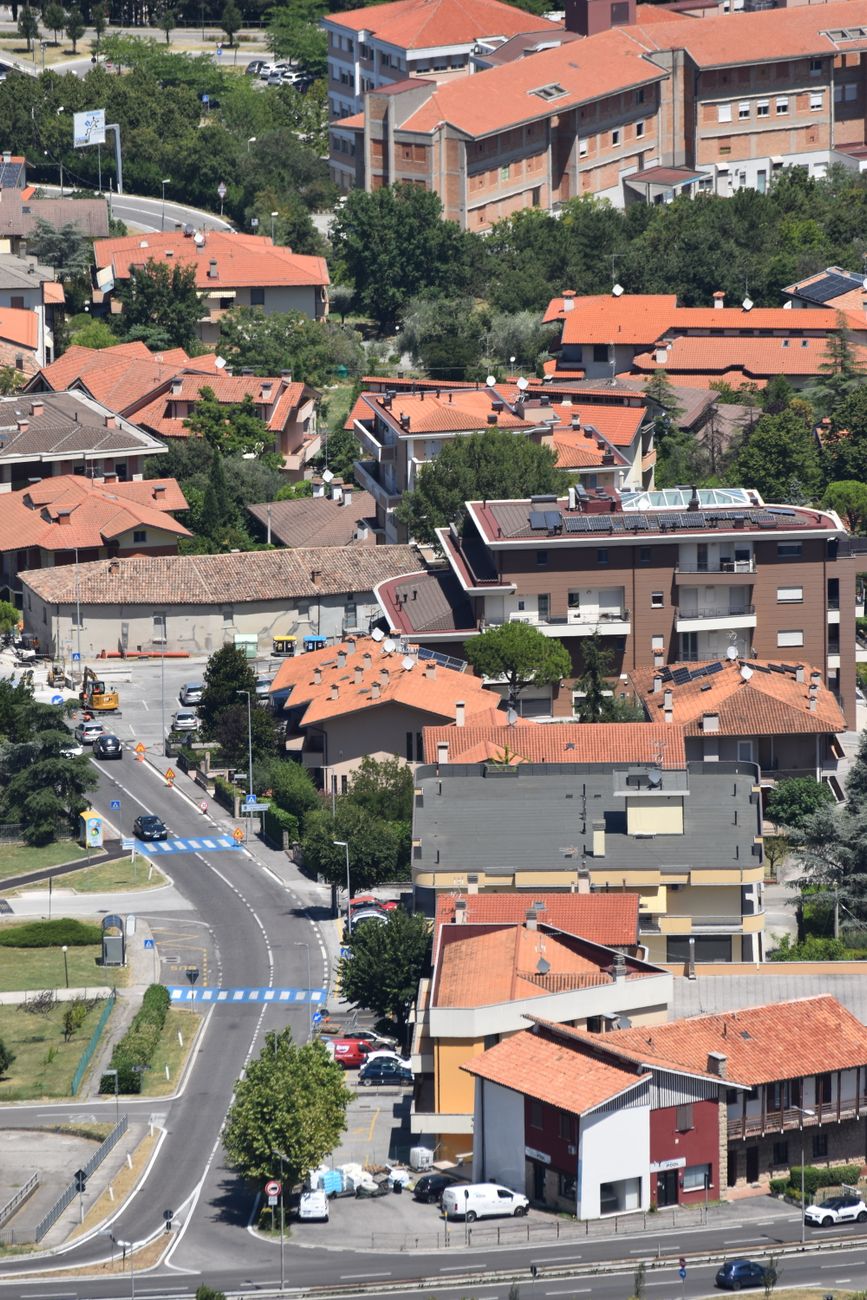
San Marino City, the capital, sits at approximately 750 meters elevation on Mount Titano. The country is accessed most easily from Italy. The main entry point is via road from the Italian regions of Emilia-Romagna or Marche. There is no airport in San Marino; the nearest major airports are in Bologna (about 120km away) and Rimini (about 40km away). Most travelers fly into one of these Italian cities and rent a car or use buses to reach San Marino. A local bus service operates within the country, but it is limited. Rimini airport and train station are the most practical jumping-off points. From Rimini, the journey to San Marino City takes about 1-1.5 hours by car or bus. The city itself is very walkable and built on steep slopes, with winding medieval streets. Comfortable walking shoes are essential, as cobblestone streets and steps dominate the terrain.
What to See and Do
The primary attractions in San Marino City are the three Rocche (fortress towers) that dominate the skyline: Guaita, Cesta, and Montale. All three can be visited; each offers views of the surrounding Apennines and, on clear days, vistas toward the Adriatic Sea and Italy's central regions. The Guaita fortress, the oldest and most impressive, can be reached via a steep stone pathway. The Cesta fortress, on the highest point, houses a museum of medieval weapons. Both are accessible to visitors and involve climbing. The medieval Old Town (Centro Storico) is pedestrian-friendly and filled with small shops, restaurants, and cafes. The Basilica of San Marino, located in the Piazza della Libertà, is the country's primary religious monument. The Piazza della Libertà itself is the main public square and hosts events and markets. The Palazzo Pubblico (Public Palace) is the seat of government and features a neoclassical façade. Several small museums exist, including the Museum of Ancient Glass and museums dedicated to torture instruments and modern art, reflecting San Marino's quirky tourism strategy. Hiking is popular in the surrounding hills; multiple trails connect San Marino to neighboring Italian regions and offer views of the countryside.
Where to Stay
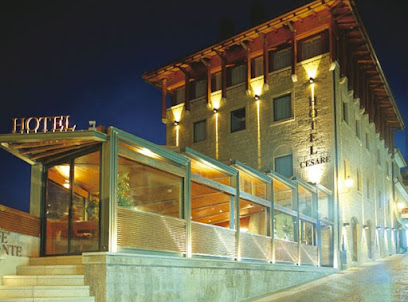
Accommodation options in San Marino City range from budget hostels to three-star hotels. There are no luxury five-star properties. Recommended options include the Hotel Titano, a centrally located mid-range hotel with views, and various smaller guesthouses and apartments throughout the Old Town. Many travelers prefer to stay in nearby Rimini, which offers more accommodation choices, a livelier beach atmosphere, and gay-friendly venues, then day-trip to San Marino by bus or car. Rimini is about 40 minutes away and offers a range of beach hotels, gay-friendly guesthouses, and a nightlife scene that San Marino lacks. For those who want to stay in San Marino itself, book accommodations in advance during peak summer months (June-August), as rooms are limited and the town is very popular with tourists.
San Marino's cuisine reflects its location in the Apennines between Emilia-Romagna and Marche. Local specialties include cappelletti (meat-filled pasta), torta di formaggio (cheese pie), and various cured meats and cheeses from the surrounding regions. The national favorite is piadina, a flatbread filled with cheese and meats, shared across the broader Romagna region. Restaurants in San Marino City tend to be touristy and moderately expensive compared to surrounding Italian towns. Dining options range from casual pizzerias to more formal sit-down restaurants. Most serve traditional Romagnol and Marchigian cuisine. Vegetarian and vegan options exist but are limited; the culture is meat and dairy-focused. Restaurants in the historic center offer views and atmosphere but often cater to tour groups. For better value and variety, many travelers eat in nearby Rimini or other Italian towns. Wine from the Sangiovese di Romagna region is widely available.
Nearby Destinations and Day Trips
San Marino functions best as part of a broader regional trip. Rimini (30km away) is the closest major destination, offering beaches, a boardwalk, historical sites including the Tempio Malatestiano, and a gay-friendly scene with some bars and beach clubs. Rimini has a summer beach culture and a modest gay presence, particularly at certain beach clubs and hotels, and it hosts the annual Rimini Summer Pride. Bologna (60km away) is a larger university city with a more developed LGBTQ+ scene, better restaurants, Renaissance architecture, and cultural attractions. Urbino (50km away) is a stunning Renaissance hilltop town with architecture and art. Ravenna (70km away) is famous for its Byzantine mosaics. All of these destinations are accessible by car or regional buses from San Marino and offer more amenities and attractions than the microstate itself.
Events and Pride
San Marino does not host its own Pride festival. Instead, Sammarinese LGBTQ+ people and the 121 San Marino association join the Rimini Summer Pride (about 30km away in Italy, held mid-summer), where the association marches with its own float; some also attend Bologna Pride (typically held in June). The country does host various cultural and sporting events throughout the year - notably the Palio della Balestra (crossbow competition) and various street festivals - but none with a specific LGBTQ+ focus or appeal. San Marino is better suited for those interested in cultural history than for those seeking LGBTQ+ specific events.
Why Visit San Marino
San Marino is an ideal destination for travelers interested in medieval history, dramatic hilltop vistas, and the novelty of visiting a tiny independent republic. LGBTQ+ travelers should come for the history and beauty, not for a gay scene. It works well as a day trip from Rimini or Bologna, both of which offer more gay-friendly amenities and nightlife. The country's legal status (civil unions since 2019, decriminalization since 2004, constitutional anti-discrimination protection, and an openly gay former head of state) means LGBTQ+ travelers are welcome and protected, but the lack of gay venues or visible gay culture means travelers seeking an active social scene should base themselves elsewhere and visit San Marino for its cultural and historical attractions.
よくある質問
Yes. San Marino decriminalized homosexuality in 2004 (Law 121), recognized same-sex civil unions in 2019, and added constitutional anti-discrimination protection by referendum the same year. It is a calm, safe destination with no documented anti-LGBTQ+ violence; the main caveat is that this small, traditionally Catholic republic has no gay-specific venues, so it suits cultural sightseeing more than nightlife.
No, there is no designated gay neighborhood in San Marino City. The city functions as a unified historic district where all visitors and residents mix freely.
San Marino City does not have dedicated gay bars or nightclubs. The social scene is understated and integrated into the general hospitality sector, with many restaurants and cafes in the central area welcoming LGBTQ+ clientele.
Rather than dedicated venues, visitors can explore the small restaurants and wine bars scattered throughout the old town. Locals are generally friendly and welcoming to all visitors.
San Marino does not hold its own Pride. Instead the local 121 San Marino association and Sammarinese LGBTQ+ people join the Rimini Summer Pride, about 30km away in Italy, where 121 marches with its own float. Bologna Pride (June) is another popular option within easy reach.
The LGBTQ+ scene is not as visible as in larger cities, but there is a quiet acceptance and growing visibility. The microstate's small size means the scene is integrated throughout the historic center.



 フレンドリーなLGBTQ+フレンドリーなホテル
(105)