Rijeka: A Guide to Croatia's Understated Queer-Friendly Port City
Introduction
Rijeka occupies a distinctive place in Croatian LGBTQ+ travel. As the country's main seaport and third-largest city, it has long carried a more left-leaning, cosmopolitan reputation than the inland interior, yet it stays off most international gay itineraries that stop at Zagreb, Split or Dubrovnik. The scene here is low-key and community-driven rather than built around standing gay bars, and that is part of its appeal. This guide covers what visitors actually find on the ground.
History and Context
Croatia has moved steadily on LGBTQ+ rights since the 1990s. Homosexuality was decriminalised back in 1977, and in 2014 the Life Partnership Act gave same-sex couples a registered-partnership status with most of the rights of marriage, with the notable exceptions of joint adoption. Full same-sex marriage, however, remains constitutionally blocked following a 2013 referendum that defined marriage as a union of a man and a woman, so Croatia has life partnerships but not marriage equality. Anti-discrimination and hate-crime laws cover sexual orientation and gender identity. Social attitudes are warmest in the big cities and along the tourist coast and cooler in rural areas and among older generations.
Rijeka's past as a multi-ethnic port, shaped by Italian, Hungarian, Central European and Jewish communities, left it with a more cosmopolitan baseline than many Croatian towns. After a difficult post-Yugoslav industrial decline, roughly fifteen years of regeneration have drawn younger residents, students and a creative crowd, and with them a more open, progressive feel.
Neighbourhoods and Orientation
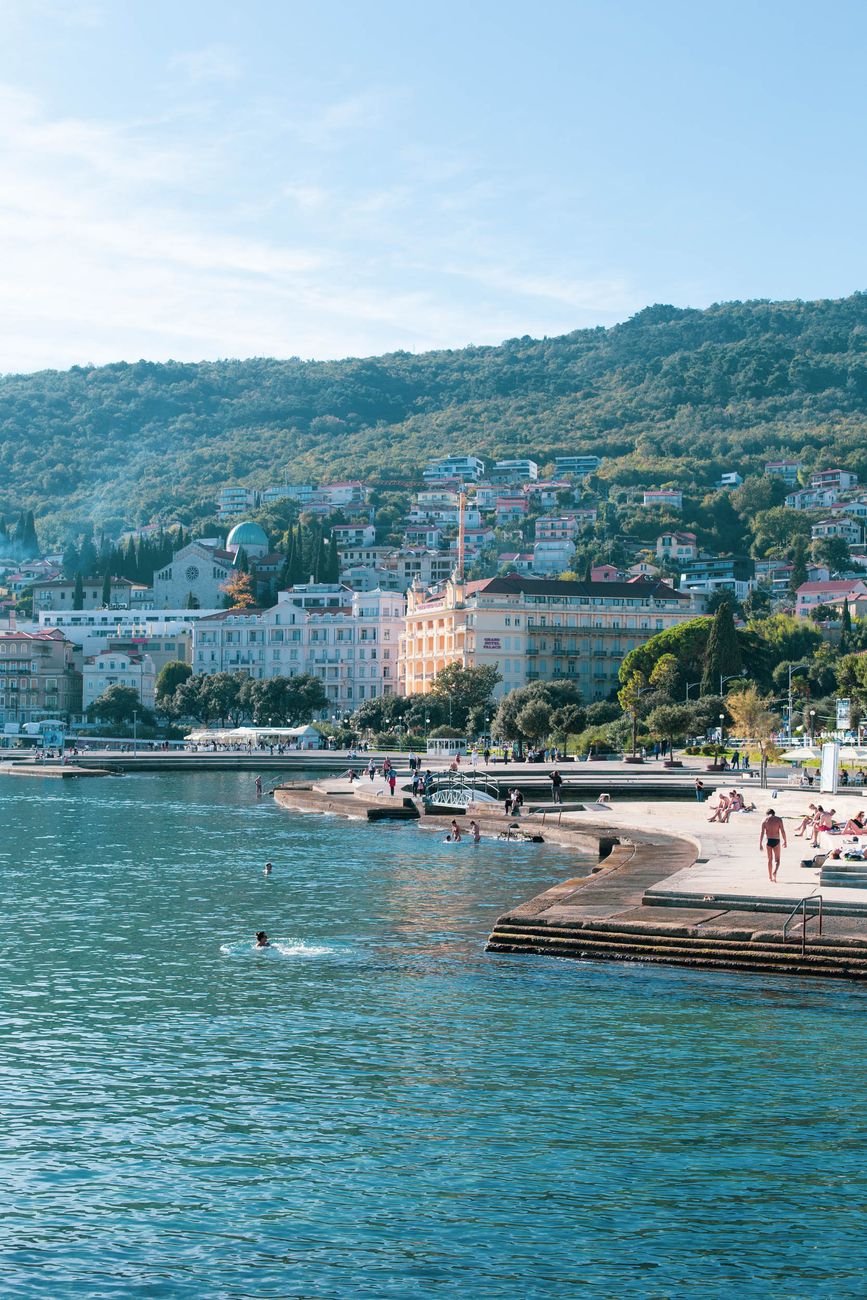
The city centre is compact and walkable. The Korzo, the wide pedestrian promenade cutting through downtown, is the social spine of Rijeka and the natural place where cafe life, including its visible queer life, plays out across the day and into the evening. The surrounding Centar district holds most of the restaurants, bars and cultural institutions and is where visitors will spend most of their time.
Just back from the waterfront, the revitalised Benčić cultural quarter, sometimes called the Art-kvart, has become the city's creative heart, with the City Museum, the Museum of Modern and Contemporary Art and the Children's House clustered in restored industrial buildings. The former Hartera paper mill and the Rikard Benčić and Delta areas host concerts, club nights and festivals, while the ongoing redevelopment of the port and waterfront continues to add promenades and public space.
Venues and Social Spaces
Rijeka does not have a permanent dedicated gay bar or club, and the honest picture is of an integrated, event-led scene rather than a gay district. The reliable anchor is OKC Palach (Klub Palach), a youth and cultural centre just off the centre that regularly hosts the city's queer parties, including LORI's Queer-UP! Party and the closing night of the Smoqua festival, with drag and an all-queer dancefloor. For daytime, the old-town Caffe Bar Kosi Toranj, tucked beside the Leaning Tower (Kosi toranj) at Pul Vele Crikve, is a relaxed, gay-friendly cafe long listed as a welcoming spot. Beyond these, queer locals and visitors simply mix through the Korzo cafes and the Benčić nightlife. The best way to find what is on during a given week is to check LORI or the venues' own social channels.
Rijeka has no dedicated gay sauna or sex-on-premises venue; the nearest gay sauna is in Zagreb. In the warmer months the social gravity shifts to the coast instead.
Beaches
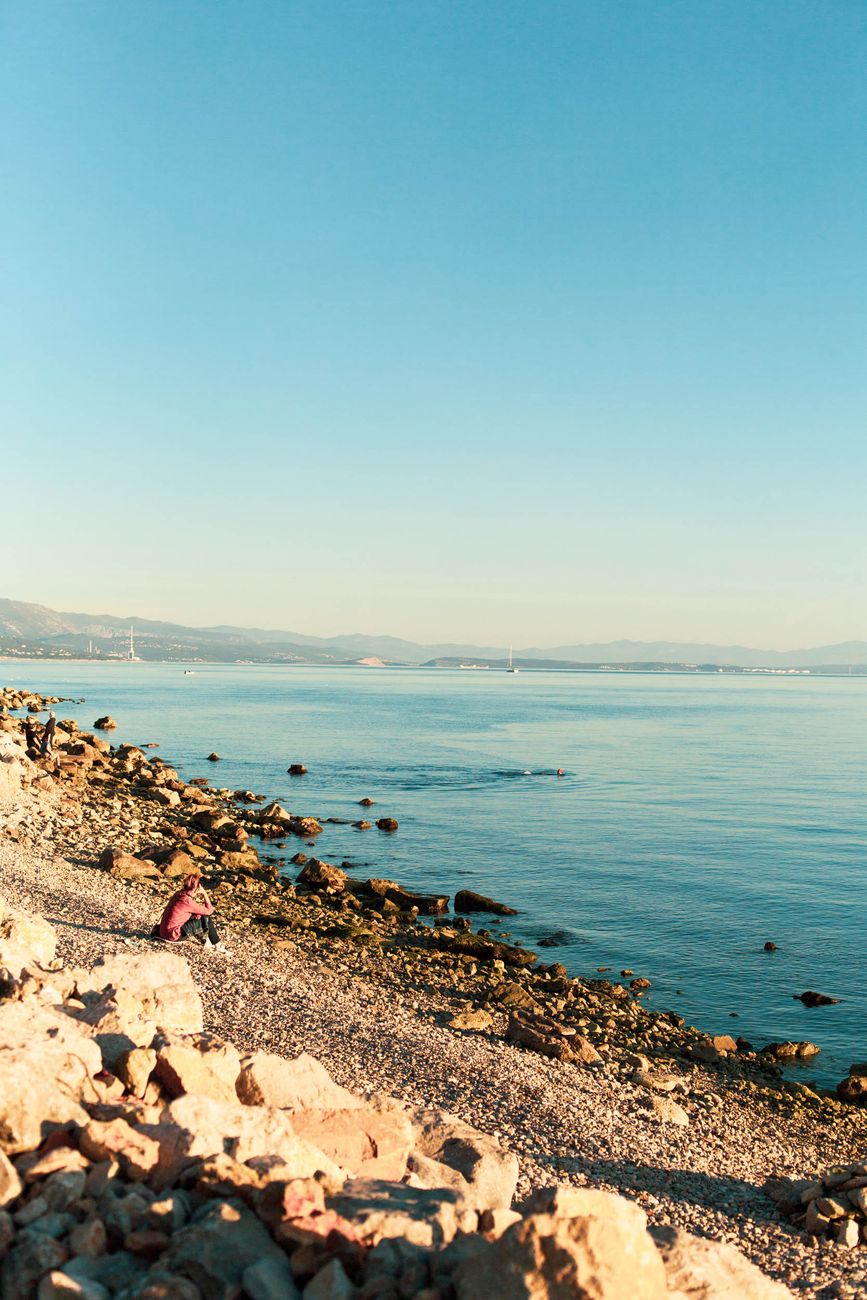
The gay-popular bathing is west of the centre on the way to Opatija. Bunker Beach at Preluk, a small rocky naturist (FKK) cove near the Rijeka-Opatija boundary, is the long-standing gay and nudist spot on this stretch of the Kvarner coast, busiest in summer and reachable by local bus. Closer in, Bivio Beach, at the western edge of the city near Kantrida, is a wooded shoreline and promenade that is also known as a gay meeting spot. As always on discreet coastal spots, be mindful of other beachgoers and local norms.
Rijeka does not hold its own Pride march. Croatia's established Pride events are in Zagreb, Split and Pula, all in June, and Rijeka residents who want a Pride parade typically travel to Zagreb (about two hours) or to nearby Pula in Istria. What Rijeka does have is Smoqua, the Festival of Queer and Feminist Culture, organised by LORI and usually held over a few days in early October. Smoqua combines panels, performances, exhibitions and film with the Queer-UP! closing party at OKC Palach, and it is the real flagship of the city's queer calendar.
Beyond Smoqua, Rijeka programmes a busy year of film, theatre and art events. Its turn as 2020 European Capital of Culture, finally staged in 2021 after pandemic delays, left behind strengthened cultural institutions and venues, several of them in the Benčić quarter.
Where to Stay
Staying in Centar puts you within walking distance of the Korzo, the cafes and the cultural sites. Rijeka offers the full range of hotels, hostels and guesthouses; central options such as the historic Grand Hotel Bonavia, the quirky floating Botel Marina and a cluster of well-reviewed hostels and rooms are all a short stroll from Korzo, while the five-star Hilton Costabella sits on the coast toward Opatija near the beaches. There are no specifically gay hotels, but the city's hospitality is relaxed and welcoming.
Rijeka is generally safe and easy-going for LGBTQ+ visitors, especially in the centre and among younger residents, where same-sex couples are increasingly an unremarkable sight. Croatia's legal framework protects against discrimination in employment, housing and services. A little discretion is still sensible in peripheral districts and in the smaller surrounding towns and villages, as it would be anywhere in the region.
Getting Around and Getting There
The centre is best explored on foot. City and suburban buses, run by Autotrolej, cover the wider area and the coast toward Opatija and Preluk. Rijeka connects to the rest of Croatia by coach from the central bus station, with Zagreb about two hours away and Split around four to five; Rijeka Airport sits on the island of Krk, linked by a bus transfer.
Food and Dining
Rijeka's dining leans on the Adriatic: excellent fresh seafood and Kvarner specialities such as scampi, alongside traditional konoba taverns and a growing crop of modern bistros and cocktail bars. The Korzo and the streets around it hold the densest concentration of places to eat, and the central market is the spot for fresh produce and fish.
Practical Information
Croatia adopted the euro on 1 January 2023, replacing the Croatian kuna, so prices are in euros and cards are widely accepted, with ATMs easy to find. English is widely spoken by younger people and in tourism, and many locals speak Italian or German as well. Because the waterfront and cultural scene keep evolving, it is always worth checking current local listings when you arrive.
Conclusion
Rijeka rewards travellers who like their cities genuine rather than packaged. It offers real local culture, a quietly progressive outlook, a small but committed queer community centred on LORI and the Smoqua festival, and quick access to the Kvarner coast, all without the crowds of Croatia's headline destinations.


 フレンドリーなゲイバー&クラブ
おすすめ
(127)