2015年6月26日のObergefell v. Hodges判決により、米国では同性婚が合法化されました。2022年12月に成立したRespect for Marriage Actは、連邦政府による婚姻承認の最低基準を定め、将来の最高裁判所の判断にかかわらず、有効なすべての同性間および異人種間の婚姻を連邦レベルで認めることを義務付けています。2020年のBostock v. Clayton County判決では、公民権法第7編(Title…
Portland's LGBTQ+ culture has never been packed into a single gayborhood. Since the community organized in the 1970s, the city's countercultural, "keep Portland weird" streak has let queer life spread out across neighborhoods rather than concentrate in one district. What that means for a visitor is that the dedicated gay nightlife sits mostly downtown, while much of day-to-day queer Portland lives in the friendly, artsy residential neighborhoods east and north of the river.
Where the nightlife is
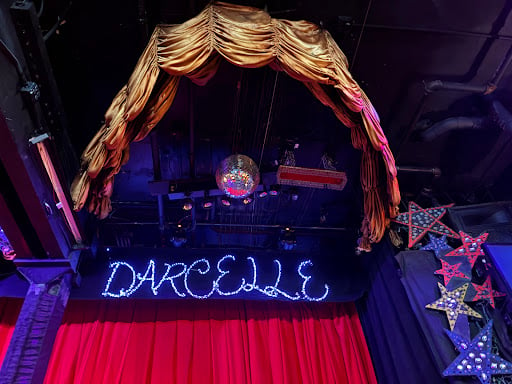
The heart of Portland's gay nightlife is downtown and Old Town-Chinatown, around NW 3rd Avenue and West Burnside. This is the last remnant of "Vaseline Alley" — the historic gay strip along SW Stark Street, since renamed Harvey Milk Street. Within a few blocks you'll find Darcelle XV Showplace (208 NW 3rd Ave), the historic drag cabaret founded by Walter Cole, better known as Darcelle, who became the world's oldest performing drag queen before his death in 2023 and whose showplace is the first LGBTQ+ site in Oregon on the National Register of Historic Places. Nearby, CC Slaughters (219 NW Davis St) is the city's main gay dance club, with a big floor, drag and an adjoining Rainbow Room lounge. The male strip clubs Silverado (610 NW Couch St) and Stag PDX (317 NW Broadway) round out the downtown cluster, and Badlands (110 NW Broadway), which opened in 2024 in the old Embers space, adds a video-and-dance bar. Scandals, a downtown fixture since 1978, closed its Harvey Milk Street location in 2025 and reopened in 2026 as Scandals East, an all-ages neighborhood queer bar on NE Alberta Street; Camp, a new queer bar, opened in 2026 in that former downtown space. In the inner Southeast, Peacock PDX (1400 SE Morrison St, in the former Crush Bar space) opened in 2025 as a new LGBTQ+ bar with karaoke, drag and dance nights.
Outside downtown, Eagle Portland (835 N Lombard St) is the city's leather-and-bear bar, up in North Portland. Northeast Portland has queer-friendly bars like Escape (karaoke, on NE Sandy), and North Portland's Overlook neighborhood has the women-owned Advice Booth. The Sports Bra on NE Broadway — the first women's-sports bar in the country — is a queer-owned, trans-welcoming space that's become a community anchor in its own right.
Downtown and the Pearl District hold most of the big hotels and put you within walking distance of the Old Town nightlife and transit. For a more neighborhood-focused stay, queer travelers often head to the east side: Southeast Portland (Hawthorne and Division) and North/Northeast (Mississippi, Alberta) are gay-friendly, walkable, and full of independent, LGBTQ-owned cafes, shops and restaurants, though they're residential rather than nightlife districts. The Q Center, the Pacific Northwest's largest LGBTQ+ community center, sits on N Mississippi Avenue.
Portland has two genuine gay bathhouses: Steam Portland (2885 NE Sandy Blvd), the busy all-male bathhouse with steam, dry sauna, sun deck and regular bear nights, and Hawks PDX, an all-gender-inclusive queer bathhouse that relocated from inner SE Grand Avenue to SE 99th Avenue. Löyly is a mainstream, LGBTQ-friendly Scandinavian-style public day spa — a nice sweat, but not a cruise venue.
Portland Pride is held in mid-July, organized by Pride Northwest. The Waterfront Festival takes over Tom McCall Waterfront Park across a weekend, with the Pride Parade — Oregon's largest — on the Sunday. The Dyke March and Trans Pride March take place during Pride weekend, stepping off from the North Park Blocks downtown. In the fall, QDoc (the Portland Queer Documentary Film Festival), the only LGBTQ+ documentary festival in the U.S., screens at Cinema 21, usually in October. Drag shows, queer film nights and burlesque run year-round; Portland is a grassroots, community-focused Pride city rather than a circuit-party destination.
Getting around
Portland is compact, walkable and bike-friendly, and TriMet runs an extensive bus and MAX light-rail network with affordable day passes. Downtown, Old Town and the inner east side are all well served, so you rarely need a car to reach the queer nightlife and neighborhoods. BIKETOWN bike-share is everywhere, fitting for a city with serious cycling culture.
Food, culture and day trips
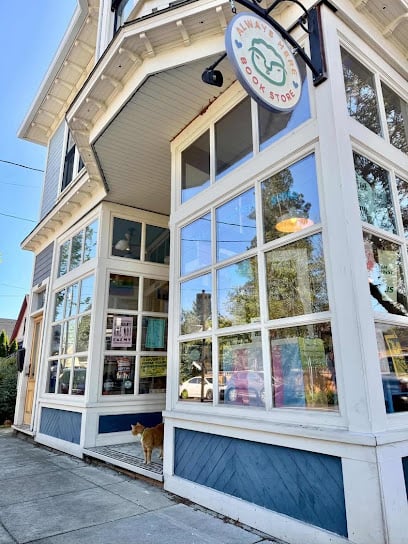
Portland's food scene — food carts, breweries, coffee, and farm-to-table restaurants — is a genuine draw, and queer-owned and queer-friendly spots are easy to find, especially along Hawthorne, Division, Mississippi and Alberta. Independent bookstores, galleries and performance venues frequently host LGBTQ+ programming; Always Here, a queer bookstore on N Williams Avenue, is a good starting point. The setting helps too: the Columbia River Gorge and Multnomah Falls are about an hour east, Mt. Hood 90 minutes away, and the Oregon Coast roughly 90 minutes west. Rooster Rock State Park in the Gorge holds one of the country's first designated clothing-optional beaches, with a long-standing gay and nude section at its eastern end.
Portland is one of the most openly LGBTQ+-friendly cities in the U.S., and Oregon has strong statewide legal protections covering sexual orientation and gender identity. Public displays of affection are unremarkable, and the city is especially welcoming to trans and non-binary visitors. Standard urban precautions apply, particularly late at night downtown; Portland has a visible homelessness issue that affects parts of the central city but is unrelated to LGBTQ+ safety.
よくある質問
Portland has no single gayborhood. The downtown and Old Town-Chinatown blocks around NW 3rd Avenue and West Burnside - the historic "Vaseline Alley" on SW Stark Street, since renamed Harvey Milk Street - are the nightlife heart, home to Darcelle XV, CC Slaughters, Silverado, Stag PDX and Badlands. Beyond nightlife, queer life is spread across gay-friendly residential neighborhoods like North/Northeast Portland (Mississippi, Alberta) and Southeast (Hawthorne, Division).
Yes. Oregon has strong statewide legal protections covering sexual orientation and gender identity, and Portland is one of the most openly LGBTQ+-friendly cities in the United States. Public displays of affection are unremarkable, and the city is especially welcoming to trans and non-binary visitors. Standard urban precautions apply, particularly late at night in the central city.
Portland Pride is held in mid-July, organized by Pride Northwest. The Waterfront Festival takes over Tom McCall Waterfront Park across a weekend, with the Pride Parade - Oregon's largest - on the Sunday. The Dyke March and Trans Pride March also take place during Pride weekend, and QDoc, the Portland Queer Documentary Film Festival, screens each October.
CC Slaughters (219 NW Davis St, Old Town) is Portland's main gay dance club, alongside the historic Darcelle XV drag showplace, the male strip clubs Silverado and Stag PDX, the video-and-dance bar Badlands, and Eagle Portland (leather) in North Portland. Scandals, a fixture since 1978, moved from Harvey Milk Street to NE Alberta Street in 2026, reopening as the all-ages Scandals East. In inner Southeast, Peacock PDX opened in 2025 in the former Crush Bar space.
Yes. Most of Portland's dedicated gay nightlife is actually downtown and in Old Town-Chinatown, not Southeast. Eagle Portland (leather) is in North Portland on Lombard Street, the Q Center community hub is on N Mississippi Avenue, and queer-friendly bars like Escape and The Sports Bra are in Northeast Portland.
Portland's queer community is woven throughout the city, emphasizing authenticity, diversity and community integration over commercial spectacle. The scene is visible and grassroots rather than confined to one commercial zone, with a strong queer arts culture - drag, burlesque, queer film - and a Pride that stays community-focused rather than corporate.











 ゲイバー&クラブ
おすすめ
(432)