2015年6月26日のObergefell v. Hodges判決により、米国では同性婚が合法化されました。2022年12月に成立したRespect for Marriage Actは、連邦政府による婚姻承認の最低基準を定め、将来の最高裁判所の判断にかかわらず、有効なすべての同性間および異人種間の婚姻を連邦レベルで認めることを義務付けています。2020年のBostock v. Clayton County判決では、公民権法第7編(Title…
Santa Fe, the capital of New Mexico, is one of the most welcoming destinations for LGBTQ+ travelers in the Southwest United States. Its progressive cultural values, world-renowned arts scene and deeply integrated community make it appealing for those seeking cultural enrichment and authentic community connection rather than a big party scene. At roughly 7,199 feet, Santa Fe is also the highest state capital in the country — plan for cooler temperatures and thinner air.
History of Santa Fe's LGBTQ+ Scene
Santa Fe's LGBTQ+ history is intertwined with its identity as an artistic and alternative hub. The city has long drawn creative people, including many LGBTQ+ artists and writers seeking refuge from more conservative places — the poet Witter Bynner, whose home is now the gay-owned Inn of the Turquoise Bear, was an early anchor of that community. From the 1970s onward Santa Fe developed a visible, organized LGBTQ+ community with social groups, cultural organizations and, eventually, formal Pride celebrations. Today that community is well-established, though the city keeps a different character than larger metros, emphasizing culture and community over nightlife.
Neighborhoods and Areas
Santa Fe does not have a traditional gay district with concentrated LGBTQ+ businesses and nightlife. Instead the community is woven throughout the city, with the most visible energy around the historic Plaza and the Railyard District (also called the Guadalupe Arts District) south of the Plaza along Guadalupe Street. The Plaza is the cultural and social heart, ringed by galleries, shops and restaurants; the Railyard draws a younger crowd with studios, the farmers market and event spaces. Canyon Road, extending northeast from the Plaza, is famous for galleries — many owned or operated by LGBTQ+ artists — and residential areas around Acequia Madre and the eastern foothills have long-standing queer populations.
Nightlife and Social Spaces
Santa Fe has no full-time dedicated gay bar; its queer nightlife is recurring and event-driven. The single most reliable anchor is Queer Night every Monday at La Reina, the mezcal and tequila bar inside El Rey Court on Cerrillos Road, an intentionally LGBTQ+-centered evening that supports the Transgender Resource Center of New Mexico. The Matador, a basement dive just off the Plaza on West San Francisco Street, is widely described as the closest thing the city has to a gay bar and draws a queer crowd, especially later in the week. The Mystic on Cerrillos Road hosts occasional queer music nights, and Cowgirl BBQ in the Railyard is a beloved institution whose karaoke and patio pull a mixed, LGBTQ+-friendly crowd. Beyond bars, gallery openings, the Santa Fe Opera (with a strong LGBTQ+ following through its June–August season) and community events function as the real social glue.
Santa Fe Pride takes place in late June and is organized by the Human Rights Alliance of Santa Fe, the city's leading LGBTQ+ advocacy organization (founded 1993). The centerpiece is PRIDE on the Plaza, a festival and gathering in the historic downtown Plaza with live music, community booths, food vendors and cultural programming, plus ancillary events around town; the 2026 celebration was held Saturday, June 27. In 2025 the Alliance opened a permanent PRIDE Center, Santa Fe's first dedicated LGBTQ+ community space. Note that Albuquerque PrideFest — a separate, larger event about 60 miles south — is held earlier in June, so regional travelers can often catch both. Throughout the year the city also programs LGBTQ+ film screenings, art exhibitions and theater.
Where to Stay
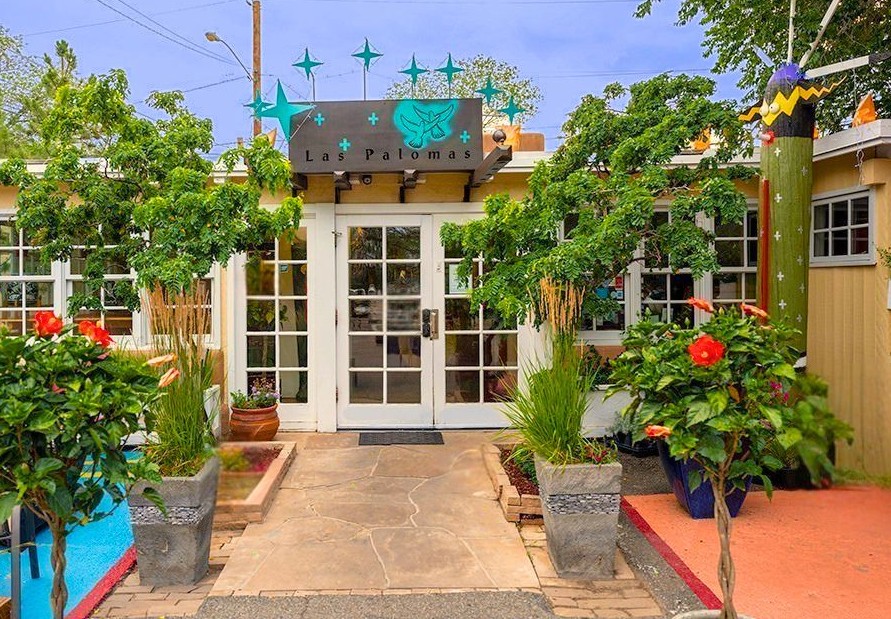
Santa Fe's standout LGBTQ+ lodging is the Inn of the Turquoise Bear, the gay-owned historic bed-and-breakfast in the former home of poet Witter Bynner, near the Plaza on East Buena Vista Street. El Rey Court on Cerrillos Road is a design-forward hotel that is genuinely LGBTQ-welcoming and home to La Reina's Queer Night. Other centrally located options around the Plaza and Railyard — including Las Palomas, Hotel Chimayó, the Eldorado and boutique inns — offer a range of budgets. Rooms are most expensive during summer, Indian Market (August) and the Opera season.
Santa Fe is considered very safe for LGBTQ+ travelers. New Mexico legalized same-sex marriage in 2013, and the state Human Rights Act prohibits discrimination based on sexual orientation and gender identity in employment, housing and public accommodation. New Mexico also bans conversion therapy for minors and is a shield-law state protecting access to gender-affirming care. As always, exercise normal urban precautions. The community is well-organized, and the Human Rights Alliance's PRIDE Center is the main hub for resources and connection.
Transportation
Santa Fe's compact historic center is best explored on foot. The New Mexico Rail Runner Express commuter train connects Santa Fe with Albuquerque and points south, and Amtrak's Southwest Chief stops at Lamy, about 18 miles from downtown (with a shuttle connection). Santa Fe Regional Airport (SAF) offers limited connections, while most visitors fly into Albuquerque International Sunport (ABQ), about 60–65 miles south via I-25. Rideshare operates in town, but a rental car is useful for exploring the wider region.
Food and Dining
Santa Fe's food scene is a major draw, built around New Mexican cuisine and its signature red and green chile alongside contemporary American and international restaurants. The Railyard Farmers Market (Saturday mornings, roughly May through November) is a community fixture, and many downtown restaurants are LGBTQ+-owned or consistently welcoming.
Set in the foothills of the Sangre de Cristo Mountains, Santa Fe offers easy access to Bandelier National Monument (ancient Pueblo cliff dwellings, about 40 miles), Kasha-Katuwe Tent Rocks National Monument, and the Turquoise Trail Scenic Byway toward Albuquerque through historic mining and art towns. Nearby Pueblo communities such as San Ildefonso (famous for black pottery) and Tesuque are also worth a visit.
Climate and Best Time to Visit
Santa Fe's high-desert elevation creates a temperate climate with big seasonal swings. Summers (June–August) are warm with afternoon thunderstorms; fall (September–November) brings mild days and golden aspens; winters can be cold with occasional snow; spring is variable and windy. Most visitors prefer summer and fall, when the city is liveliest — and priciest.
よくある質問
Santa Fe has a history of welcoming LGBTQ+ people, with same-sex marriage legalized in New Mexico in 2013. The city's cultural brew has welcomed outsiders and misfits, including LGBTQ+ individuals, since at least the mid-20th century.
Santa Fe is thoroughly integrated rather than having a distinct gay neighborhood. The downtown Plaza area is the heart of the city where most visitors spend their time, and many restaurants and bars in this area are frequented by LGBTQ+ locals and visitors.
Santa Fe's LGBTQ+ nightlife is modest and event-driven rather than centered on dedicated gay bars — the city has none full-time. The most reliable queer anchor is Queer Night every Monday at La Reina, the mezcal bar inside El Rey Court on Cerrillos Road. The Matador, a basement dive off the Plaza, is widely considered the closest thing to a gay bar and draws a queer crowd, while spots like The Mystic and Cowgirl BBQ host recurring queer nights and karaoke. Most social life flows through welcoming restaurants, galleries and community events.
Santa Fe Pride is held in late June and organized by the Human Rights Alliance of Santa Fe. The centerpiece is PRIDE on the Plaza — a festival and gathering in the historic downtown Plaza — alongside ancillary events around town. The 2026 celebration took place on Saturday, June 27. It is community-focused rather than massive in scale.
Santa Fe Pride weekend (late June) is one of the busier times to visit, so book accommodations well in advance. Programming centers on PRIDE on the Plaza downtown, with a festival, live music, community booths and parties hosted by area bars and hotels. Note Santa Fe's 7,199-foot elevation — pace yourself and stay hydrated.
For up-to-date information on current gay-friendly bars, cafes, and hangouts, checking local LGBTQ+ travel resources or contacting the Santa Fe Convention & Visitors Bureau upon arrival is advisable.




 ゲイバー&クラブ
おすすめ
(235)