China does not have a law explicitly criminalising same-sex relationships. Homosexuality was decriminalised in 1997 and removed from the official list of mental disorders in 2001. However, this absence of formal criminalisation does not mean safety or acceptance. The government does not recognise same-sex marriage or partnerships, and LGBTQ+ expression and community organising face systematic restrictions. In recent years, the political climate has become less permissive: social media companies have been pressured to remove LGBTQ+ content, dating apps have been intermittently blocked or restricted, and government censorship of LGBTQ+ topics has intensified. There have been no major recent prosecutions specifically for same-sex relationships in Lanzhou or Gansu Province that are publicly documented, but this does not indicate safety—it reflects the fact that most LGBTQ+ people avoid visibility entirely.
The legal risks are indirect but real: same-sex couples cannot marry or access spousal rights; adoption is impossible; and any public LGBTQ+ activism or content creation risks being classified as "spreading obscenity" or "harming social morality," charges that carry fines and detention. For foreign travellers, enforcement is less likely than for residents, but the legal environment is unpredictable. Political campaigns and public moral crackdowns can shift enforcement suddenly. Travellers should assume no legal protection for same-sex relationships and avoid any behaviour that courts visibility.
PRACTICAL SAFETY AND DISCRETION
Discretion is not a choice in Lanzhou—it is a necessary condition of safety. Same-sex couples should not hold hands, embrace, or display any physical affection in public. This applies to streets, parks, restaurants, and public transport. A brief touch or hand-hold may seem innocuous to Western travellers, but it draws immediate attention and negative reactions in Lanzhou. Locals will stare, comment, or express hostility. While violent assault on foreigners is uncommon, public humiliation, being asked to leave venues, or police involvement is a real possibility.
Digital security is critical. WeChat, Alipay, and other Chinese apps are monitored by the state, and the government has a track record of using data to identify and pressure LGBTQ+ individuals. Avoid discussing sexuality, relationships, or LGBTQ+ matters on any platform that operates in China. Dating apps like Grindr and Blued have faced intermittent blocking and surveillance; if you use them, understand that activity may be logged and could theoretically be used against you. Avoid connecting to public WiFi for sensitive browsing.
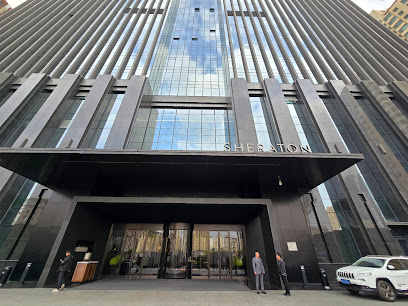
Hotel policies are a practical consideration. International chains (Marriott, Hilton, Accor, InterContinental) will typically accept same-sex couples in a shared room without issue. They are accustomed to international guests and follow global standards. State-owned hotels, budget hostels, and family-run guesthouses often will not. When booking, use international platforms (Booking.com, Expedia, Hotels.com) rather than local Chinese booking sites; these platforms require hotels to comply with their policies, which include non-discrimination on the basis of sexual orientation. Arrive with your booking confirmation visible. If refused, calmly request to speak to management and cite your booking confirmation. International brands enforce their policies; local establishments may not.
Avoiding attention is the overarching rule. Do not discuss sexuality with hotel staff, taxi drivers, restaurant workers, or new acquaintances. Do not seek out or ask about LGBTQ+ venues or communities—this makes you suspicious and exposes local people to risk. Do not post on social media from Lanzhou about LGBTQ+ matters, even after you leave; the internet is not private in China, and any post can have consequences for people you met. If approached by locals who are curious about your relationship, deflect politely and vaguely. Assume all public spaces are places where you need to present as heterosexual or maintain distance.
DISCREET SOCIALISING
There are no openly gay bars, clubs, saunas, or neighbourhoods in Lanzhou. LGBTQ+ people exist and socialise, but entirely within private networks and discreet digital channels. For travellers, this means planned, private interaction is possible, but finding it requires existing connections.
Some international hotels in central Lanzhou—particularly upscale chains in Chengguan District—have quiet hotel bars where mixed groups of visitors and expats gather. These are not LGBTQ+ spaces, but they are environments where people do not conform to rigid local social norms and where staff are less likely to intervene in the presence of foreign customers. A quiet corner or discrete conversation in such a space is tolerable. However, this is not a social scene; it is simply a marginally safer background. Do not use hotel bars as a meeting point or treat them as gay-friendly spaces.
Expat communities in Lanzhou are small and scattered. Universities (Lanzhou University, Northwest University) have some international faculty and students, and these circles can include LGBTQ+ people. However, entering these circles requires genuine personal or professional connection, not tourism. Attempting to seek out expat communities specifically to find LGBTQ+ socialising draws attention and is risky for the locals involved.
The reality is that for most travellers, discreet socialising in Lanzhou means private time with a travel partner, not meeting the local community. This is the honest assessment: you cannot safely access an LGBTQ+ social scene here, and seeking one puts both yourself and local people at risk.
MAINSTREAM TRAVEL HIGHLIGHTS
Lanzhou has substantial mainstream appeal independent of any LGBTQ+ considerations. It is a major Silk Road city with historical and cultural significance. Key attractions include:
- Lanzhou Interpretation of the Silk Road Museum: A comprehensive museum covering the history and archaeology of the Silk Road trade routes, with artefacts spanning centuries.
- Five Spring Mountain (Wuquan Shan): A scenic area with temples, parks, and panoramic views of the Yellow River and city.
- White Pagoda Mountain (Baita Shan): A Buddhist site with temples, gardens, and views from the summit, accessible by cable car.
- Bingling Temple (near Lanzhou): A cave temple complex carved into cliffs overlooking the Yellow River, accessible by boat; it contains Buddhist statues dating back over a thousand years.
- Lanzhou Night Markets and Food Culture: The city is renowned for hand-pulled noodles (lamian), beef ramen (lanzhou lamian), kebabs, and street food. Night markets are vibrant and worth visiting.
- Yellow River Scenic Area: Walks along the river, parks, and leisure facilities.
Nightlife in the mainstream sense exists: there are karaoke lounges (KTV), restaurants with late-night dining, and some bars. These are ordinary venues catering to local and business travellers. They are not LGBTQ+ spaces, and no special assumption should be made about them. Behaviour in these spaces should be conservative and conform to local norms.
WHERE TO STAY
Accommodation choice is significant for safety and comfort. International chains include:
- Lanzhou Lanwan Marriott Hotel (Chengguan District): Standard Marriott with business facilities, central location, reliable policy on room assignments.
- Lanzhou Dunhuang Hotel (Chengguan District): International standard, good location.
- Various Accor properties: Ibis and other Accor brands operate in Lanzhou with consistent policies.
These hotels will reliably accept same-sex couples in shared rooms without issue or comment. They are more expensive than local alternatives but offer security, reliability, and professional service. Book in advance through international platforms to ensure your booking is confirmed and to have documentation to present at check-in.
Budget alternatives include hostels and guesthouses, many of which are reluctant to accommodate same-sex couples. If you choose budget accommodation, book through international platforms (Booking.com, Hostelworld), not Chinese platforms, and be prepared for potential friction or refusal. Have your booking confirmation ready. If refused, you have a claim against the booking platform and can request alternative accommodation or a refund.
The area around Lanzhou Train Station and Lanzhou Airport has developed accommodation infrastructure; these areas are more accustomed to foreign travellers and are marginally safer choices for same-sex couples, though international chains are still the most reliable option.
Lanzhou is worth visiting for its historical, cultural, and natural significance. However, it is not appropriate for all LGBTQ+ travellers in the same way it might be for heterosexual or cisgender tourists.
If you are: a traveller who is comfortable with complete discretion, experienced with conservative environments, travelling with a partner and able to present as unattached in public, or visiting for specific cultural or professional reasons, then Lanzhou is navigable. You will need to adopt a mode of careful privacy, but mainstream tourism is possible. Book accommodation carefully, avoid seeking LGBTQ+ scenes, and treat the city as a historical and cultural destination without any expectation of LGBTQ+ social life.
If you are: someone newly out, looking for LGBTQ+ community or nightlife, uncomfortable with sustained discretion, or visiting primarily for social reasons, then Lanzhou is not a suitable destination. The absence of openly LGBTQ+ spaces, the necessity of hiding your identity in all public contexts, and the political context will likely feel isolating and stressful rather than enjoyable. There are more welcoming destinations in East and Southeast Asia where you can travel with less restriction.
Transgender and non-binary travellers face additional considerations. Gender non-conformity attracts significant attention in Lanzhou. If your appearance codes as non-binary or transgender, you will be visibly unusual and draw stares, comments, and possible refusal of service. Hotel check-in may be complicated; staff may question documents or express discomfort. This is not a safe or comfortable environment for gender-non-conforming expression. Consider carefully whether to visit.
CONCLUSION
Lanzhou is a historically rich and culturally significant city. It is accessible to LGBTQ+ travellers who prioritise discretion, understand the legal and social context, and travel with realistic expectations. Do not come seeking community or nightlife. Do not come if discretion feels like a burden. Come for the Silk Road history, the temples, the food, and the landscape—and do so quietly, safely, and with full awareness of the political environment. Book international hotels, avoid digital visibility, refrain from public displays of affection, and keep your personal life private. In those conditions, a visit is possible; outside them, it carries genuine risk.


 飯店