Maastricht, the capital of Limburg in the far south of the Netherlands, blends medieval charm with easy-going Dutch tolerance. A city of roughly 120,000 people wedged against the Belgian and German borders, it is compact, walkable and shaped by a large international student population at Maastricht University. Its LGBTQ+ scene is small but genuine: a couple of long-running bars, a strong regional organisation and an annual Pride, all set in a city where acceptance is simply part of everyday life rather than concentrated in a gay district.
History and the Local Scene
The Netherlands legalised same-sex marriage in 2001, the first country in the world to do so, and backs it with comprehensive anti-discrimination law. In Maastricht the organised scene grew around COC Limburg, the provincial branch of the national LGBTQ+ rights organisation, whose volunteer-run bar Cafe Rose opened in 1979 and remains the oldest gay bar in the city and the province. The daytime-to-evening Sway Cafe on the Markt adds a second everyday anchor. Beyond these, most of Maastricht's cafes, restaurants and clubs are simply mixed and welcoming rather than specifically gay-branded, reflecting how normalised LGBTQ+ life is here.
Neighbourhoods and Districts
Binnenstad (old town, west bank): This is the heart of the gay scene. The two dedicated venues sit here, a few minutes apart, around the Markt and the nearby Vrijthof, the city's grand central square overlooked by the Sint-Janskerk and Sint-Servaasbasiliek. Everything is within an easy walk.
Jekerkwartier: The atmospheric south-western corner of the old town, full of independent bars, restaurants and galleries along the little Jeker river. Not a gay quarter, but a relaxed, arty area many LGBTQ+ visitors enjoy.
Wyck and Ceramique (east bank): Across the Maas, Wyck offers boutique shopping and good dining and Ceramique brings modern architecture and museums. Pleasant and welcoming, though the everyday gay venues are on the west-bank Binnenstad side, not here.
Sphinxkwartier / Boschstraat: The regenerated former industrial quarter north of the centre, home to the Muziekgieterij music venue where COC Limburg's Queer Factory parties are held.
Bars, Sauna and Community
Cafe Rose (Bogaardenstraat 43): The oldest LGBTQ+ bar in Maastricht and Limburg, opened in 1979 and run by volunteers of COC Limburg. Expect a friendly, unpretentious crowd, a Thursday student night and weekend openings, plus pub quizzes, karaoke, occasional drag and the Pride afterparty.
Sway Cafe (Markt 39): A gay cafe-bar right on the market square, open through the day and into the evening and often described by visitors as the city's one everyday gay bar. A good, central spot to start the night.
COC Limburg (Bogaardenstraat 43): The regional LGBTQ+ organisation behind Cafe Rose, also running the Jong&Out youth group (second Saturday of the month), the Dionyx queer-student network and the Queer Factory parties.
Kelmonderhof (Kelmonderhofweg 51, Beek): The region's only gay sauna, about 10 km north of the centre near Maastricht-Aachen airport. A converted farmhouse with Finnish and steam saunas, indoor and outdoor pools, a bar and private relaxation cabins. Men-only days run Sunday to Wednesday, with mixed days Thursday to Saturday; closed Tuesdays. You will need a car or taxi to reach it.
Pride Maastricht takes place every year in late June (the 2026 edition was on Saturday 27 June) with a march through the city centre from the Mosae Forum area toward the Tapijn site, followed by an afternoon festival and parties. It is a community-run, relatively intimate celebration rather than a mass tourist event. Details and dates are published each year at pridemaastricht.nl. COC Limburg's Queer Factory parties and the monthly Jong&Out meetups fill out the calendar. The national Roze Zaterdag rotates between other Dutch cities and is not usually held in Maastricht.
Where to Stay
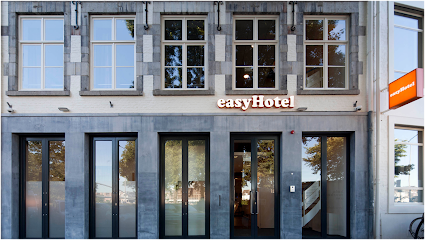
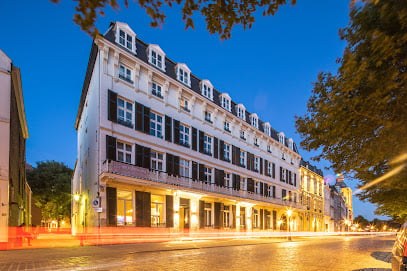
Maastricht has accommodation for every budget within easy walking distance of the Binnenstad venues, from boutique hotels in the old town to riverside hostels on the Maasboulevard. Dutch hotels are uniformly LGBTQ+-welcoming; there is no gay-specific property, but central choices put you minutes from Cafe Rose and Sway.
Maastricht is small enough to cross on foot, and buses (there are no trams) serve outlying areas; cycling is easy and popular. By train, Maastricht Centraal connects to Amsterdam in about two and a half hours, to Liege in Belgium in around 30 minutes, and to Aachen in Germany with a change; the nearest full-service airports are Eindhoven and Brussels.
Day Trips
Liege, Belgium (about 30 km, 30 minutes by train): the nearest big cross-border scene, and home to the region's closest gay sauna with a darkroom, L'Aquari-Hom. Aachen, Germany (about 35 km): a historic cathedral city with its own gay bars, cruising spots and an annual CSD. Valkenburg (about 12 km): marl caves, a hilltop ruin and thermal baths in the gentle Limburg hills. The Meuse (Maas) valley offers cycling and vineyard visits.
Safety and Practicalities
The Netherlands is one of the safest countries in the world for LGBTQ+ travellers and Maastricht is no exception; same-sex couples can hold hands and show affection openly. English is spoken almost everywhere, the euro is the currency, and EU/EEA visitors enter freely while others should check requirements in advance.
Conclusion
Maastricht will not overwhelm you with a huge gay scene, and that is the point. A pair of welcoming bars, a committed local organisation, a heartfelt June Pride and a nearby sauna sit inside one of the prettiest and most relaxed cities in the Netherlands, ideally placed for exploring three countries at once.



 同志酒吧與俱樂部
精選
(126)