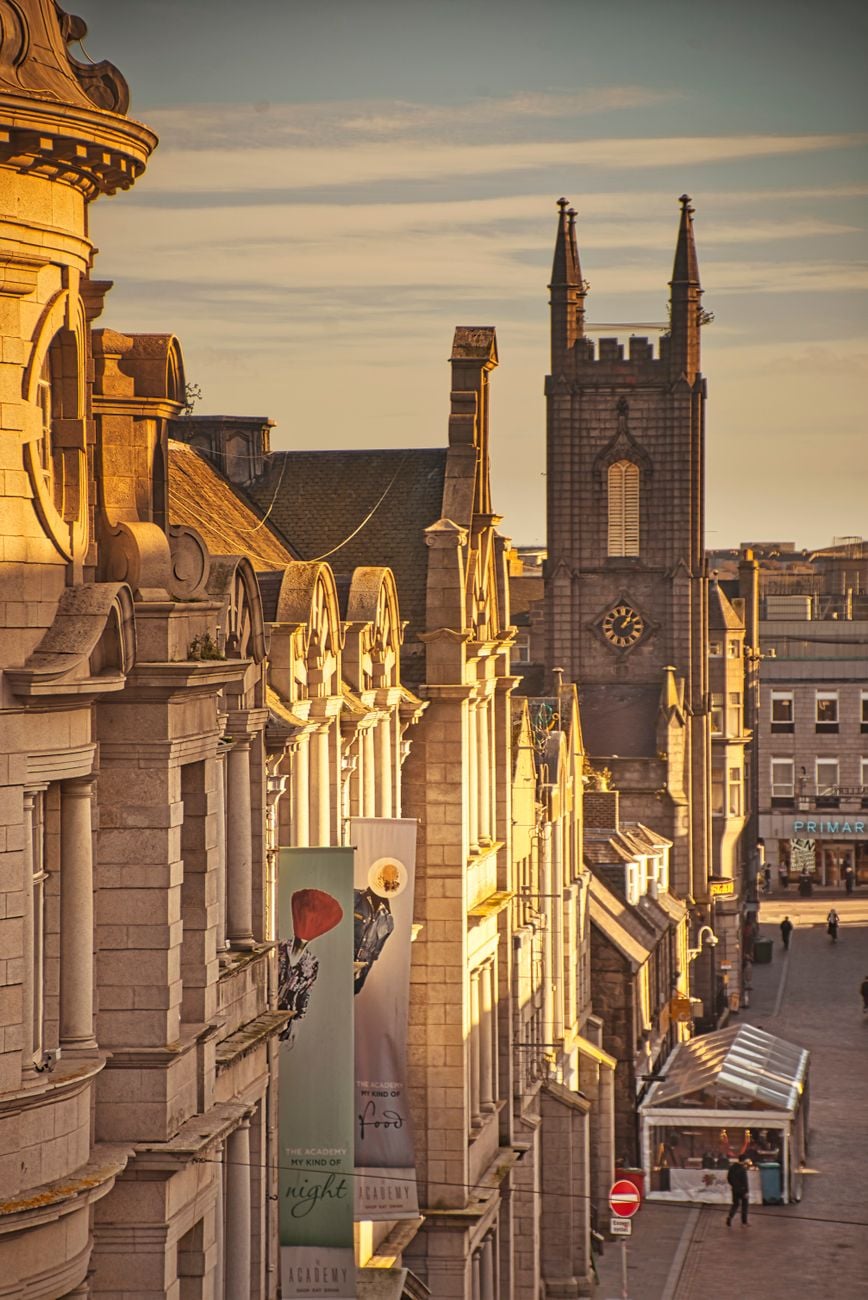
Aberdeen's queer history, like much of Scotland's, has only recently gained visibility. The city's economy, historically tied to fishing and now dominated by oil and gas, fostered a diverse population and contributed to gradual social change. While homosexuality was decriminalised in Scotland in 1981, acceptance evolved at a slower pace in some areas. The modern LGBTQ+ community in Aberdeen has seen steady growth since the 1990s, with increased visibility in the 2010s marked by regular Pride events and the emergence of welcoming establishments.
Today, Aberdeen's LGBTQ+ scene, while smaller than in larger Scottish cities, benefits from active community networks. Local groups and volunteers contribute to social events and support initiatives. The community tends to be dispersed throughout the city rather than concentrated in a single district, a reflection of Aberdeen's urban layout and the evolving nature of queer spaces.
Navigating the City: Neighborhoods and Layout
Aberdeen's city center is compact and easily explored on foot. Union Street serves as the main commercial thoroughfare, hosting shops, restaurants, and bars. The area around Union Street, including Belmont Street, Dee Street, and Market Street, is where many of the city center's social and hospitality venues are located.
The West End, extending west from Union Street, is primarily residential, featuring Victorian and Edwardian architecture. This area has become popular with young professionals and LGBTQ+ residents seeking a quieter setting with convenient access to city center amenities.
The Beach area, approximately one mile east of the city center, offers a promenade, amusement arcade, and various cafes and restaurants. It provides a pleasant setting for socializing and outdoor activities.
Key Venues and Social Spaces
Aberdeen's LGBTQ+ nightlife centres on one dedicated venue. Cheerz Bar & Nightclub, on Exchange Street in the city centre, has been the city's only dedicated LGBTQ+ bar and club since 1996 and serves as the community's social hub, hosting drag shows, karaoke, quiz nights and weekend club nights. It draws a friendly mix of locals, students and visitors, and remains the reliable heart of a small but resilient scene.
Beyond dedicated LGBTQ+ venues, several other city center bars and pubs have become known as LGBTQ+-friendly spaces where queer individuals socialize comfortably. Given the size of the scene, venues often attract diverse crowds, and the community may gather across multiple locations.
Compared to larger Scottish cities, Aberdeen has not traditionally had a significant number of dedicated saunas or extensive gay-specific commercial infrastructure, which is more a reflection of the city's scale than a lack of community presence.
Pride and Community Events
The city's main Pride celebration is Grampian Pride, organised by the local LGBT+ charity Four Pillars and held under that name since 2018. It usually takes place in late May or early June, with a parade along Union Street followed by a free Pride village of live music, stalls and community stands, most recently at Duthie Park (the 2025 edition ran on 7 June). Note that in 2026 the central parade is paused for financial reasons, with Four Pillars running a programme of smaller LGBTQ+ events across June (Pride Month) instead; a full parade is hoped to return in future years.
The event has become a notable part of Aberdeen's cultural calendar, attracting both LGBTQ+ individuals and allies. Participation has increased over the years, and local businesses increasingly demonstrate visible support. The Pride celebration reflects the city's ongoing movement towards greater inclusion and visibility.
Throughout the year, the LGBTQ+ community organizes social meetups, quiz nights, and informal gatherings, often promoted through community social media channels.
Accommodation Options
Aberdeen offers a range of accommodation, from budget-friendly hostels to hotels. The city center provides convenient access to venues and restaurants. Several independent guesthouses and bed-and-breakfasts operate throughout the city and West End.
The West End area offers a quieter residential atmosphere while remaining within walking distance of the city center, appealing to those seeking less bustle but good access to amenities.
The Beach area provides seaside accommodation, though it is somewhat removed from the city center's social hubs.
Booking accommodation in advance is advisable during Pride week in August and during the peak summer tourist season.
Aberdeen is generally considered a safe city for LGBTQ+ travelers. Scotland's legal framework provides strong protections, including comprehensive equality legislation and hate crime laws. Public displays of affection between same-sex couples are typically accepted in the city center and social venues.
As with any urban environment, standard travel safety practices are recommended: be aware of your surroundings, avoid isolated areas late at night, and use established taxi firms or ride-sharing apps for late-night travel. The city center is generally well-lit.
Aberdeen is not known for particular tensions or areas where LGBTQ+ individuals would feel unwelcome within the city center or established social spaces. More conservative attitudes might be encountered in some outer residential areas or nearby rural regions, though this is not unique to Aberdeen.
Weather is a significant consideration: Aberdeen experiences cold, wet conditions for much of the year. Visitors should pack accordingly. Summers (June-August) are mild with long daylight hours; winters (December-February) are cold and dark.
Getting Around: Transportation
Aberdeen Airport is located about seven miles southwest of the city center. Buses and taxis provide transport to the city center, with journeys typically taking 20-30 minutes depending on traffic.
The city center rail station offers connections to Edinburgh (approximately 2.5 hours), Glasgow (approximately 3 hours), and other Scottish destinations, making day trips or onward travel feasible.
Within Aberdeen, walking is the most practical way to navigate the compact city center. Local buses serve outlying areas and surrounding regions.
Taxis and ride-sharing apps provide alternatives for late-night travel or when carrying luggage.
Food and Drink
Aberdeen's food scene includes a strong emphasis on seafood, reflecting its coastal location. The harbor area features several seafood restaurants offering fresh local produce.
Union Street and its surrounding areas provide a diverse range of dining options, from casual cafes to more formal establishments. Vegetarian and vegan choices are increasingly available in city center restaurants.
Traditional Scottish cuisine is widely available. Local specialties include Cullen skink, Scottish salmon, and Angus beef.
The bar scene extends beyond exclusively gay venues. Many pubs and cocktail bars welcome LGBTQ+ customers. Independent cafes also offer daytime social spaces.
Day Trips and Nearby Attractions
Aberdeen's location offers good access to the Scottish Highlands and coastal areas.
Dunnottar Castle, a ruined fortress situated on a coastal cliff about 30 miles south, is a notable landmark. Access involves a short cliff walk and offers dramatic views. A car or organized tour is generally required to visit.
The Cairngorms National Park is approximately 50-60 miles west of Aberdeen.
Aberdeen 的 Pride 即 Grampian Pride,由慈善機構 Four Pillars 主辦,通常於五月底或六月初舉行(2025 年一屆於 6 月 7 日登場,包括 Union Street 遊行及 Duthie Park 的 Pride Village)。2026 年因財務原因暫停中央遊行,改為在整個六月舉辦一系列較小型的 LGBTQ+ 活動;最新日期請查閱 Four Pillars。


 同志酒吧與俱樂部
精選
(135)