The honest summary: Cochabamba is Bolivia's third city, a mild valley city at about 2,560 m, nicknamed the city of eternal spring, and home to the public university UMSS. It does not have a gay scene in the bar-and-sauna sense. We could not confirm a single dedicated gay bar, club or sauna operating in 2026: the places that used to call themselves LGBT clubs have gone quiet online, and the few new listings on Google have no second source. What Cochabamba does have is a real community: an annual Pride march on El Prado at the end of June (Saturday 27 June in 2026), a trans-led support house, an HIV clinic that serves gay men and trans women, and a social life that runs mostly through WhatsApp groups, TikTok and the apps.
Legal in one line: Sex between men has been legal in Bolivia since 1832. The 2009 constitution bans discrimination on sexual orientation and gender identity (Art. 14) but defines marriage as between a man and a woman (Art. 63). Ley 045 (2010) makes discrimination a criminal offence, Ley 807 (2016) lets adults change legal name and sex without surgery, and since 20 March 2023 the civil registry (SERECI) must register same-sex "uniones libres" (de facto unions) nationwide after Constitutional Court ruling SCP 0577/2022. Same-sex marriage is not legal.
About the city
The 2024 census counted 661,484 people in the municipality (Cercado) and just over 2 million in the department; the mayor disputes the city figure. With Sacaba and Quillacollo the metro area is well over a million. The climate is semi-arid and spring-like most of the year (13 to 27 °C), with rain from November to March and cool nights in June and July, which matters if you come for the Pride march at 20:00.
The old centre is the grid around Plaza 14 de Septiembre, with the cathedral and the arcaded streets. Calle España, running north from the square, has the centre's cafés and small bars. Further north, El Prado (Avenida Ballivián) is the tree-lined boulevard that ends at Plaza de las Banderas, and beyond it La Recoleta, Av. Pando, Av. Portales and Av. América are where most of the city's nightlife is. The Cristo de la Concordia stands on Cerro San Pedro, east of the centre; take the cable car up.
Where the scene actually is
Not in a district and not in a bar. None of the international gay guides we checked (Travel Gay, Spartacus, Patroc, misterb&b) lists a current Cochabamba venue. Our search of Google Maps, Bolivian press and social media turned up names, but nothing we could confirm as an LGBTQ+ venue that is open now.
What people describe instead is a scene that meets at private parties, at karaoke nights promoted on TikTok, at a handful of mainstream discos on and around El Prado and La Recoleta where queer groups go together, and on Grindr and the other apps. If you want to go out, the practical route is to ask locally: the collectives that organise Pride, and people you meet on the apps, will know which karaoke or party night is on that weekend. We'd rather say that plainly than list mainstream clubs as gay bars.
Bars & Clubs
Bars and clubs we could not confirm
A few names come up when you search for gay nightlife in Cochabamba. We are not listing any of them as venues, and here is why.
Babel Discoteca, on Av. Libertador Bolívar near Av. América, called itself "the best LGBT nightclub" on Facebook, and Opinión covered talent nights there in 2018. We found no dated activity from 2025 or 2026 and no current Google listing, so treat it as closed or dormant until you see a recent post.
"A Quién Le Importa" (named after the Alaska y Dinarama anthem) promotes itself on TikTok as a VIP karaoke disco bar open Thursday to Sunday. We couldn't find an address or any source that confirms it as an LGBTQ+ venue.
Libertad Lounge Bar was once described as the first LGBT lounge bar in the city. Its Facebook page shows no recent activity.
Vogue club has a Google listing near Av. América with the one-line description "Top bar LGBT", but no reviews, no address and nothing else on the web.
Sauna Privilegio is listed on Google as a "gay sauna" and a "club solo para hombres" near Av. Atahualpa in the north of the city. It has two reviews and no other source, so we can't vouch for it.
Saunas
Saunas, cinemas and cruising
Cochabamba has dozens of "saunas", but in Bolivia that word usually means a family steam bath or a hotel spa, not a gay bathhouse. We found no confirmed gay sauna, no gay cinema and no cruising area that any current guide or forum names. Bolivia's only well-documented gay saunas are in El Alto, next to La Paz. With no current source naming a spot, we don't list outdoor cruising here.
Closed or changed, gone but still Googled
The CDVIR (Centro Departamental de Vigilancia y Referencia), the departmental HIV centre near Parque Demetrio Canelas, closed in March 2024 for lack of funds, according to Los Tiempos. HIV care moved to the Ticti Norte and Sebastián Pagador health centres. Older lists of "gay clubs in Cochabamba" on aggregator sites mix in food stalls, event halls and brothels; we checked the ones that still appear and none is an LGBTQ+ venue.
Pride & Events
Pride and events
The Marcha de las Diversidades Sexuales y de Género is Cochabamba's Pride march, and it's one of the oldest in Bolivia: the 2019 edition was billed as the 13th, and the first National Pride March was held in Cochabamba in 2013. It takes place on a Saturday evening on or just after 28 June. Recent dates were 2 July 2022, 1 July 2023 and 29 June 2024, and in 2026 Opinión reported it for Saturday 27 June from 20:00 in the city centre. The usual route runs from Plaza 14 de Septiembre along Calle España, Av. Heroínas and Av. San Martín to El Prado and ends at Plaza de las Banderas. It's organised by a coalition of local collectives, with support in some years from the Defensoría del Pueblo and the municipality, and comparsas (dance troupes) march in costume. The 2027 date had not been announced at the time of writing; expect the last Saturday of June or the first of July.
Pride & Events
Pride week usually adds smaller events: a plantón (rally) on the main square, a youth march, and film screenings at the public university, UMSS.
Community and health Casa Trans de Cochabamba is a trans-led house that offers psychological, medical and legal support and STI prevention; local press covered its work from 2024 to June 2026. Google lists it at Av. Salamanca 577 with afternoon opening on Wednesdays and Thursdays, but message them before you go.
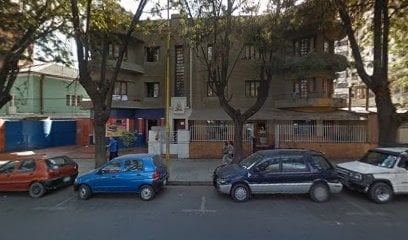
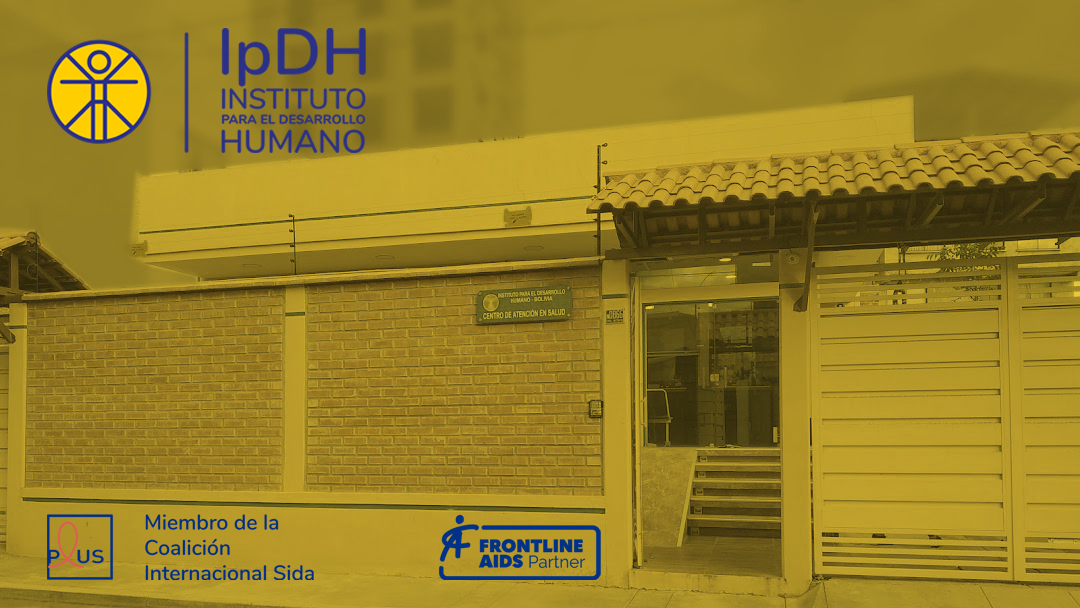
IpDH, the Instituto para el Desarrollo Humano, is an HIV and sexual-health NGO founded in 1997. Its clinic at Pasaje Mitayo 866 (between Audiencia and Tadeo Haenke, near Puente Cobija) offers HIV and hepatitis tests and care for key populations, including gay men and trans women. Google lists it as open weekdays from 08:00 and Saturday mornings.
Bolivia also has national groups with Cochabamba members, including the Colectivo TLGB de Bolivia and the trans network Red Trébol, founded in 2008. Their local activity is easiest to follow around Pride.
Safety
Safety
The law protects you on paper, but Bolivia is socially conservative, and the Catholic and evangelical churches are influential. Travel guides advise against public displays of affection, and outside Pride you'll rarely see same-sex couples holding hands. Activists report assaults on LGBTQ+ people every year, especially trans women: in February 2021 a 19-year-old trans woman was murdered in Cochabamba and the UN called for a hate-crime investigation. Be discreet, meet app dates in public places first, and use a radio-taxi or ride app at night.
General city safety matters as much. La Cancha, the huge market south of the centre, is known for pickpockets and bag-slashing, so carry little. Robberies have been reported on the steps up to the Cristo de la Concordia, so go up by cable car or in daylight with others. Avoid the bus terminal area after dark.
Getting there and around
Jorge Wilstermann International Airport (CBB) is about 4 km south-west of the centre, around 15 minutes by taxi, and it's the home base of the national airline BoA, with domestic flights across Bolivia. Long-distance buses connect to La Paz and Santa Cruz. In town, the centre and El Prado are walkable. About 70 micro and minibus lines and fixed-route shared taxis (trufis) cover the rest, and the Mi Tren light rail, opened in 2022, links the city with its neighbouring municipalities. At night, take a radio-taxi.
Where to Stay
Where to stay
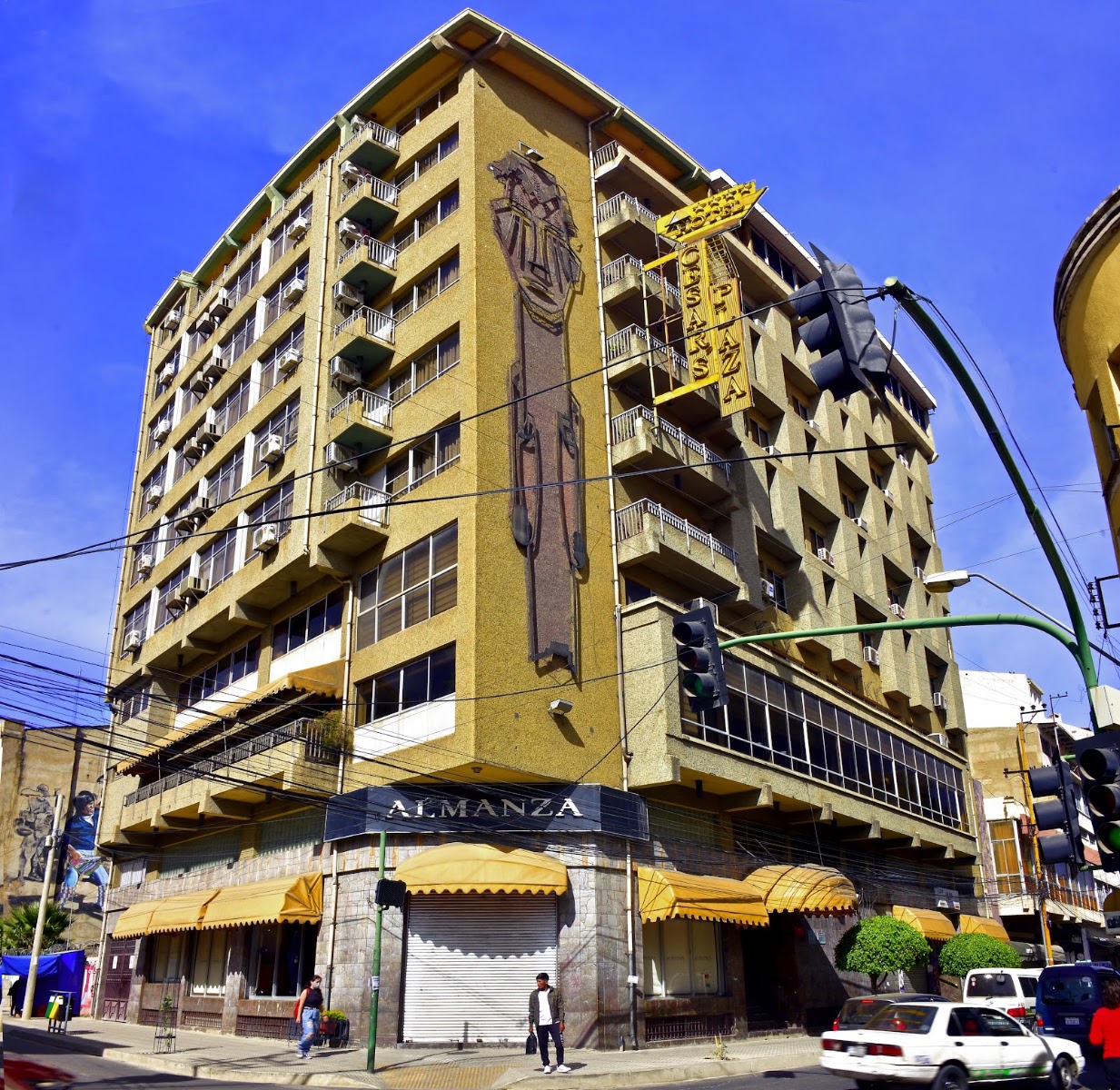
For walking access to the old town and El Prado, stay near Plaza 14 de Septiembre: Cesar's Plaza is a block from the square, and Casa Cochabamba and NATIVA Suites are small places a few blocks away. Hotel Regina sits just off El Prado. For the northern nightlife strip, Gran Hotel Cochabamba (pools, spa) in La Recoleta, Huper Hotel Boutique on Av. Portales and Catena Hotel on Pedro Blanco are the convenient picks. Running Chaski on Calle España is the budget hostel option. All are mainstream hotels. Same-sex couples booking a double room is legal; if you'd rather avoid questions, book online in advance.
A few words in Bolivian Spanish
Marcha de las Diversidades or Marcha del Orgullo is the Pride march. A 2012 "Diccionario marica" by the Bolivian writers Roberto Condori and Edgar Soliz collected words the community has reclaimed: "fresco" for a closeted man, "k'eusa", from the Aymara world, for a queer man, and "loca" and "maricón". Coming from a visitor, most of these still sound like insults, so stick to "gay" or "LGBT". "Trufi" is the shared taxi, and if you want an HIV test, ask for a "prueba rápida de VIH".
At a glance
Gay bars and clubs: none we could confirm as open in 2026.
Gay saunas: none confirmed; most "saunas" are family steam baths.
Cruising: none we list.
Pride: Saturday evening on or after 28 June (27 June 2026), El Prado.
Community: Casa Trans (Av. Salamanca); IpDH HIV clinic (Pasaje Mitayo 866).
Airport: Jorge Wilstermann (CBB), about 4 km from the centre.
Best base: around Plaza 14 de Septiembre or El Prado.
Population: 661,484 (2024 census, municipality).
沒有我們能確認在 2026 年仍營業的場所。位於 Av. Libertador Bolívar 的 Babel Discoteca 過去曾自稱是 LGBT 夜店,但我們未發現其在 2025 或 2026 年的任何活動跡象,而 Google 和 TikTok 上較新的名稱(A Quién Le Importa、Vogue club)也缺乏第二來源佐證。酷兒夜晚的活動多發生於私人派對、卡拉 OK 之夜,以及 El Prado 與 La Recoleta 一帶的主流迪斯科舞廳。建議向當地人詢問或在交友軟體上查詢該週末的活動資訊。
目前尚無經確認的男同志三溫暖。在玻利維亞,「sauna」一詞通常指家庭式蒸汽浴或飯店水療中心。有一筆 Google 地圖上的店家資料顯示,位於 Av. Atahualpa 附近的 Sauna Privilegio 自稱是男性專屬俱樂部,但僅有兩則評論且缺乏其他來源佐證。由於沒有任何現行旅遊指南或論壇提及,我們不列出台北的 cruising 區域。玻利維亞紀錄最完善的男同志三溫暖位於 El Alto,緊鄰 La Paz。
The Marcha de las Diversidades Sexuales y de Género 於 6 月 28 日當週或之後的週六傍晚舉行。2026 年的活動於 6 月 27 日(週六)晚間 8 點在市中心展開;往年日期分別為 2024 年 6 月 29 日、2023 年 7 月 1 日及 2022 年 7 月 2 日。慣常路線從 Plaza 14 de Septiembre 出發,途經 Calle España、Av. Heroínas 與 Av. San Martín,最後抵達 El Prado 和 Plaza de las Banderas。截至撰寫本文時,2027 年的日期尚未公布。
請謹慎行事。同性關係已合法化,憲法禁止歧視,且自 2023 年 3 月起可登記同性同居關係,但婚姻尚未合法,社會態度仍偏保守。除同志驕傲遊行期間外,應避免在公共場合表現親暱;透過交友軟體約會時,初次見面請選擇公開場所;夜間出行建議搭乘計程車。跨性別女性面臨最嚴重的暴力威脅:2021 年,一名 19 歲的跨性別女性在 Cochabamba 遭謀殺。關於一般安全事項,在 La Cancha 市場請看管好隨身包包,並搭乘纜車前往 Cristo de la Concordia。
IpDH(Instituto para el Desarrollo Humano)是一家成立於 1997 年的愛滋病非政府組織,在 Pasaje Mitayo 866 號設有診所,鄰近 Puente Cobija,為重點族群提供愛滋病毒與肝炎檢測及照護服務;Google 地圖顯示其平日 08:00 起開放,週六上午亦有營業。位於 Av. Salamanca 的 Casa Trans de Cochabamba 為跨性別人士提供心理、醫療與法律支援。省級 CDVIR 愛滋病毒中心已於 2024 年 3 月關閉,其病患已轉移至 Ticti Norte 與 Sebastián Pagador 健康中心。


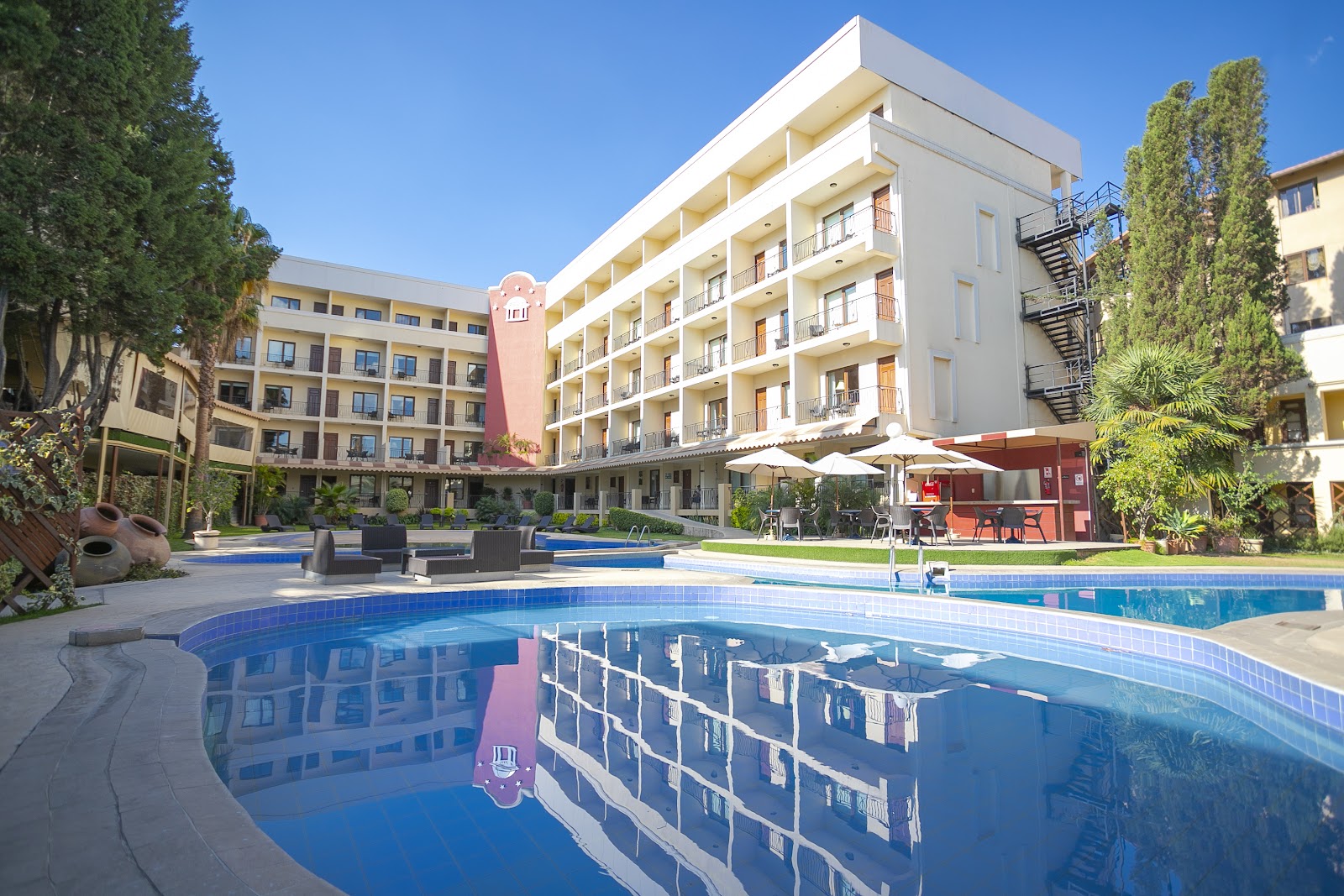 友善同志友善飯店
(3368)