
In this guide · 17 sections
- First, the thing that changes everything: the beaches are outside the city
- Lisbon at a glance
- The verified spots
- 1. Jardim do Príncipe Real
- 2. Parque Eduardo VII
- 3. Monsanto Forest Park (Alto da Serafina)
- 4. Praia do Meco
- The beach that should be first: Praia 19 (Costa da Caparica)
- When to go
- Getting around at night
- The apps
- The law in Portugal
- Health, including the urgent bit
- Safety and etiquette, the honest version
- A bit of history, because Portugal earned it late
- If Lisbon feels small
- Keep this page honest
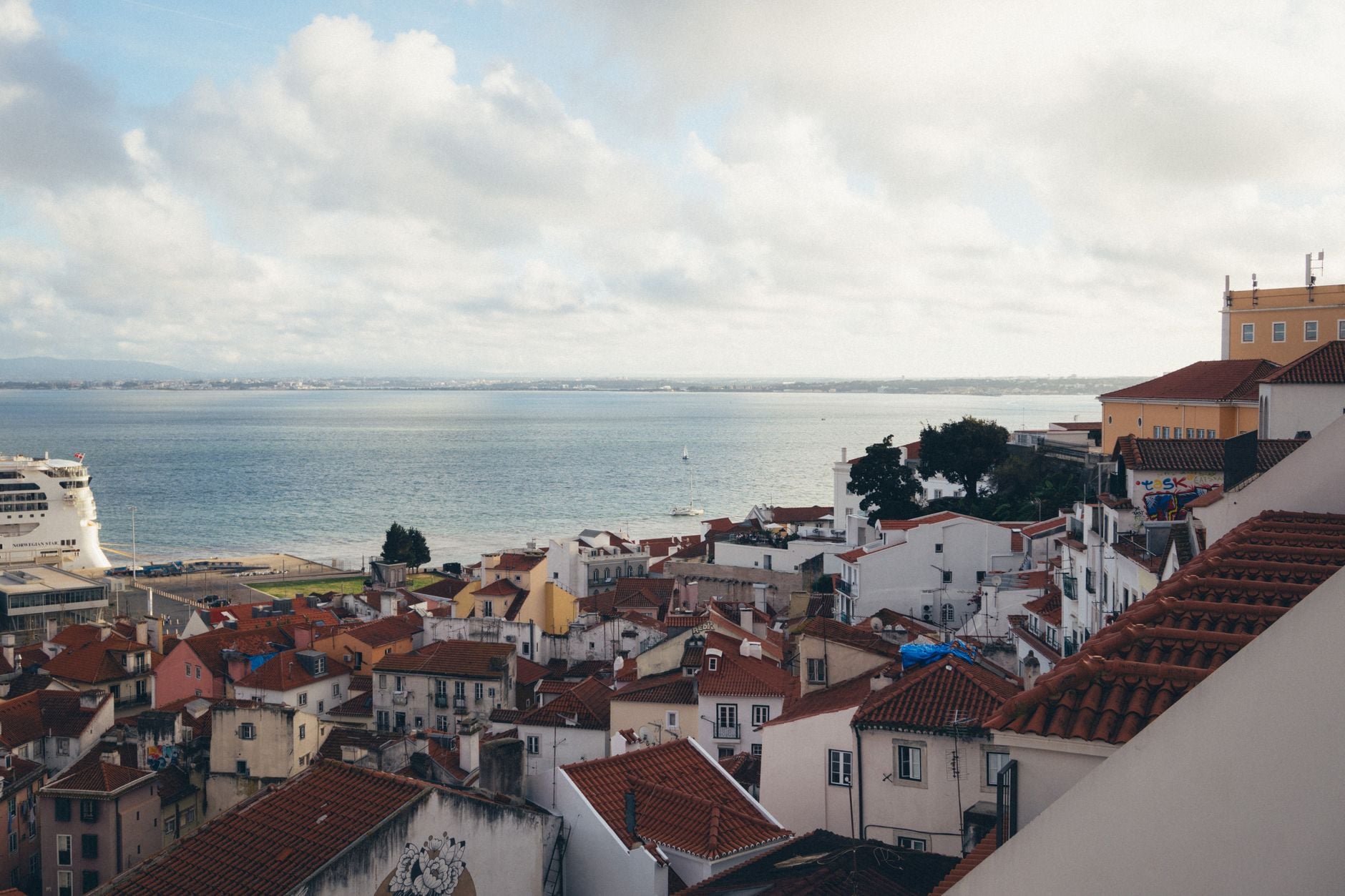
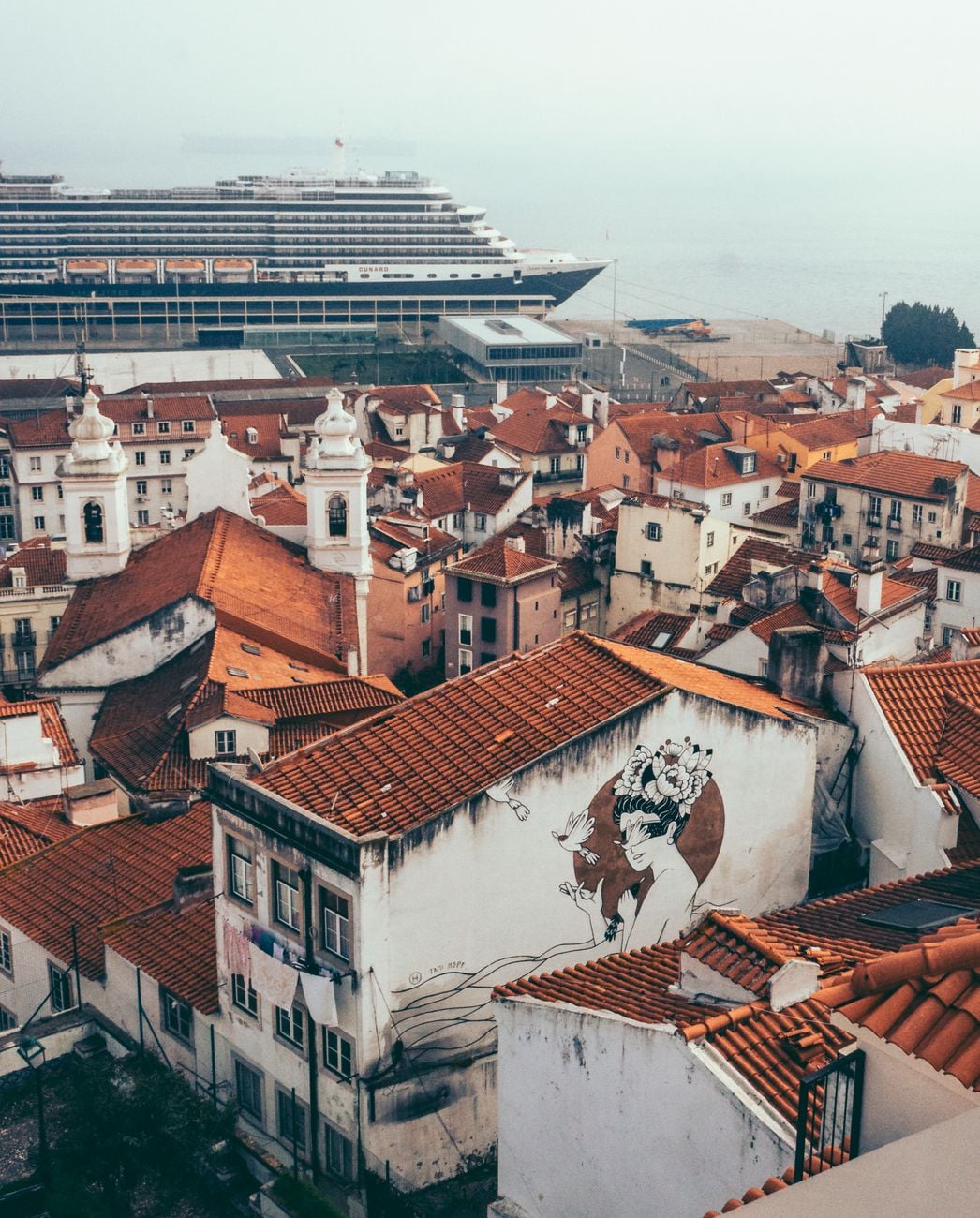
Lisbon is a city that lives outdoors and uphill. Every evening ends at a miradouro with a beer from a kiosk and a view of the river going pink; every morning starts with the realisation that the pavement, the famous black-and-white calçada, is made of polished limestone and has been trying to kill you since 1755. It is also one of the easiest cities in Europe to be gay in: 30 bars, four saunas, a gayborhood with a tree in the middle of it, and an Atlantic coast where the gay beaches have been nude since before it was legal to be anything else.
The Portuguese have two words for what this guide is about. Engate is the old one: to hook, to pick up. Pegação is the Brazilian import that most younger men use now. Neither is a secret. Cruising here isn't hidden in the way it is in colder countries; it's a daytime thing under a cedar tree as much as a midnight thing in a park, and the beaches are the real centre of it from May to October.
This guide covers the four places currently verified on GayOut's Lisbon cruising page, plus Praia 19, the beach that isn't on the cruising list but should be the first thing you plan, what each is like, when to go, how to get home, what the law says, and the things that only make sense after your first August here.
First, the thing that changes everything: the beaches are outside the city
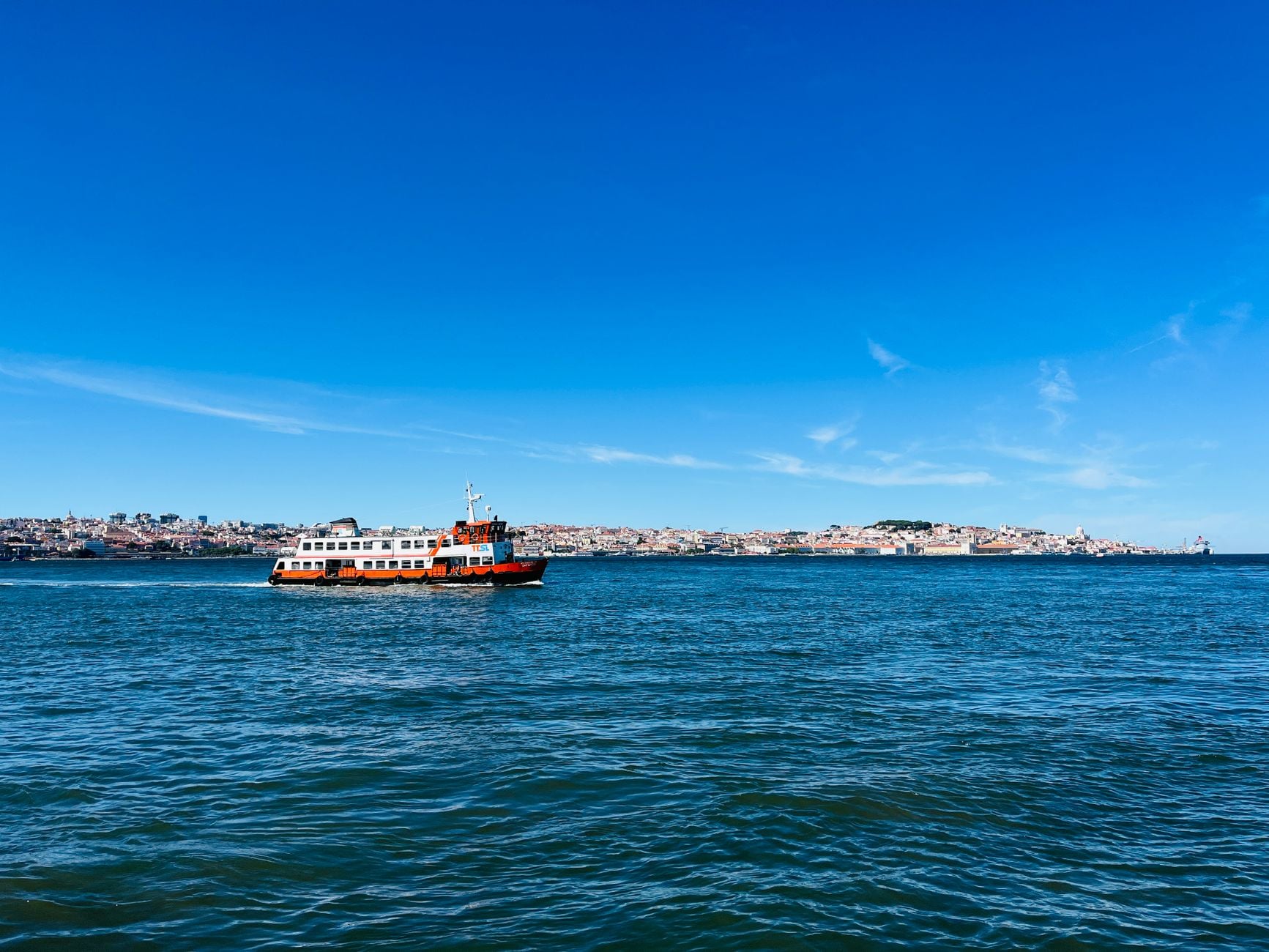
Lisbon has no beach. This surprises people. The city sits on the Tagus estuary, the water in front of the Praça do Comércio is a river, and nobody swims in it. The beaches, including both gay beaches, are across the bridge on the Costa da Caparica or forty kilometres south at Meco, and getting there is a project you plan around.
That shapes the whole scene. From May to October the serious daytime cruising is at the beach, not in the city, and a Lisbon gay weekend has a rhythm: beach until late afternoon, back across the bridge, shower, Príncipe Real at 9, Bairro Alto or Cais do Sodré at midnight, and the park or a sauna if the night goes that way. In winter the beach drops out and the city spots and saunas carry it.
Two more things about the calendar. Santos Populares in June, peaking on the night of the 12th, is the biggest street party of the year. The whole of Alfama and Graça smells of sardines on charcoal from about 6pm, a smoke that gets into your clothes and stays there for days, and the entire city is in the streets until dawn, drinking from plastic cups, sweating through the climb up to Castelo, and in the most open, flirtatious mood Lisbon ever gets into. Arraial Lisboa Pride in late June is one of the oldest Prides in Europe and is basically Santos Populares with a rainbow flag. If you can only come once, come in June.
And the water: the Atlantic on this coast is cold. Not Baltic cold, but 17 or 18 degrees in August, with a current and a shore break. The sun is 30 degrees and the sea is not, and the physical experience of going from one to the other is a full-body contraction that happens to everyone, every time, and that no amount of Lisbon summers ever fixes. Every year someone from Madrid runs in and comes out a different colour.
Then there's the Nortada. Most summer afternoons, from about 2 or 3pm, a strong, cold north wind gets up along the whole coast, and it changes the beach completely: it blows the sand off the dunes at speed, it turns 30 degrees into a chill, and it sends everyone who isn't prepared home early. Locals know. They arrive early, set up on the sheltered south side of a dune, and bring a heavy towel that won't take off. Do the same.
Lisbon at a glance
- 4 verified cruising areas: Monsanto, Jardim do Príncipe Real, Parque Eduardo VII, Praia do Meco
- 1 gay beach listing: Praia 19, on the beaches page
- 30 gay bars and clubs: Lisbon bars page, bars guide
- 4 gay saunas: saunas page, saunas guide. The one to know by name is Trombeta Bath in Bairro Alto, the old-school one, the one every local mentions first and the natural end to a night in the bars a few streets away
- 6 gay shops: shops
- 19 gay-friendly hotels: hotels page
- 34 gay-friendly restaurants: restaurants
- 2 LGBTQ+ organisations: organisations
- One gay heritage listing
- Tell someone where you are. Monsanto and the Meco dunes especially, where you can be genuinely alone.
- Take less. Lisbon is a safe city, but Bairro Alto pickpockets are professionals and the dunes are a place where a bag left on a towel becomes someone else's bag. Phone, keys, a bit of cash.
- The pavement is trying to kill you. The calçada is polished limestone. Wet, it's ice. Downhill and wet after three beers, it's a hospital. Flat shoes with grip, and this is not a joke.
- Sunscreen and shade. The dunes have neither. Praia 19 in August without a hat is a lost day two.
- The water is cold and moves. 17 degrees, a shore break, and a current. Don't swim far out at either beach and don't swim after drinking.
- Signals, not speeches. The Portuguese are warm but not fast, and they're not the Spanish. If you've come from Madrid, recalibrate: the quiet under the cedar isn't distance, it's the national setting. A Portuguese man would rather have a slow conversation over an Imperial than flirt at full volume, and a conversation that would be a proposition in Chueca is just a conversation here. Give it ten minutes and a second look. The second look is where it happens.
- It's fine to feel awkward. Everyone does, especially under the cedar in Príncipe Real where it feels like the whole city can see you, because it can. If the park is empty or the mood's off, walk down to a kiosk and get a ginjinha. Nobody expects you to stay.
- Fire. Monsanto in summer on a hot windy day: if the park is closed, it's closed. If you smell smoke, leave.
- Ticks in the dunes. Real, and not only at Meco. Check yourself.
- Take your rubbish. The beaches are cleaned but the dunes aren't, and a dirty dune is how a nude beach becomes a family beach.
- Lisbon gay saunas: four, and the reason the winter isn't a problem
- Lisbon gay bars: 30, most of them in Príncipe Real and Bairro Alto, and the fastest way to hear what's active this month
- Porto: three hours by train, smaller, cooler, and with a beach you can reach on the metro
- Madrid: an hour's flight and the biggest gay scene in southern Europe
- Portugal overview: the Algarve has its own summer scene
City overview: gayout.com/europe/portugal/lisbon

The verified spots
1. Jardim do Príncipe Real
Príncipe Real is the garden square in the middle of the gay quarter, and it isn't a cruising ground so much as the place the whole scene passes through. There's a 150-year-old Mexican cedar in the middle whose branches have been trained flat on an iron frame into a single vast umbrella, and under it there's a kiosk, benches, a lot of men reading, a lot of men not reading, and the city's main gay bars in a ring around the outside.
It's a daytime and early-evening spot. Late afternoon into the golden hour is the time, and the mood is eye contact and easy conversation rather than anything overt, because it's a busy public garden with children in it and everyone knows that. Think of it as the lobby. The bars around the edge, some with darkrooms (the bars page lists which), are the rooms.
Practical: it's on top of a hill, like everything in Lisbon. The 24 tram or a walk up from Baixa. Getting home is a walk downhill, which is the only direction that's ever easy here.
"Príncipe Real at 7pm in June is the most efficient hour in the Portuguese gay calendar. You sit under the tree with a Sagres and the whole week walks past you." (Local, paraphrased)

2. Parque Eduardo VII
Parque Eduardo VII is the big formal park at the top of the Avenida da Liberdade, the one with the clipped hedges in a grid and the view straight down to the river. Be precise about where, because the park is big and most of it is useless for this: the central slope with the hedges is floodlit, open and empty. The cruising is at the top, on the wooded paths at the crest of the hill around the Jardim Amália Rodrigues, the garden with the olive trees and the café, and along the tree-lined walks that run either side of the summit. After dark, from around 10pm.
This is the city's after-dark park, the one that works when you don't want a sauna and the beach is a memory. Weekends after the bars are busiest; weeknights are quieter but not dead, especially in summer when the nights are warm and the whole city is still out at 1am. The crowd is local and mixed, with a fair number of men who've walked up from Bairro Alto.
The upper paths are dimly lit and the hedges give cover, but it's a central park with a police station nearby and people walking through, so discretion is the whole game. Marquês de Pombal metro at the bottom, which closes at 1am; after that, walk down the Avenida or get a Bolt.
3. Monsanto Forest Park (Alto da Serafina)
Monsanto is Lisbon's enormous hillside forest, the green lung west of the centre, and the trails and car parks around Alto da Serafina are the longest-established cruising ground in the city. It's a car spot in the way Wolvercote is in Oxford: people drive up, park, and walk into the pines.
The listing calls it daytime and it's true that the car parks see traffic in the afternoon, especially weekends. But the trails come alive after dark too, and that's when it's busiest in summer. Bring a torch. Don't point it at anyone. The ground is roots and pine needles and drops away steeply in places you won't see until you're on them.
Two honest warnings. It's isolated: once you're off the road you can be a long way from anyone, which is the appeal and the risk, so go where there are others around and don't carry anything you'd miss. And in summer Monsanto is a fire risk. On hot, windy days the park can be closed, and if you smell smoke, you leave; the forest has burned before and the wind here comes off the Atlantic hard.
No metro. Buses run to the edge of the park in the day and stop early. Realistically it's a car, a Bolt up and a Bolt back, or a long walk to Campolide.

4. Praia do Meco
Praia do Meco is the second gay beach, 40km south of the city near Sesimbra, and it's the wilder one: a long clothing-optional Atlantic beach backed by cliffs and dunes, and the gay section is at the northern end under the cliff, with cruising in the dunes behind. It's been nude since the 1970s and the vibe is more naturist-with-a-gay-corner than Praia 19's gay-beach-with-naturists.
Summer only, June to September, and a car is close to mandatory. There's no train, buses are infrequent and don't go to the beach itself, and you'll want to leave when you want to leave. Bring everything: water, shade, food, and a jumper for the walk back, because the wind off the Atlantic in the late afternoon is a different climate from the one you arrived in. The waves are real. The current is real. Don't swim far out.
If you have a car and a full day, Meco is the better beach. If you have a bus ticket and an afternoon, it's Praia 19.
The beach that should be first: Praia 19 (Costa da Caparica)
Praia 19 isn't on the cruising list because it's filed as a beach, but it's the centre of the summer scene and the one everyone means when they say "the gay beach". It's on the Costa da Caparica, the long straight coast across the bridge, and it's called 19 because that's the stop number on the Transpraia, the little open-sided train that runs the length of the beach in summer.
The gay and nude zone is at the far end from the town, dune-backed, and busy from noon on any warm day. The dunes behind the beach are a long-established daytime cruising area, and in July and August they're the busiest cruising ground in Portugal. Bring water, bring a hat, bring cash for the beach bar, and don't lie in the dunes without checking for ticks.
Getting there: bus from Praça de Espanha or the Areeiro bus station to Costa da Caparica town, then the Transpraia to stop 19. That's the theory. In practice the little train has spent long stretches of recent summers not running at all, or running a shortened route that stops well before 19, so don't build your day around it without checking that morning. When it's down, the two real options are: walk, about 30 minutes south along the sand from where the buses stop, which is fine on the way there and grim on the way back with the Nortada in your face; or get a Bolt to the Fonte da Telha access point at the southern end and walk north, which is shorter and puts you at the gay end from the start. Bolt, not Uber: in Lisbon and especially across the bridge, Bolt is cheaper, faster to arrive and far more willing to take the fare. A Bolt from the centre to the beach split three ways costs about what the bus and train would.
Bring cash. The beach bar at 19 is one of the few places in the Lisbon area where contactless is not a given: the signal in the dunes is weak, the card machine is temperamental, and drinks, sunbeds and the odd umbrella are often cash only. A twenty and some coins in a pocket you can find when you're not wearing anything.
The last Transpraia back, when it runs, is early evening and the last buses aren't much later. Lose track of time and it's a long walk and an expensive ride.
"Nineteen is the only place in Portugal where nobody's on their phone. There's no signal in the dunes and everyone's pretending that's why." (Local, paraphrased)
When to go
| Spot | Season | Best time | Crowd | Getting home |
|---|---|---|---|---|
| Príncipe Real | All year | Late afternoon, early evening | Everyone, the whole scene | Walk downhill |
| Parque Eduardo VII | All year, best in summer | 10pm onwards | Local, mixed | Metro until 1am, then Bolt |
| Monsanto | All year | Weekend afternoons, summer nights | Drivers, locals | Car or Bolt |
| Praia do Meco | June to September | Midday to late afternoon | Naturist, gay corner | Car only |
| Praia 19 | May to September | Noon onwards | The summer scene | Transpraia + bus, or Bolt |
Getting around at night
Lisbon's metro closes at 1am, and given that nothing in the city happens before midnight this is a design flaw the city has decided to live with. After 1am there's the Rede da Madrugada, a network of night buses that covers the main routes every half hour or so, and there's Bolt, which is the answer most locals give. Uber exists, but in Lisbon Bolt is cheaper, more plentiful and quicker to show up, and for anything across the bridge it's not close. Taxis are fine and metered, and the tuk-tuks are for tourists in daylight.
The city is walkable if you accept the hills. Príncipe Real, Bairro Alto and Cais do Sodré are all within twenty minutes of each other on foot and the walk is downhill at least one way. Parque Eduardo VII is uphill from everywhere. Shared e-scooters are everywhere and a common way from Cais do Sodré up to Príncipe Real at 2am. Going the other way is the problem. The combination of polished calçada, three Imperials, and an e-scooter on the downhill from Príncipe Real to Cais do Sodré is the fastest available introduction to the Portuguese public health system, and the staff at Santa Maria have seen it enough times to have a look for it.
For the beaches, plan the return before the outward leg. Both coasts are a trap for the optimistic.
The apps
Grindr runs the city and the beach, and the dunes at Praia 19 have a reputation as one of the busiest Grindr grids in Iberia on a Saturday in August, patchy signal and all. Sniffles has a small but growing Lisbon user base, mostly summer and mostly the beach. Scruff has a bigger following here than in most of southern Europe because of the bear scene, and a lot of what happens around the Príncipe Real men's bars is arranged there.
The Portuguese are friendly on the apps and slower to meet than the Spanish; expect a conversation. And the usual caveat, which matters more on a beach with no signal: a busy app is a forecast, not a report.
The law in Portugal
Portugal decriminalised homosexuality in 1982, wrote sexual orientation into the constitution as a protected ground in 2004, and legalised same-sex marriage in 2010. Nude bathing is legal on designated beaches, and both Praia 19 and Meco are among them; the naturist stretches are established and the police have no interest.
Sex in public is an offence under the Penal Code (the relevant article covers "ultraje público ao pudor", public outrage to decency), but it's prosecuted on complaint, in practice almost never at the established spots, and the police attitude to cruising is somewhere between indifference and mild embarrassment. Discretion at Eduardo VII and Príncipe Real, which are busy public parks, is a courtesy to the neighbourhood more than a legal precaution. Monsanto and the dunes see nobody official at all.
Health, including the urgent bit
For routine testing, CheckpointLX in Príncipe Real is the community sexual health centre for men who have sex with men, run by GAT: free, anonymous, fast HIV and STI testing, and PrEP referrals. It's a few minutes from the garden and it's used to everyone.
For the urgent bit: PEP works if you start it within 72 hours, and every hour counts. In Lisbon, the emergency departments at Hospital de Santa Maria or Hospital Curry Cabral, which is the city's infectious diseases reference centre, both handle it, and any public hospital urgência can start the process. Say "PEP" or "profilaxia pós-exposição" at the desk. Don't wait for Checkpoint to open on Monday.
The saunas hand out condoms. The dunes don't. Bring your own, and put them somewhere the sand won't get.
Safety and etiquette, the honest version
A bit of history, because Portugal earned it late
Portugal was a dictatorship until 25 April 1974, and under Salazar and Caetano being gay was a crime, a diagnosis and a reason for the secret police to keep a file on you. The cruising grounds of the Estado Novo years, the parks and the cinemas, were among the only places gay men could meet at all, and the older men you'll see at Eduardo VII sometimes remember a time when the same paths were watched.
Decriminalisation came in 1982, the constitution was amended to protect sexual orientation in 2004, marriage followed in 2010, and Lisbon went from one of Europe's most closeted capitals to one of its most relaxed inside a single generation. The heritage listing covers some of that. The cedar in Príncipe Real, which was planted long before any of it, has been there for the whole story.
If Lisbon feels small
It won't, in June. In January, maybe.
Keep this page honest
Cruising spots change faster than any other category on GayOut, and Lisbon's change with the tourist season and the property market: bars open and close in Príncipe Real every year. If something here is wrong, use the "Report a correction" form on the Lisbon cruising page, or add a place via Add a Venue. Local knowledge is the only thing that keeps a page like this worth reading.