
Belarus is the hardest country in Europe to write honestly about, so let's not pretend otherwise. Since April 2026 it has a Russian-style "propaganda" law on the books, a security service that still calls itself the KGB, and a documented habit of raiding private gay parties. There is no open scene anywhere in the country. What exists is underground, invitation-only, and deliberately hidden — including from websites like this one.
So this guide does something different. It won't point you to venues, because there are none we can stand behind. It will tell you exactly what the law says, who is at risk and how much, how to protect yourself if you're going anyway, and where the Belarusian queer community actually lives now — which, increasingly, is across the border.
The legal situation
Homosexuality itself is legal. Belarus decriminalised it in 1994, after the Soviet collapse, and being gay is not a crime today. That's the last piece of good news in this section.
In 2024, the Ministry of Culture issued a decree classifying depictions of "homosexualism" as pornographic, in the same category as pedophilia and necrophilia. That opened the door to criminal prosecution under Article 343 of the Criminal Code — distribution of pornography — which carries up to four years in prison. It has been used against ordinary social media content.
Then in April 2026, Lukashenko signed the law everyone had seen coming since 2024: a ban on "propaganda of homosexual relations, gender change, refusal to have children, and pedophilia," all deliberately lumped into one sentence. It works like Russia's law. Spreading information "in any form" that creates a positive attitude toward same-sex relationships is now an administrative offence, punishable by fines, community labour, or up to 15 days' detention. Businesses face fines several times higher than individuals.
Read those two layers together and the picture is clear. The 2026 law makes visibility an offence. The 2024 decree makes it potentially a crime. Neither requires you to have done anything a European court would recognise as wrongdoing.
There are no anti-discrimination protections, no recognition of same-sex couples, and no legal path for gender recognition that is safe to pursue. Every registered LGBTQ+ organisation in the country has been shut down or forced abroad.
Who is actually at risk
Not everyone faces the same danger here, and it's worth being precise about it.
Foreign tourists are not the primary target. Belarus wants the hard currency, and a Western visitor who keeps a low profile is unlikely to attract attention. Your risk is concentrated at two points: the border, where devices get inspected, and anything you do publicly or online while in the country. A fine or 15 days' detention is a real possibility if you do something the law now defines as "propaganda" — and a detention in Belarus can turn into something worse if the authorities decide you're interesting for other reasons.
Belarusians, dual nationals, and Russian-speaking visitors face a different reality. If Belarus can treat you as one of its own, the state's full toolkit applies: surveillance, blackmail, pressure to inform on others, prosecution.
If you hold a Belarusian passport — even alongside another one — assume the foreign passport will not protect you. Belarus treats dual nationals as its own citizens. Consular access can be denied, and the KGB's documented method with LGBTQ+ people is exposure used as leverage: cooperate, or your family and employer find out.
Activists, journalists, and anyone with a 2020 history should not travel to Belarus at all. The post-election machinery of arrests is still running, and LGBTQ+ identity stacks on top of any political file, it doesn't replace it.
The security services
The danger in Belarus isn't a homophobic stranger on the street. Minsk has low street crime and people mind their own business. The danger is institutional.
The KGB and police have raided private LGBTQ+ gatherings for years — house parties, club nights, birthday celebrations. Attendees have been filmed, outed, and pressured. Rights monitors have documented blackmail of gay men specifically: the threat of exposure used to recruit informants. Dating apps are part of this. Entrapment through fake profiles is a known pattern across the region, and Belarus has both the capability and the track record.
This is why "it's a private party, we're safe" doesn't hold here. It also shapes everything below.
Your phone is the biggest risk you carry
Border officers in Belarus inspect phones, and they know where to look. Telegram is the main messaging app in the region, and guards check channel subscriptions, group memberships, search history, and archived chats — not just what's visible on your home screen.
Before you cross, at the airport or the Polish and Lithuanian land borders:
- Telegram: leave every LGBTQ+ and independent-media channel and group. Clear search history, empty the archive folder, clear the cache. Guards check subscriptions and archives, not just open chats.
- Dating apps: delete them entirely. Logging out is not enough.
- Media: remove photos, videos, and saved content you wouldn't want a border officer scrolling through.
- VPN: install and test a reputable one before arrival. You may not be able to download one inside.
- Best option: if the trip is serious, carry a travel phone that has never held anything sensitive — not your everyday phone wiped.
- Say as little as possible and ask for consular contact if you're a foreign citizen. Don't sign anything you can't read.
- Don't unlock your phone voluntarily. You may be compelled at the border, but volunteering access during an encounter inside the country is a different situation.
- Once you're safe — ideally once you're outside the country — report what happened to an international rights organisation. ILGA-Europe can route you to whoever currently handles Belarus cases. Contact them from outside Belarus, not from inside on a monitored connection.
- If you're Belarusian and the pressure involves informing on others, the exile organisations have handled exactly this before. You're not the first, and relocation support exists.
Once you're in the country, stay dark on social media. Under the 2026 law, engagement can count as dissemination — reposting or publicly reacting to LGBTQ+ content while physically in Belarus is a risk, not just posting your own.
And on apps: assume anything you'd use to meet men is monitored. If you use one anyway, no face in the profile, no real name, no hotel name, distance display off, and treat every eager local profile as a possible trap until proven otherwise over a long time.
Outside Minsk, there is nothing — and that's not a gap in our data
We get asked why GayOut lists no venues in Homel, Brest, Hrodna, Vitsebsk, or Mahilyow. The answer is that there is nothing to list, and there never really was. Even in easier years, queer life in regional Belarus meant private apartments and word of mouth. Local community sites famously published false meeting-spot information on purpose, so outsiders reading along would learn nothing real. That instinct was correct then and it's essential now.
If you see another website listing "gay bars" in a Belarusian regional city, you're looking at scraped junk. Anyone who follows it is being sent to a random straight venue at best. We'd rather publish an honest zero.
Minsk
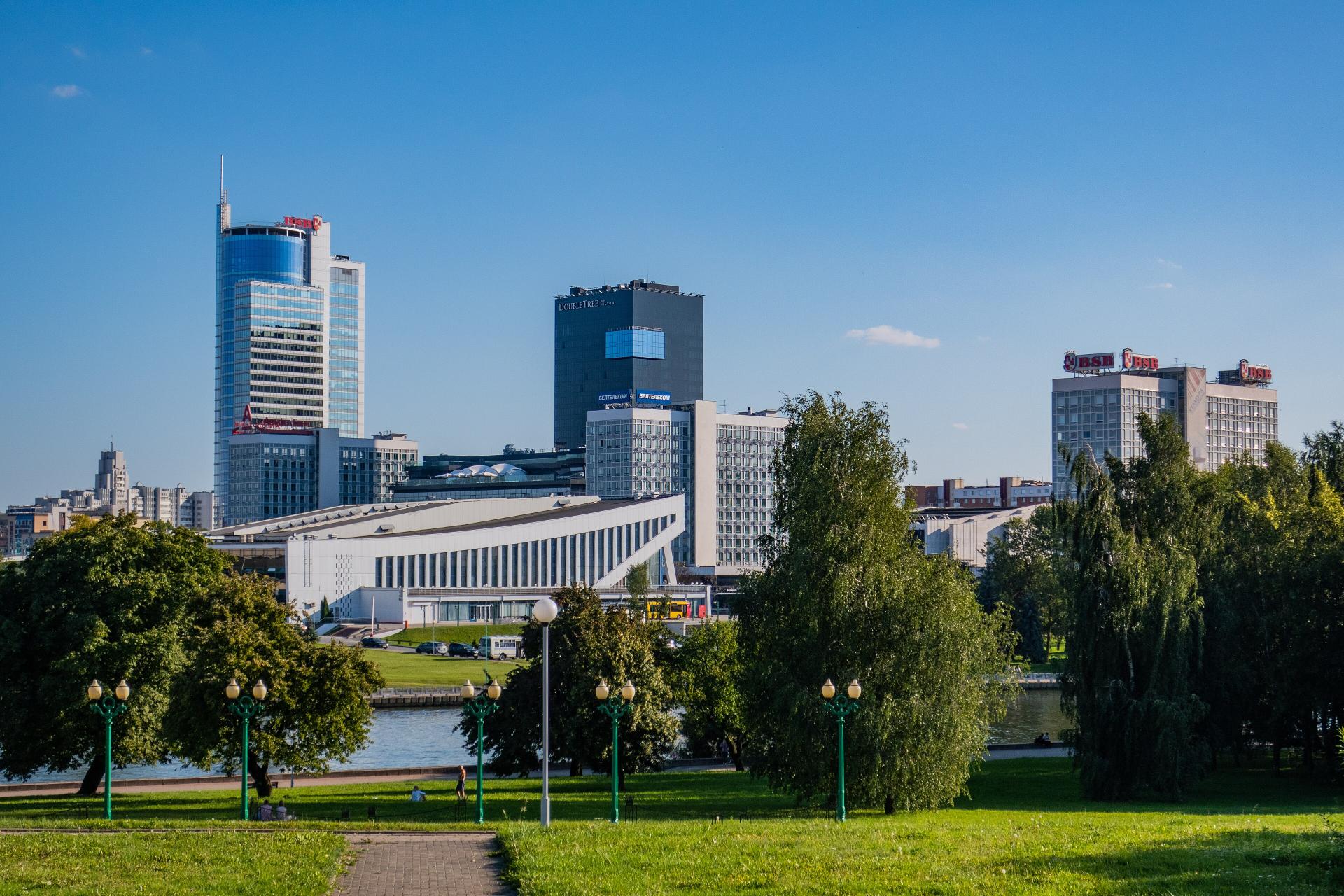
Minsk is the only city in Belarus with any queer infrastructure at all, and "any" is doing heavy lifting in that sentence. The scene is a handful of discreet, unadvertised spaces and private parties that surface and vanish. Our full Minsk guide covers the city in detail, including digital safety at street level and what remains of nightlife.
One note on hotels, because people ask. International chain hotels in Minsk are professional with foreign guests, and two men sharing a room at one is unremarkable. But we don't label any hotel in Belarus "gay-friendly." No hotel here markets itself that way, and under the 2026 law, that label could expose a business to fines. A hotel being safe to sleep in is not the same as a hotel being part of a scene. There is no scene.
Where the community lives now
Here's the part of this story that isn't bleak. Belarusian queer life didn't disappear after 2020 — it moved. Vilnius and Warsaw absorbed a large share of the exiled community, with Tbilisi taking more. Belarusian-run parties, support groups, and advocacy organisations operate openly in those cities, and for a lot of queer Belarusians, a bus ticket to Vilnius is what a night out looks like.
If your interest in Belarus is really an interest in Belarusian queer culture, that's where you'll find it — in the open, legally, three hours from Minsk. Our Vilnius and Warsaw guides are the practical next step.
If you live in Belarus
Support exists, even if we won't print a channel list that could be monitored or go stale into danger.
The organisations that used to operate inside the country now work from abroad on documentation, emergency assistance, and relocation help. International networks — ILGA-Europe and its member organisations among them — can point you to whatever is current and safe, which changes as the crackdown evolves. If you're facing blackmail or threats from the security services, an established international rights organisation is a safer first contact than any local channel, because local channels can be compromised.
Relocation support is real. People use it every month. You are not stuck.
Practicalities if you're going anyway
Some people have unavoidable reasons to travel to Belarus: family, work, reporting, helping someone leave. For them:
Bring cash. Sanctions have made card payments unreliable — foreign Visa and Mastercard mostly work, unlike in Russia, but with refusals and outages, and the US State Department advises against depending on them. Clean euros or dollars, exchanged at official kiosks, cover you everywhere and leave no trail.
Keep your documents flawless and your story simple. Belarus is bureaucratic and suspicious of foreigners; the goal is to be boring.
Know where your embassy is before you land, and write its emergency number on paper — if your phone is confiscated at the worst moment, a note in your wallet still works.
Separate your lives completely. Whoever you are in public in Belarus, your real life stays offline and out of the country until you're back across the border.
If something goes wrong
If you're detained, questioned, or approached with a blackmail attempt while in Belarus:
The honest summary
Belarus in 2026 is a country where being gay is legal and showing it is not. The propaganda law formalised what the security state was already doing, and the community's real center of gravity now sits in Vilnius and Warsaw, not Minsk. If you're a visitor, total discretion and a clean phone are the price of entry, and there is no scene waiting for you as a reward. If you're Belarusian, the network that can help you — including help leaving — is active and reachable through international organisations. That network is the most important thing on this page.