
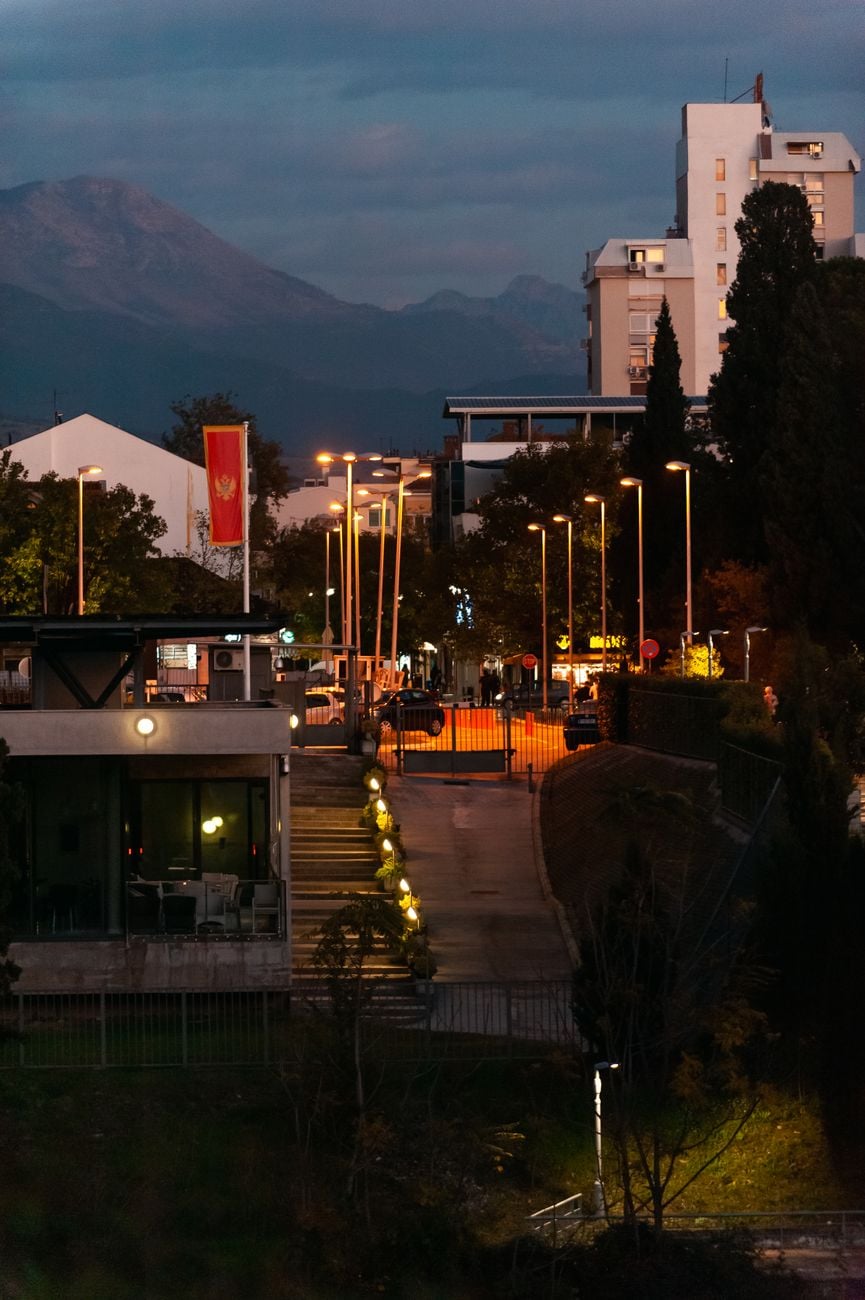
 Gay-Friendly Bars & Clubs
(293)
Gay-Friendly Bars & Clubs
(293)

🇲🇪
Gay Podgorica
LGBTQ+ Travel Guide & City Directory
175,000 residents
02:35 GMT+02:00
View on Maps
19°C · Cloudy
EUR €
Build a 3-Day Podgorica Trip
3 Gay Bars & Clubs
5 Gay-Friendly Hotels
Never miss a gay event in Podgorica
One email a week — the weekend lineup, parties and deals. No spam, unsubscribe anytime.
Weekly event updates. Notifications appear on your lock screen.
On iPhone: first add GayOut to your Home Screen (Share → Add to Home Screen), then open it from there to enable notifications.
Gay-Friendly Bars & Clubs in Podgorica
Gay-Friendly Hotels in Podgorica
View all 5 → Gay-Friendly Hotel
(86)
Gay-Friendly Hotel
(86)
IPN MOTEL ROOMS
Gay-Friendly Hotel
LGBTQ+-friendly motel accommodation in Podgorica, Montenegro offering private rooms for travelers.
gay-friendly
wifi
air-conditioning
LGBTQ+ Friendly
May 2026
 Gay-Friendly Hotel
(119)
Gay-Friendly Hotel
(119)
Hotel 1920.
Gay-Friendly Hotel
LGBTQ+-friendly hotel in central Podgorica offering comfortable accommodation for gay travellers.
gay-friendly
wifi
air-conditioning
LGBTQ+ Friendly
May 2026
 Gay-Friendly Hotel
(475)
Gay-Friendly Hotel
(475)
Crnogorska-Kuća
Gay-Friendly Hotel
LGBTQ+-friendly hotel accommodation in Podgorica, Montenegro's welcoming capital city.
gay-friendly
mixed-lgbtq
wifi
LGBTQ+ Friendly
May 2026
 Gay-Friendly Hotel
(149)
Gay-Friendly Hotel
(149)
Hotel Septembar
Gay-Friendly Hotel
LGBTQ+-welcoming hotel in Podgorica, Montenegro's capital city.
gay-friendly
wifi
air-conditioning
LGBTQ+ Friendly
May 2026
Where to stay in Podgorica
via Stay22Where to stay in Podgorica
Loading map…
🎟️ Tours & Experiences in Podgorica
via GetYourGuideSkip-the-line tickets, walking tours, day trips and unique LGBTQ+ friendly experiences — booked instantly with free cancellation.


- Free cancellation
- Reserve now, pay later
- Mobile tickets
Mega Events in Podgorica

Date TBA
MEGA EVENT
⭐ Featured
Podgorica, Montenegro
Montenegro Pride 2026
Montenegro Pride, in Podgorica, happens every July. It's the Western Balkans' main annual march, and it's always been a political…
Travel Guide
Gay Podgorica — Your Complete Guide
Everything worth knowing before you go.
Gay venue
1
LGBTQ+ status
Welcoming
In this guide · 14 sections
Podgorica Gay Travel Guide
Overview
Podgorica, the capital of Montenegro, represents a unique travel destination for LGBTQ+ visitors seeking to experience a developing gay scene in the Balkans. While it cannot compete with established gay capitals like Belgrade, Athens, or Prague, Podgorica offers authenticity, affordability, and an increasingly visible LGBTQ+ community navigating life in a traditionally conservative region. The city's gay scene is small but welcoming, concentrated in the city center, and has grown noticeably over the past decade.

History of the LGBTQ+ Scene
Montenegro's path toward LGBTQ+ acceptance has been gradual. The country decriminalized same-sex relationships relatively early for the region, and same-sex marriage was legalized in 2022, making Montenegro notable in the Balkans. Podgorica's LGBTQ+ community, though historically underground, began organizing more visibly in the early 2000s. The first Podgorica Pride took place in 2013 and was met with both celebration and counter-protests, reflecting the tensions between progressive urban centers and more conservative rural populations. Over successive years, Pride has grown in attendance and acceptance, though it remains smaller than Western European pride events.
Neighborhoods and Orientation
Podgorica's city center is compact and walkable. The Old Town (Stara Varoš) area, with its narrow streets and historic architecture, forms the atmospheric heart of the city. Njegoševa Street, the main downtown pedestrian thoroughfare, is the commercial and social spine where many cafes, restaurants, and shops are concentrated. This area is generally the safest and most welcoming for LGBTQ+ visitors, with higher foot traffic and a younger, more liberal demographic.
The area around the River Morača offers parks and recreational spaces popular with locals. Most gay-friendly venues and accommodations are located within a 10-15 minute walk of the city center, making navigation straightforward even for first-time visitors.

Venues and Nightlife
Podgorica's gay scene is intimate rather than extensive. While specific gay bars and clubs change ownership or focus periodically, the city center hosts several gay-friendly venues where LGBTQ+ locals and visitors gather. Cafes and bars near the main square and along central streets are generally welcoming to same-sex couples and LGBTQ+ groups. The scene is less about dedicated gay venues and more about select bars and clubs that attract a mixed but LGBTQ+-friendly crowd.
Nightlife typically centers on casual drinking and socializing rather than large-scale clubbing, though weekend evenings see more activity. During Pride season (June), temporary events and gatherings enliven the scene considerably. For visitors seeking more robust nightlife options, day trips to nearby Budva or even Belgrade are feasible.
Pride and Events
Podgorica Pride, held annually in June, is the city's signature LGBTQ+ event. The celebration includes a street march through the city center, cultural performances, panel discussions, and social gatherings. Attendance has grown from hundreds in early years to several thousand in recent celebrations. International visitors are welcome, and the event offers an opportunity to connect with the local LGBTQ+ community and activists.
Beyond Pride, social gatherings and meetups occur informally throughout the year, often organized through social media and community networks. LGBTQ+-focused film screenings, cultural events, and discussions happen periodically at cultural centers and venues.

Where to Stay
Podgorica offers accommodation across all price ranges. The city center contains numerous hotels and hostels within walking distance of gay-friendly venues and nightlife. Mid-range hotels and guesthouses are abundant and affordable compared to Western European standards. Many accommodations are welcoming to LGBTQ+ couples, though it remains advisable to read recent reviews or contact establishments beforehand. Booking platforms typically allow filtering by LGBTQ+-friendly properties.
The city center is the preferred base for LGBTQ+ visitors, as it offers walkability, safety, proximity to venues, and access to restaurants and cafes. Areas further from the center are less LGBTQ+-oriented and may feel less comfortable for some travelers.
Find gay-friendly hotels in Podgorica, montenegro
Real prices · Free cancellation · Verified bookings
Safety Considerations
Podgorica and Montenegro are generally safe destinations for LGBTQ+ travelers, particularly in the city center. Public displays of affection between same-sex couples are not common and may attract attention, but outright hostility is rare in urban areas. Montenegro's legal framework is progressively LGBTQ+-friendly, with marriage equality, anti-discrimination laws, and hate crime protections on the books.
That said, Montenegro remains socially conservative in many respects, and attitudes outside urban centers tend to be more traditional. LGBTQ+ visitors should exercise reasonable discretion, particularly in rural areas or during evening hours away from the city center. The vast majority of interactions in Podgorica will be neutral or positive.

Transit and Getting Around
Podgorica is compact and highly walkable, particularly the city center where most LGBTQ+-oriented activity occurs. Public buses serve the broader city and surrounding areas affordably. Taxis are readily available and inexpensive; ride-sharing apps like Bolt operate in the city. The Podgorica airport is about 12 kilometers from the city center, accessible by taxi, shuttle services, or rental car.
For day trips, rental cars provide flexibility, or bus services connect Podgorica to nearby towns like Budva, Kotor, and Cetinje. The country is small enough that most destinations are within 1-2 hours of the capital.
Food and Dining
Podgorica's restaurant scene reflects Balkan cuisine with Mediterranean influences. Local specialties include fresh seafood (despite being inland, Montenegro's proximity to the coast ensures fresh fish), lamb, cheese, and traditional grilled meats. The city center contains numerous restaurants and cafes ranging from casual to upscale. Vegetarian options are available but less abundant than in Western European cities.
Cafes are social hubs where locals linger over coffee, and many are welcoming to LGBTQ+ visitors. Traditional konobas (taverns) offer authentic regional food in casual settings. International cuisine is increasingly available in the city center.
Day Trips and Attractions
Podgorica serves as a base for exploring Montenegro's natural and cultural attractions. Lake Skadar, one of Europe's largest lakes, lies nearby and offers bird-watching, boat tours, and scenic beauty. The Morača River Canyon provides stunning hiking and photography opportunities. The historic towns of Budva and Kotor on the Adriatic coast are 1-2 hours away and feature medieval architecture, beaches, and a more developed tourist infrastructure.
Cetinje, Montenegro's historic capital, lies in the mountains and contains cultural institutions, monasteries, and museums. The Lovćen National Park offers hiking and panoramic views. These day trips allow visitors to experience Montenegro's diverse landscapes while based in Podgorica.
Practical Information
The official language is Montenegrin (similar to Serbian); English is spoken by younger people and in tourism-oriented establishments. The currency is the Euro. The city is served by a small international airport with connections to major European hubs. Visa requirements depend on nationality; EU and US citizens can typically visit for 90 days visa-free.
When to Visit
Best time to visit is May-September for warm weather, with June optimal for experiencing Pride. Shoulder seasons (April-May and September-October) offer pleasant weather with fewer crowds. Winters are mild but can be rainy.
Conclusion
Podgorica offers LGBTQ+ travelers an authentic Balkan experience with a developing gay community, affordable prices, and access to natural attractions. The scene is small but genuine, and the city's progressively LGBTQ+-friendly legal framework provides a safe environment. Visitors should approach the city as an opportunity to explore a lesser-known European destination and connect with a community building visibility in the region, rather than expecting the infrastructure of established gay capitals.
Frequently asked questions
Podgorica is in a traditionally conservative region, but the city center is generally the safest and most welcoming for LGBTQ+ visitors due to higher foot traffic and a younger, more liberal demographic.
The city center, particularly around Njegoševa Street, is the commercial and social spine where many cafes, restaurants, and shops are concentrated. Most gay-friendly venues and accommodations are located within a 10-15 minute walk of this area.
The first Podgorica Pride took place in 2013. While the exact dates for future events are not specified, Pride has grown in attendance and acceptance over successive years.
Podgorica's gay scene is intimate. While specific gay bars can change, the city center hosts several gay-friendly venues where LGBTQ+ locals and visitors gather, often in cafes and bars near the main square and central streets.
Podgorica's gay scene is small but welcoming and has grown noticeably over the past decade. It cannot compete with established gay capitals but offers authenticity and an increasingly visible LGBTQ+ community.
Cafes and bars near the main square and along central streets are generally welcoming to same-sex couples and LGBTQ+ groups. The city center is considered the safest and most welcoming area for LGBTQ+ visitors.
Cities like Podgorica
Gay Podgorica on YouTube
Videos representative of Montenegro

5 things to know about Montenegro before you visit🇲🇪 #montenegro #montenegrotravel #travelshorts
Know a great venue in Podgorica?
Help the community by adding it to our directory — it's free and reviewed within 48 hours.