Tout ce qu\'il faut savoir avant de partir.
Chattanooga, située dans le sud-est du Tennessee, au carrefour de la Géorgie, de l'Alabama et du Tennessee, est une destination accueillante pour les voyageurs LGBTQ+. Elle offre l'expérience d'une ville de taille moyenne revitalisée, avec une visibilité et une acceptation LGBTQ+ croissantes.
L'histoire LGBTQ+ de Chattanooga reflète celle du Sud américain en général, passant de racines conservatrices à une plus grande ouverture. Autrefois centre manufacturier et ferroviaire, la ville a connu un déclin économique. Vers la fin du XXe siècle, les communautés LGBTQ+ étaient largement clandestines. Cependant, un mouvement de revitalisation dans les années 2000 a attiré de jeunes professionnels, des artistes et des entrepreneurs, y compris des personnes LGBTQ+ attirées par l'accessibilité financière, l'accès à la nature et les opportunités de création de liens.
Aujourd'hui, Chattanooga bénéficie d'une présence LGBTQ+ notable. La communauté s'organise autour de la Pride et de divers groupes culturels. Les employeurs locaux, notamment dans les secteurs de la santé et de la technologie, appliquent souvent des politiques de non-discrimination et offrent des avantages pour les partenariats domestiques. L'atmosphère de la ville est généralement progressiste par rapport aux régions environnantes, bien que le Tennessee, en tant qu'État, penche vers le conservatisme sur les questions LGBTQ+.
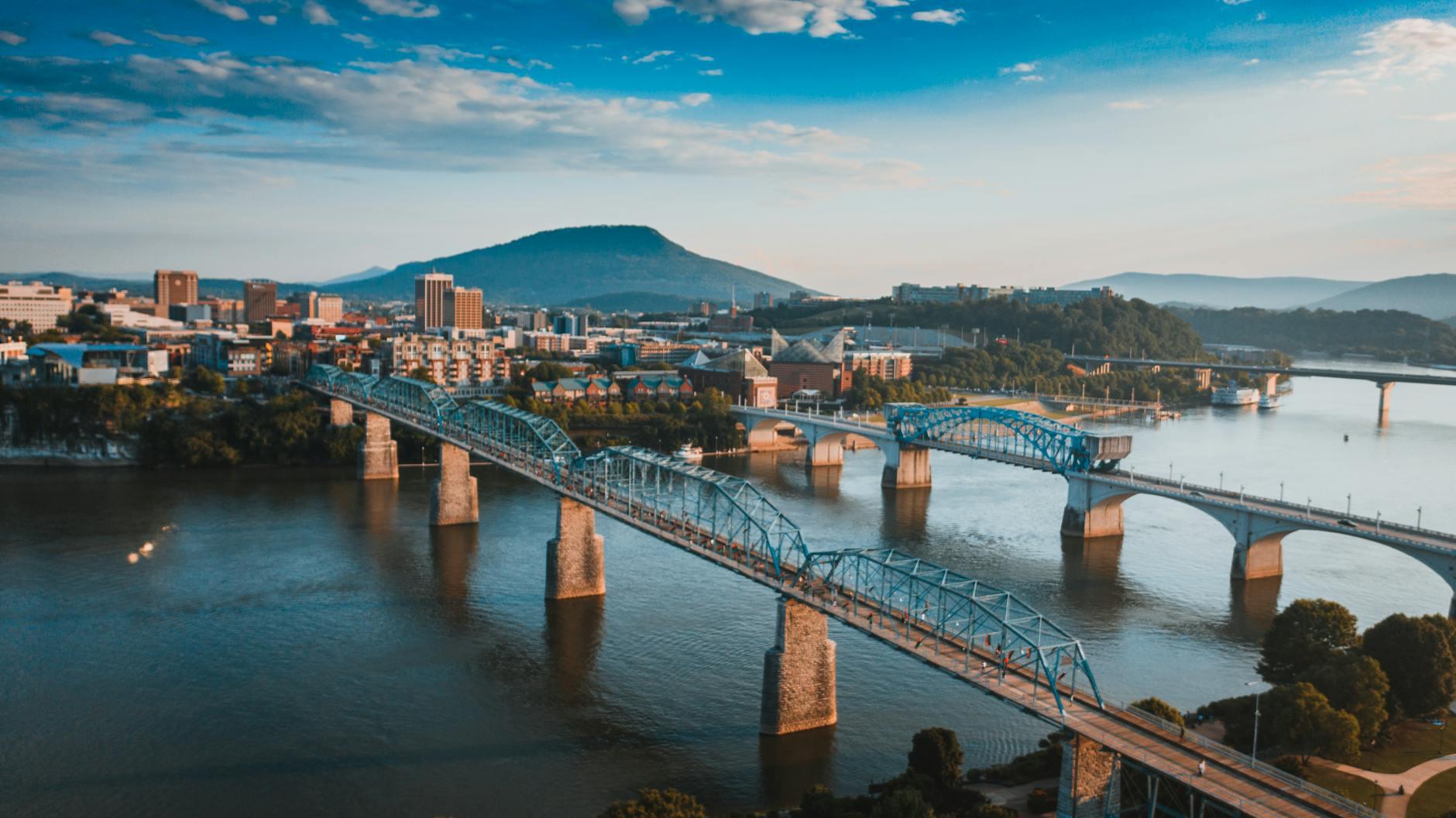
Le centre-ville de Chattanooga constitue une zone centrale pour les activités et la restauration LGBTQ+, s'étendant le long de Market Street et des berges du fleuve. North Shore, de l'autre côté du Walnut Street Bridge, est un quartier résidentiel et de divertissement branché avec des parcs, des restaurants et des lieux culturels, attirant de nombreux résidents LGBTQ+ et considéré comme un quartier visiblement accueillant. Southside est un autre quartier en développement avec des logements abordables, des ateliers d'artistes et des espaces communautaires en pleine croissance. Bien que Brainerd et East Brainerd comptent des résidents LGBTQ+, on y trouve moins de lieux spécifiquement dédiés à cette communauté. Hixson, au nord du centre-ville, est principalement résidentiel. La plupart des visiteurs et résidents LGBTQ+ ont tendance à se retrouver dans ou près du centre-ville et de North Shore.
La vie nocturne LGBTQ+ de Chattanooga est plutôt discrète. Le cœur de cette scène se trouve à l'Alan Gold's Discotheque, sur McCallie Avenue, une boîte de nuit gay sur plusieurs niveaux qui accueille des spectacles de dragsters depuis des décennies. Le Reagan's Retro Bar, dans le quartier de Southside, est un établissement accueillant pour la communauté LGBTQ+, réputé pour ses soirées drag pendant la saison de la Pride. La scène nocturne LGBTQ+ n'est pas aussi concentrée que dans les grandes villes ; de nombreux établissements sont ouverts à tous plutôt qu'exclusivement gays, et l'ambiance peut varier selon les saisons. Les bars et restaurants du centre-ville sont généralement accueillants et comptent souvent une clientèle LGBTQ+ significative. Les établissements le long de Market Street et près des berges du fleuve ont tendance à être plus progressistes. Les cafés, librairies et restaurants décontractés servent également de lieux de rencontre informels pour la communauté. De nombreuses personnes LGBTQ+ se connectent via des applications et des groupes communautaires, tels que des groupes de rencontre, des ligues sportives et des organisations sociales.
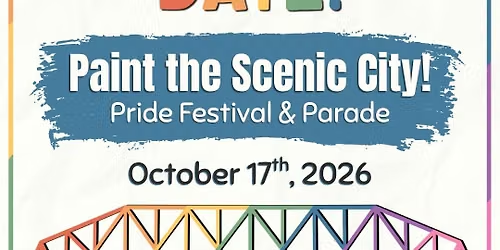
Le Chattanooga Pride Festival a lieu chaque année en octobre, avec un défilé, des scènes de spectacle, des vendeurs et des activités familiales. La fréquentation a atteint plusieurs milliers de participants, l'événement se tenant généralement au centre-ville, à Ross's Landing, sur les berges du fleuve. Tout au long de l'année, la ville accueille divers événements culturels, notamment des festivals artistiques, des productions théâtrales et des concerts, dont beaucoup sont inclusifs pour la communauté LGBTQ+ ou bénéficient d'une participation LGBTQ+ importante.
Chattanooga propose une gamme d'hôtels adaptés aux voyageurs LGBTQ+. Des informations sur les établissements accueillants sont disponibles auprès du Chattanooga Convention and Visitors Bureau. De nombreux hôtels du centre-ville et du North Shore sont explicitement accueillants. Certains bed-and-breakfasts locaux appartiennent à des personnes LGBTQ+ ou sont gérés par elles. Pour les séjours plus longs, des options de location sont disponibles via des plateformes comme Airbnb, avec de nombreuses propriétés appartenant à des personnes LGBTQ+ dans le centre-ville, le North Shore et les quartiers environnants.
Chattanooga est généralement un lieu sûr pour les voyageurs LGBTQ+, avec un soutien communautaire visible et sans zones spécifiques nécessitant des précautions supplémentaires au-delà des pratiques de sécurité urbaine standard. Downtown et North Shore sont bien fréquentés et éclairés. La police et les services municipaux sont professionnels. Bien que la législation de l'État du Tennessee manque de protections LGBTQ+ à l'échelle de l'État en matière de logement, d'emploi ou d'établissements publics, Chattanooga dispose de protections locales et est nettement plus progressiste que de nombreuses régions environnantes, la discrimination étant relativement rare dans la ville elle-même, en particulier dans le centre-ville et sur la North Shore.
Chattanooga est assez agréable à parcourir à pied, particulièrement Downtown et North Shore. Le Walnut Street Bridge est une passerelle piétonne reliant Downtown et North Shore. CARTA (Chattanooga Area Regional Transportation Authority) assure un service de bus, bien que la fréquence et la couverture soient limitées. Les services de covoiturage comme Uber et Lyft sont largement disponibles. Une voiture est utile pour les excursions d'une journée et les activités de plein air, mais pas essentielle si vous utilisez les transports en commun ou des services de location.
La scène culinaire de Chattanooga s'est considérablement développée. Downtown et North Shore proposent une diversité de restaurants, allant de la ferme à la table, des cuisines internationales, des brasseries et des restaurants décontractés. De nombreux établissements appartiennent à des personnes LGBTQ+ ou leur réservent un accueil chaleureux. Les brasseries et les cafés servent d'importants lieux de rassemblement communautaire. Les tendances culinaires notables incluent des options végétariennes, des saveurs internationales et des interprétations contemporaines de la cuisine du Sud. Les food trucks et les restaurants éphémères contribuent à cette scène dynamique.
Le charme de Chattanooga s'étend à son accès à la nature. La rivière Tennessee offre des possibilités de kayak, de paddleboard et de promenades pittoresques le long du Riverwalk. Le Hunter Museum of American Art surplombe la rivière, et le Tennessee Aquarium est l'un des plus grands aquariums d'eau douce d'Amérique du Nord. Les activités de plein air à proximité comprennent la randonnée dans la région des Appalaches, les randonnées vers des cascades, l'escalade et les routes panoramiques. Parmi les destinations populaires situées à moins d'une heure de route, on trouve Cloudland Canyon State Park et Fall Creek Falls State Park. Pour l'histoire de la guerre de Sécession, le Chickamauga Battlefield se trouve juste au sud de la ville.
Chattanooga convient parfaitement aux voyageurs LGBTQ+ en quête d'une destination décontractée axée sur le plein air, à ceux qui recherchent une communauté de petite ville, ou aux voyageurs combinant tourisme LGBTQ+ et activités de plein air et culturelles. Elle séduit ceux qui souhaitent explorer une ville américaine en plein renouveau, ainsi que les couples.




 Bars & clubs gays
À la une
(978)
Bars & clubs gays
À la une
(978)