
 Gay Bars & Clubs
(403)
Gay Bars & Clubs
(403)

🇿🇦
Gay Johannesburg 2026
LGBTQ+ Travel Guide & City Directory · Gauteng
5,635,000 residents
15:01 GMT+02:00
View on Maps
21°C · Cloudy
ZAR R
JNB · 21 km
Build a 3-Day Johannesburg Trip
1 Gay Bars & Clubs
6 Gay-Friendly Hotels
3 Gay Heritage
LGBTQ+ Legal Status in South Africa
Based on national laws as of 2025
79/100
LGBTQ+ Friendly
Legal 58/60 · Scene 21/40 · South Africa national score
South Africa — Gay Travel Index profile →
Compare all 208 countries →
Legal rights details
✓
Same-sex relations legal
✓
Equal age of consent
✓
Partnership / union
✓
Same-sex marriage
✓
Adoption rights
✓
Anti-discrimination law
✓
Legal gender change
First country in Africa to legalise same-sex marriage (2006). Constitutional protections exist, but LGBTQ+ people face significant societal prejudice, especially outside cities.
Never miss a gay event in Johannesburg
One email a week — the weekend lineup, parties and deals. No spam, unsubscribe anytime.
Weekly event updates. Notifications appear on your lock screen.
On iPhone: first add GayOut to your Home Screen (Share → Add to Home Screen), then open it from there to enable notifications.
Gay Bars & Clubs in Johannesburg
Gay Bars & Clubs
(403)
Gay-Friendly Hotels in Johannesburg
View all 6 → Gay-Friendly Hotel
(81)
Gay-Friendly Hotel
(81)
The Vantage
Gay-Friendly Hotel
Main amenities 50 apartments Daily housekeeping Laundry service Meeting room Concierge services Luggage storage Limited hour front desk Free parking Feel at home Kitchen Cookware, dishware, and…
gay-friendly
wifi
card-payments
LGBTQ+ Friendly
 Gay-Friendly Hotel
(5)
Gay-Friendly Hotel
(5)
Genesis All Suite
Gay-Friendly Hotel
he Genesis All Suite offers 24 hour on-site security, a fitness room with a view, and free underground parking.
gay-friendly
gym
wifi
LGBTQ+ Friendly
 Gay-Friendly Hotel
(4527)
Gay-Friendly Hotel
(4527)
Four Seasons
Gay-Friendly Hotel
Resembling a quaint hillside village, Four Seasons Hotel The Westcliff Johannesburg sits within three hectares of verdant grounds overlooking Johannesburg Zoo.
gay-friendly
hotel-pool
wifi
LGBTQ+ Friendly
 Gay-Friendly Hotel
(469)
Gay-Friendly Hotel
(469)
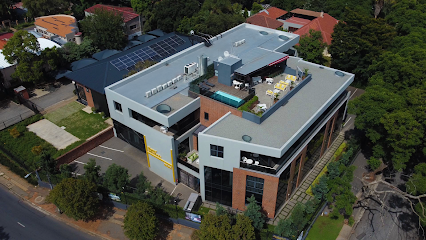
Home Suite Hotels Rosebank
Gay-Friendly Hotel
Well-reviewed and central — a comfortable pick for a Johannesburg weekend.
gay-friendly
hotel-pool
gym
LGBTQ+ Friendly
Aug 2026
Where to stay in Johannesburg
via Stay22Where to stay in Johannesburg
Loading map…
🎟️ Tours & Experiences in Johannesburg
via GetYourGuideSkip-the-line tickets, walking tours, day trips and unique LGBTQ+ friendly experiences — booked instantly with free cancellation.

- Free cancellation
- Reserve now, pay later
- Mobile tickets
Bookable now
Gay Group Tours & Sailing Weeks
Small-group trips run by gay-owned operators — real departures, live prices, solo-friendly.
Gay Heritage in Johannesburg
 Gay Heritage
(6827)
Gay Heritage
(6827)
Constitution Hill
Gay Heritage
The prison that held Gandhi and Mandela, reborn as the Constitutional Court — guardian of the first constitution on Earth to ban discrimination by sexual orientation.
gay
Verified by GayOut
Aug 2026
 Gay Heritage
Simon Nkoli Corner
Gay Heritage
The Hillbrow corner named for Simon Nkoli — anti-apartheid and gay liberation hero — where Africa's first Pride march was planned. Best visited on a guided heritage tour.
gay
Verified by GayOut
Aug 2026
 Gay Heritage
GALA Queer Archive
Gay Heritage
Africa's foremost queer archive (est. 1997) — 200+ collections including Simon Nkoli's papers, held at Wits. Visits by appointment; runs the Hillbrow queer heritage tour.
gay
Verified by GayOut
Aug 2026
Mega Events in Johannesburg

31
OCT
MEGA EVENT
Johannesburg, South Africa
Joburg Pride shades of Pink
Joburg Pride Shades of Pink is an electrifying LGBTQ+ pride event that promises a night of celebration, love, and unity in the…

31
OCT
MEGA EVENT
Johannesburg, South Africa
Johannesburg Pride
Johannesburg Pride, held every October, isn't just South Africa's biggest LGBTQ+ event; it's Africa's oldest, dating back to…

Date TBA
MEGA EVENT
Johannesburg, South Africa
Out in Africa Film Festival
Out in Africa is South Africa's pioneering LGBTQ+ film festival, screening in both Johannesburg and Cape Town since 1994 — the…
Travel Guide
Gay Johannesburg — Your Complete Guide
Everything worth knowing before you go.
Gay venue
1
LGBTQ+ status
Welcoming
In this guide · 10 sections
Johannesburg has one of the deepest queer histories of any African city. South Africa was the first country to put anti-discrimination protections based on sexual orientation into its constitution (1996), the fifth in the world to legalize same-sex marriage (2006), and the first in Africa. Johannesburg has hosted continental Prides since 1990 — Africa's first Pride march — and the city houses major queer cultural and academic institutions like the GALA Queer Archive at Wits University. But South Africa also has severe gender-based and homophobic violence, especially affecting Black lesbians and trans women in townships. Johannesburg specifically has high overall crime rates that affect any visitor's plans. For queer travelers, it's this: the legal and institutional framework is among the strongest globally, the main queer scene in the northern suburbs is friendly and developed, practical safety takes effort, and a careful visit is genuinely rewarding.
The neighborhoods
Johannesburg is huge and spread out. The central business district has mostly lost its upmarket tourism, and queer life clusters in the northern suburbs. Melville on 7th Street is the historic gay-bohemian neighborhood and the obvious base—tree-lined, walkable streets, a string of queer-friendly bars, restaurants, and the Sophiatown jazz revival. Greenside, Parkhurst, and Parkview are wealthier middle-class residential areas with several queer-comfortable Sunday-brunch spots and the best mixed-friendly café scene. Maboneng in the inner city is the redeveloped creative quarter—a partly successful inner-city regeneration, with the Market on Main on Sunday, art galleries, and queer-friendly studios. Rosebank is the upmarket shopping and business district with several queer-comfortable hotels. Sandton further north is the global financial center—clean, safe, characterless, with the biggest luxury hotels. Crime patterns in Johannesburg change dramatically by neighborhood; stick to the recommended areas.
Gay bars and venues
Johannesburg's queer scene is smaller than Cape Town's but has a more politically-engaged, racially-mixed culture. Babylon the Bar in Melville on 4th Avenue is the long-running anchor—open from afternoon, mixed crowd, drag and karaoke nights, the practical first stop. Liquid Blue in Melville is the dance-club option. Ratz Bar, also in Melville, is the alternative-leaning queer-feminist favorite. Reaction in Cresta is the long-running men's club with regular themed nights. HQ Joburg in Rosebank runs occasional queer-themed nights at a larger mixed venue. OUT Wellbeing on 12th Street in Killarney is the year-round community space with a café, health services, and regular events. The biggest queer parties move around—HER! for queer women, Pussy Party, Vogue Nights Jozi (the legendary ballroom and vogueing scene that has created a generation of South African vogue artists). Find them advertised on Instagram.

Pride and the calendar
Johannesburg Pride happens in late October, usually with a march from Zoo Lake to the festival grounds at the Sandton CBD. The first edition in 1990 was a defining political moment—Africa's first Pride, organized against apartheid-era restrictions on public assembly, with participants wearing paper bags over their heads to hide their identities. The modern edition draws about 15,000-25,000 attendees. The associated South African Pride Festival spans October across multiple cities. Soweto Pride, a township pride founded specifically to address violence against Black lesbians, runs in September each year—politically important and worth attending. Mzansi Pride in November consolidates community programming. OUT Africa Film Festival in September is the queer film calendar peak.
Saunas, apps and the wider scene
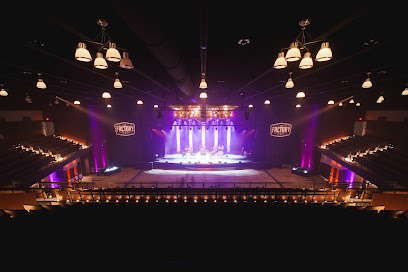
Johannesburg has fewer fixed cruise venues than Cape Town. The Factory in Sunnyside is the main gay sauna and runs with the usual facilities. Apps (Grindr, Hornet, Romeo) are the practical meeting tool, but visitors should be very cautious—Johannesburg has a documented pattern of app-based hate crimes and robberies targeting gay men, including incidents with police impersonation. Never go to a stranger's location on a first meeting; meet in public at a known venue; verify identity before sharing hotel details; do not leave drinks unattended.

Where to stay
For a first visit, stay in Rosebank, Melville, or Sandton. Rosebank is the practical balance—safe, walkable, gay-comfortable, with queer-friendly venues a short Uber away. Sandton feels safer but has less character. Melville puts you right in the gay neighborhood. LGBTQ+-friendly hotels include the Saxon Hotel, Villas & Spa in Sandhurst (the most quietly luxurious gay-comfortable property, generally considered the best in the city), the Four Seasons Hotel The Westcliff on Westcliff hill (the colonial-style hotel with city views), The Capital on the Park in Sandton, the Hyatt Regency Johannesburg in Rosebank, and the smaller The Peech Hotel in Melrose (the queer-comfortable boutique favorite). In Melville, gay-owned guesthouses like Liz at Lancaster have long been the budget-friendly options. 54 on Bath in Rosebank is the modern queer-comfortable mid-range choice.
Find gay-friendly hotels in Johannesburg, south-africa
Real prices · Free cancellation · Verified bookings
Food
Johannesburg's food scene has grown a lot over the last decade. Marble in Rosebank (Trinity Park) is the most-praised contemporary South African kitchen, with queer-comfortable management. The Pantry on Nicol in Bryanston is the consistent fine-dining favorite. The Saxon's Five Hundred at the Saxon Hotel is the upscale tasting menu. For modern South African cooking, try The Local Grill, Workshop Co., and the queer-popular Doppio Zero chain. In Melville, Soulsa and Pablo Eggs Go Bar are queer-comfortable favorites. For Cape-style braai and traditional cooking, there's The Butcher Shop & Grill in Sandton. Sakhumzi in Soweto on Vilakazi Street is the queer-comfortable lunch stop on a township tour. Coffee culture is strong: Bean There Coffee, Father Coffee, The Whippet.

What to see
Constitution Hill in the central district is the essential South African historical visit—the former Old Fort prison complex that held Mahatma Gandhi, Nelson Mandela, and thousands of others, now home to the Constitutional Court of South Africa. The court was deliberately built on the site to symbolize the new democratic constitution rising from the prison's foundations; LGBTQ+ rights cases, including the marriage-equality ruling, were argued here. The Apartheid Museum in Gold Reef City covers apartheid history thoroughly. Origins Centre at Wits University covers African human origins. The GALA Queer Archive at Wits is the most important LGBTQ+ archive in Africa—visit by appointment. Go to Maboneng on Sundays for the Market on Main and a street-art tour. Visit Soweto on a guided tour: Vilakazi Street (the only street in the world to have housed two Nobel Peace Prize winners—Mandela and Tutu—at the same time), the Hector Pieterson Museum and Memorial, the Mandela House. Walk and bicycle Soweto tours run by community guides are queer-comfortable and educational.
Day trips
Johannesburg is the gateway to Pilanesberg National Park and Madikwe for safari (three to four hours northwest), and the closer Cradle of Humankind UNESCO site (an hour west)—the Sterkfontein Caves where some of the oldest hominid fossils have been found. Pretoria (now Tshwane), an hour north, is the administrative capital with the Voortrekker Monument, Freedom Park, and the Union Buildings—a contrasting visit to Johannesburg. Head to Magaliesberg for hiking and queer-popular country lodges. Sun City resort is good for a weekend gambling and spa break.

Safety—read carefully
Johannesburg needs the most careful safety planning of any major city in these guides. South Africa has very high rates of violent crime; Johannesburg specifically has high carjacking, robbery, and home-invasion rates that affect residents and visitors. The legal framework for LGBTQ+ rights is exceptional, but social attitudes outside the affluent northern suburbs are uneven, and corrective rape and hate crimes against Black lesbians in townships are documented at unacceptable levels. Practical rules for queer visitors: stay in the recommended neighborhoods (Rosebank, Sandton, Melville, Parkhurst, Parkview, Maboneng); use only Uber or Bolt, never street taxis or unmarked cars; never walk between neighborhoods at night; never display phones, watches, or jewelry in public; do not use ATMs on the street; do not stop at red lights at night in poorly-lit areas (locals often do not, by law you may proceed with caution); ask hotel security and concierge for advice on every outing; visit Soweto and other townships only with an established tour operator. Within these rules, Johannesburg is a manageable destination; without them, the risk is unacceptable. Public affection between same-sex couples in the recommended neighborhoods draws no reaction; outside the center, discretion is sensible. The rand (ZAR) is the currency; cards are accepted at hotels and restaurants, but cash is needed for tips and tourism. English is universally spoken alongside Zulu, Sotho, Tswana, Afrikaans, and Xhosa.
When to visit
Johannesburg sits at 1,750 meters altitude on the Highveld plateau, so the climate is dry, mild, and bright year-round. The most pleasant times are March to May (autumn) and August to October (spring). October Pride is the obvious peak. Summer (December to February) brings dramatic late-afternoon thunderstorms—beautiful but disruptive. Winter (June-August) is dry, cold at night (sometimes below 0°C) but with bright sunny days—the best time for safaris. The Johannesburg International Mozart Festival in January and the Joy of Jazz in September are the cultural peaks.

Frequently asked questions
Yes — Johannesburg has an active LGBTQ+ scene with bars, clubs and Pride events. Browse the venues on this page for the most-reviewed spots, and check the calendar for upcoming events.
We list the top-reviewed gay bars and clubs in Johannesburg on this page. Filter by category and rating to find dance clubs, cocktail bars, cruise bars and more — every venue is verified by the GayOut community.
Pride season (typically June–July in the northern hemisphere) is the most lively time, with parades and parties. Spring and early autumn are also great for sightseeing without summer crowds. Check the events calendar above for specific dates.
Yes — see the "Where to stay in Johannesburg" map above for hotels with current prices, including LGBTQ+ welcoming properties recommended by our community.
Johannesburg is generally safe for LGBTQ+ visitors in tourist and central areas. Standard travel-safety advice applies. Check the country page for an LGBTQ+ rights overview specific to South Africa.
Cities like Johannesburg
Gay Johannesburg on YouTube

Top 5 Gay clubs in South Africa || Johannesburg pride 2025 🏳️🌈
Know a great venue in Johannesburg?
Help the community by adding it to our directory — it's free and reviewed within 48 hours.