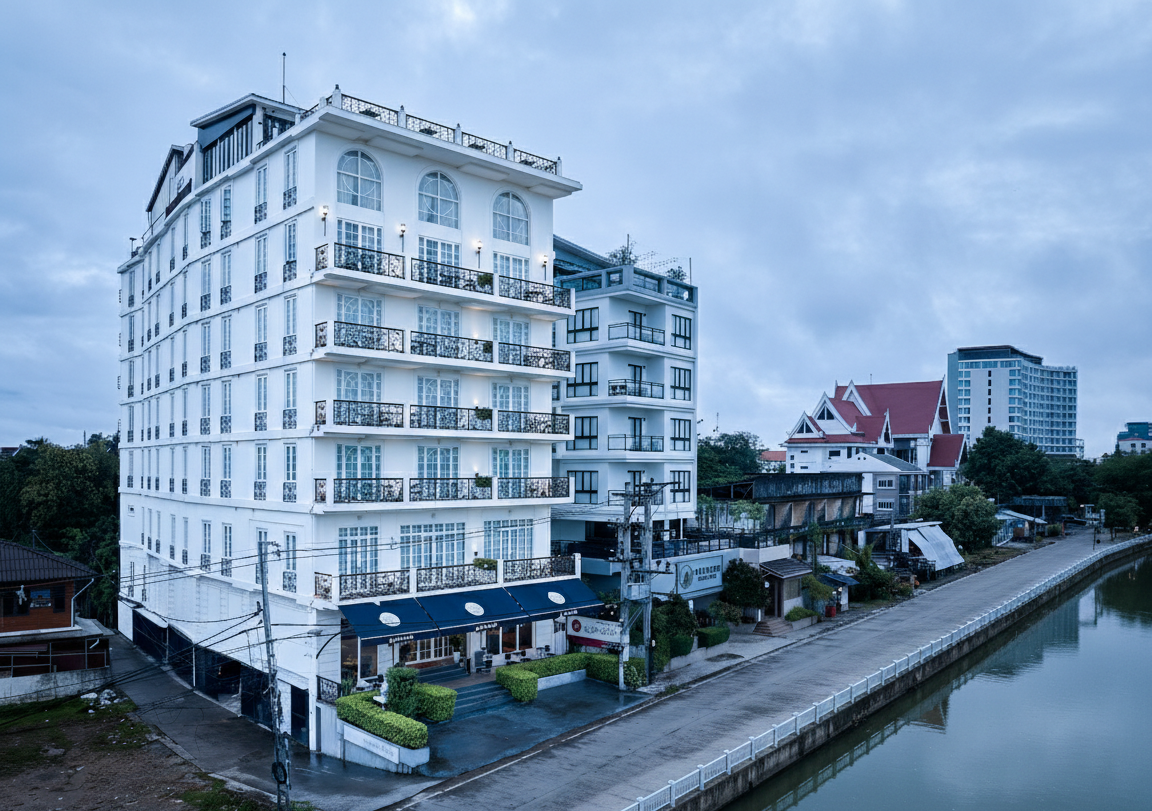
Same-sex acts never formally criminalised in Laos. No legal recognition of partnerships or marriage. No anti-discrimination protections. One-party state ? government posture is neutral. No formal Pride events. Community operates discreetly.
Never miss a gay event in Vientiane
One email a week — the weekend lineup, parties and deals. No spam, unsubscribe anytime.
Weekly event updates. Notifications appear on your lock screen.
On iPhone: first add GayOut to your Home Screen (Share → Add to Home Screen), then open it from there to enable notifications.
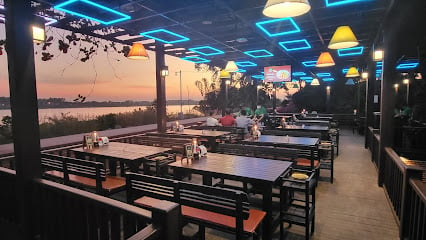
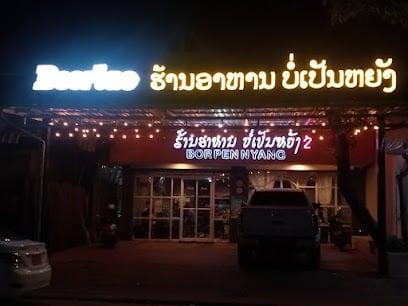
Riverside bar on the Mekong with an open terrace, Laos beer, and a gay-friendly atmosphere. One of Vientiane's better sunset viewing spots — wide Mekong views across to Thailand.
Vientiane, Laos: A Traveler's Guide to the LGBTQ+ Scene
Vientiane is Southeast Asia's most understated capital—sleepy, affordable, and deeply spiritual. The LGBTQ+ scene reflects this character: quiet, welcoming to those who seek it, but never flamboyant or in-your-face. For travelers accustomed to the gay nightlife of Bangkok, Hanoi, or Saigon, Vientiane may feel subdued. But for those seeking an authentic Lao experience with genuine community connections, the city offers unexpected warmth and charm.
Legal and Historical Context
Laos decriminalized same-sex relations in 2010, a significant step that removed the legal jeopardy faced by LGBTQ+ people in some neighboring countries. This legal shift created space for a small but visible community to emerge in Vientiane, particularly among educated urbanites and expats. However, Laos remains a deeply Buddhist and conservative nation. The Lao concept of family and sexuality emphasizes tradition and discretion. Public displays of affection between same-sex couples are rare and can attract unwanted attention. Despite this, the actual attitude toward LGBTQ+ people tends toward social indifference rather than hostility—a distinction that matters. Many Lao people simply don't discuss sexuality openly, making the scene quieter but also less overtly hostile than in some Southeast Asian nations.
The community in Vientiane has grown modestly with the city's expat population, particularly among development workers, English teachers, and digital nomads who have settled in recent years. This has created a dual scene: local Lao LGBTQ+ networks and an international expat community that overlaps at certain venues and social occasions.
Neighborhoods and Layout
Vientiane is compact and navigable, without clearly defined gay neighborhoods in the Western sense. However, most social venues and expat infrastructure are concentrated in a few key areas:
Downtown/Riverfront: The area near the Mekong River and around Settha Palace Hotel has traditionally been the heart of Vientiane's tourist and expat scene. This is where most gay-friendly venues, international restaurants, and hotels cluster. Walking along Fa Ngoum Road at sunset is a quintessential Vientiane experience, and this area feels the most cosmopolitan.
Vientiane Center: Just inland from the river, this neighborhood contains shops, cafes, and some nightlife. It's where everyday Vientiane life happens, and it's safe and walkable.
That Luang Area: Named after the golden stupa that dominates it, this neighborhood is more residential and spiritual, with less tourist infrastructure. It's worth visiting for the temple itself but not the primary area for gay venues.
Key Venues
Vientiane's gay scene is small, and venues change or close with some frequency. However, certain establishments have been reliable meeting points:
Bar and Lounge Scene: Several small bars in the downtown area have historically served as informal gathering spaces. These tend to be low-key, atmospheric places with mixed crowds of locals, expats, and travelers. They often feature beer, cocktails, and conversation rather than high-energy dancing. Names and locations can shift, so checking recent travel blogs and asking at accommodations upon arrival is wise.
Cafe Culture: Much of Vientiane's social life happens in daytime and early evening cafes rather than nightlife venues. LGBTQ+ people and allies gather at various cafes around the riverfront and city center. These spaces, while not exclusively gay, offer opportunities for low-pressure socializing and connection.
Establishments to research before arrival: Names like Q Bar and similar venues have appeared in LGBTQ+ travel guides in recent years, but the scene's small size means verifying current status before visiting is essential. Hotel concierges, particularly at international properties, are often knowledgeable about the current landscape.
Pride and Events
Vientiane has no official Pride festival. LGBTQ+ awareness events and celebrations tend to be quiet and community-based rather than large public gatherings. International LGBTQ+ awareness days (June's Pride month, Trans Day of Visibility in March) may be marked by small informal gatherings or social media acknowledgments, but there are no organized parades or major celebrations like in Thailand or Vietnam.
This isn't a drawback for many travelers—instead, it offers something rarer: a chance to build genuine friendships and connect with LGBTQ+ Lao people in their own social spaces, without the spectacle of organized Pride events.
Where to Stay
Vientiane's hotel scene offers good value. Several properties cater to international travelers:
Settha Palace Hotel: A restored French colonial luxury hotel on the riverfront, iconic and historic, with a central location and easy access to gay-friendly venues and restaurants.
Dokmai Garden Hotel: A charming boutique property slightly removed from the main tourist area, quiet and welcoming.
Le Passage: A small guesthouse with character, convenient to downtown.
Mansions: A contemporary upscale option.
Mekong Riverside Boutique Hotel: Offers the classic Vientiane experience with riverside views.
For budget travelers, numerous guesthouses in the $20-40/night range offer comfort and social atmospheres where fellow travelers congregate—often a good way to find out where the current gay-friendly venues are.
Vientiane is generally safe for LGBTQ+ travelers. Violent crime targeting tourists is rare. However, several considerations apply:
Discretion: While Laos is more relaxed than countries like Vietnam or Cambodia in some respects, public displays of affection between same-sex couples, particularly between men, remain uncommon and can attract stares or gossip. Holding hands or kissing in public, while not illegal, draws attention in ways it might not in Bangkok. Private spaces and established gay venues are different—people in these spaces are there with awareness of the environment.
Visa and Legal Status: Ensure travel documents are in order. LGBTQ+ status is not a legal issue, but general visa requirements apply. Most Western travelers can obtain tourist visas upon arrival or via e-visa in advance.
Police and Authority: Stories of police harassment of LGBTQ+ people are rare in Vientiane compared to some regional cities, but exercising prudent judgment is sensible. The decriminalization of same-sex relations significantly reduced legal vulnerability.
Transgender and Non-Binary Considerations: Laos has a concept of sexual and gender diversity embedded in Buddhist philosophy, though it's not the same as Western LGBTQ+ identity frameworks. Thai influence has also shaped cultural attitudes—Thailand's more visible transgender visibility has some regional effect. However, recognition of non-binary identity and the ability to change legal documentation is extremely limited. Transgender travelers should exercise standard caution regarding documentation and public safety.
Communication and Connectivity
Internet access is generally good in Vientiane. Most hotels, cafes, and many restaurants offer WiFi. Thai and international SIM cards work in Laos with appropriate plans, making it easy to connect with local social networks, dating apps, and travel communities online before arrival.
Transportation
Vientiane is navigable by foot, bicycle, and tuk-tuk. The city is small enough that most attractions and social venues are reachable on foot or with a short tuk-tuk ride ($1-3). Bicycle rentals are available at many hotels. There is no public bus system that tourists commonly use, though local buses exist. Walking along the Mekong at sunset is one of the city's greatest pleasures and perfectly safe.
Regional connections: Flights to Bangkok, Hanoi, and other Southeast Asian cities are readily available. The bus system connects Vientiane to other Lao cities and to Thailand. Many travelers loop Vientiane into broader Southeast Asia itineraries.
Food and Dining
Vientiane's food scene is one of its great pleasures. Lao cuisine features fresh herbs, lime, and fish sauce, and is less spicy than Thai food (though still flavorful). Key experiences:
Local Markets: Talat Sao (Morning Market) is massive and chaotic, full of local food stalls and souvenirs. Going early (5-8 AM) offers the best experience.
River Road Restaurants: Mekong-side restaurants and cafes along Fa Ngoum Road offer river views and relaxed dining. Many cater to international tastes while offering authentic Lao options.
Restaurant Districts: The area near Settha Palace Hotel and throughout downtown contains both local favorites and international cuisine.
Food & Drink
Food Tourism: Several tour operators offer cooking classes, market visits, and food-focused experiences. These are excellent ways to engage with local culture.
Day Trips and Nearby Attractions
Vientiane's charm extends beyond the city:
That Luang: The golden stupa, 4 kilometers outside the city center, is Laos's most sacred Buddhist monument. It's stunning and serene, and perfectly accessible by tuk-tuk.
Xieng Khuan (Buddha Park): About 25 kilometers south of Vientiane, this surreal park contains hundreds of Buddhist and Hindu statues. It's quirky, fascinating, and offers a different perspective on Lao spiritual practice.
Parku Waterfall: A small waterfall nearby, pleasant for a few hours of escape.
Udon Thani, Thailand: Just across the Mekong, this Thai city is easily reachable by friendship bridge and offers different dining and cultural experiences. Many travelers day-trip across.
Vang Vieng: Two to three hours north, this adventure tourism hub offers tubing, cave exploration, and rock climbing. It's very different from Vientiane's character but worth considering as part of a broader Laos trip.
Luang Prabang: Three hours north by bus or flight, Laos's most famous city is a UNESCO World Heritage site with stunning temples and a robust tourist infrastructure. Many travelers combine both cities.
Timing and When to Visit
Vientiane's best season is November to February, when the weather is cool and dry. Temperatures are mild, humidity is manageable, and everything feels pleasant. March through May is hot and increasingly uncomfortable. June through October is the monsoon season—rainy, humid, and less appealing for tourism, though it's also the low season with fewer tourists.
Cultural Events: Lao New Year (Songkran) occurs in mid-April and involves water festivals and celebrations. Pi Mai, the Buddhist new year celebration, is also a significant annual event. These can be joyful times to visit, though they also draw larger crowds.
Who This City Is For
Vientiane is ideal for LGBTQ+ travelers seeking:
Authentic Southeast Asian experience without Western-style gay tourism infrastructure. It rewards those interested in cultural immersion and genuine connection over nightlife and scenes.
A slower pace and lower-pressure social environment. The city is meditative and offers genuine relaxation.
Budget-friendly travel with excellent value for money.
Expats and digital nomads looking for community in an affordable, livable destination.
It may be less appealing for travelers seeking large Pride events, high-energy nightlife, or extensive LGBTQ+-specific tourism offerings. Those seeking such experiences will find them more readily in Bangkok, Hanoi, or Ho Chi Minh City.
Cultural Sensitivity and Respectful Travel
Vientiane's strength lies partly in its preservation of Lao culture amid rapid regional change. Respectful tourism means:
Respecting Buddhist temples and spiritual spaces. Dress modestly when visiting temples (covered shoulders and knees). Remove shoes before entering certain spaces. Photography restrictions apply—ask before photographing.
Learning basic Lao phrases. Saying "Sabaidee" (hello) and "Khob khun" (thank you) shows respect and is genuinely appreciated.
Asking permission before photographing people, particularly in markets and less touristy areas.
Recognizing that Laos, while welcoming to tourists, is not a theme park. It's a real country with its own concerns and culture.
Connecting with Local LGBTQ+ Community
Making genuine connections enhances any visit. Consider:
Online platforms: Dating and social apps include LGBTQ+ users in Vientiane. These can facilitate both social and romantic connections. Being respectful and clear about intentions is important.
Hostels and guesthouses: Many offer social events or have bulletin boards where current event information appears. Speaking with staff is often the best way to learn where the scene currently is.
Expat groups: Online groups and meetups for expats in Vientiane often have LGBTQ+ members and can provide community connections.
Volunteering: Several organizations in Vientiane accept volunteers. This can be an authentic way to connect with both local and international communities.
Conclusion
Vientiane offers something many LGBTQ+ travelers don't expect: a destination where being gay is neither invisible nor the primary focus of the tourism experience. Instead, it's one element of a richer engagement with Southeast Asian culture, spirituality, and community. The scene is small, which has advantages and disadvantages, but the genuine warmth with which LGBTQ+ travelers are welcomed, combined with the city's natural charm and affordability, makes it a rewarding destination. For those willing to move beyond established gay tourism infrastructure and engage authentically with place and people, Vientiane offers something increasingly rare: a chance to slow down, connect genuinely, and discover Southeast Asia on its own terms.
Frequently asked questions
Laos has historically had restrictive attitudes toward LGBTQ+ expression, though same-sex relationships have never been criminalized. The legal age of consent is the same for all sexual orientations. While the scene is becoming more visible, it's advisable to be aware of your surroundings and exercise discretion.
Vientiane's LGBTQ+ scene is not concentrated in a single neighborhood. Most gay-friendly venues are located in central Vientiane, particularly around Setthathirat Road, Samsenthai Road, and Pangkham Road. The area near Vientiane Center and the Mekong riverfront also have welcoming establishments.
Unlike many Southeast Asian cities, Vientiane does not have a concentrated 'gay district.' Visitors should expect LGBTQ+-friendly venues to be scattered throughout the city center rather than in one dedicated area.
The gay bar scene in Vientiane is modest but active, with several bars catering to gay clientele. The nightlife is generally quiet by regional standards, with most venues closing by 1-2 AM. It's recommended to ask local guides or hotel staff for current venue recommendations as the scene shifts.
Vientiane does not host a large-scale Pride celebration comparable to those in other regional cities. However, local LGBTQ+ organizations occasionally organize smaller gatherings.
Specific venue information can change, so it's best to ask local guides, hotel staff, or connect with local LGBTQ+ groups online through social media or travel forums for current recommendations. The scene is small and details can shift seasonally.
Your privacy choices.
We use cookies to run GayOut and, with your consent, measure usage. Learn more
Your privacy choices
We use cookies to keep GayOut running, remember your preferences, and (with your permission) measure how the site is used. You can accept all, reject all, or pick what you allow. Learn more
Essential
Required for sign-in, fraud prevention, CSRF protection and remembering your language. Cannot be disabled.
Always on
Remembers your favourites, dark mode and other interface preferences across visits.
Helps us understand which pages people visit (Google Analytics, server-side stats) so we can improve.
Used by campaign tracking pixels. None are active right now, reserved for future use.
Install GayOut
Add GayOut to your home screen for faster access, offline favourites, and Pride alerts.


 Gay-Friendly Bars & Clubs
Featured
(47)
Gay-Friendly Bars & Clubs
Featured
(47)