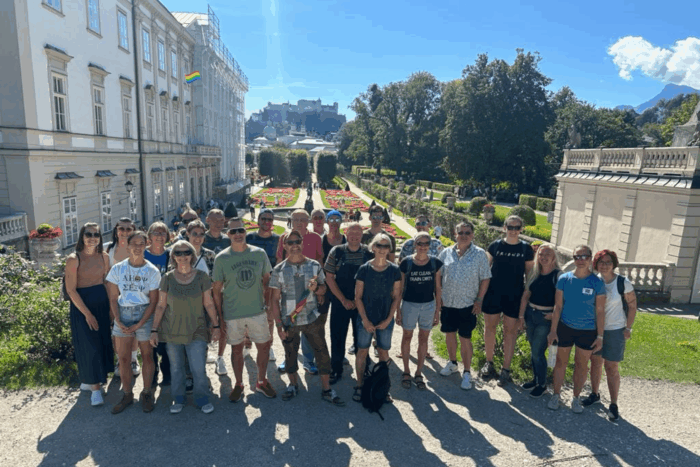
The Homosexuelle Initiative Salzburg (HOSI) — Salzburg's oldest LGBTQ+ community organisation, providing social events, counselling, and advocacy for the city's LGBTQ+ community since 1979.
Austria has a complex historical relationship with LGBTQ+ rights. While Vienna and other larger cities developed visible gay scenes in the 1970s and 1980s, smaller cities like Salzburg followed more gradually. Same-sex partnerships gained legal recognition through registered partnerships in 2009 and full marriage equality in 2019, marking Austria as one of Central Europe's more progressive nations. Salzburg's gay community, though smaller than Vienna's, has grown increasingly visible over the past 15 years, with Pride events beginning in the early 2010s and now drawing hundreds of participants annually.
Today, Salzburg maintains a reputation as a culturally sophisticated, relatively liberal city. The broader population is accepting, particularly among younger people and in the city center. The gay scene is modest in size but genuine—locals rather than primarily tourist-focused.
Neighborhoods and Layout
Salzburg's city center is split by the Salzach River into two main districts. The Altstadt (Old Town) on the left bank is the historical heart, featuring the cathedral, narrow medieval streets, and most major tourist attractions. The Neustadt (New Town) on the right bank, developed in the 17th century, offers a more modern streetscape with residential charm.
The Altstadt remains the main social and commercial hub and is home to gay-friendly spots such as Fungo's Bar, while the city's dedicated gay venues — Mexxx, Dark Eagle and the HOSI Salzburg centre — cluster a short walk away on the right bank, in the Neustadt and Schallmoos districts around Franz-Josef-Straße and Schallmooser Hauptstraße. Key streets include Getreidegasse, the famous shopping street, and the surrounding alleyways. The Neustadt, particularly around the Markart Platz and residential neighborhoods, offers quieter accommodation options. Neither area is specifically a "gay neighborhood" in the way Vienna's 6th district (Mariahilf) is, but rather LGBTQ+ venues and spaces are scattered throughout the center.
Venues and Nightlife
Salzburg's gay scene centers on a small handful of dedicated venues. Mexxx (Schallmooser Hauptstraße 20) is the city's main gay bar and disco — a relaxed bar that turns into a dance floor on weekends and the reliable meeting point for the local community. Nearby, Dark Eagle (Paracelsusstraße 11) is Salzburg's leather and fetish bar, run as the LMC Salzburg clubhouse, with a bar open to all and a men-only cruise area downstairs. HOSI Salzburg (Franz-Josef-Straße 22), the city's LGBTQ+ centre, runs a welcoming ground-floor bar and regular community evenings, while Fungo's Bar (Steingasse 10) in the Old Town is a cosy, gay-friendly café-bar. For cruising, Cruising Line (Mertensstraße 13) is a men-only cruise club and cinema, and there is no dedicated gay sauna in Salzburg — the nearest are in Munich and Vienna.
The scene is quieter than Vienna's—expect relaxed cafés and bars rather than large clubs or multiple circuit venues. Weekend evenings are busier; midweek can be slower. Many gay visitors to Salzburg socialize in mainstream venues as well; the city is generally accepting, and travelers won't feel unsafe in regular bars or restaurants.
For nightlife beyond dedicated gay venues, mainstream clubs and bars throughout the city center are welcoming. The city's nightlife overall is modest compared to larger Austrian cities; people tend to socialize early in the evening and wind down by midnight or 1 a.m.
Salzburg Pride — organised by HOSI Salzburg as the Christopher Street Day (CSD) festival — takes place from late August into early September, featuring a parade that sets off from the main station (Hauptbahnhof), plus outdoor events, cultural programs, and social gatherings. The event has grown in recent years and attracts both locals and visitors. Numbers are modest—typically several hundred to over a thousand participants—but the atmosphere is celebratory and inclusive. The local city government and mainstream businesses increasingly participate.
Beyond Pride, the LGBTQ+ community organizes occasional social events, film screenings, and cultural gatherings throughout the year. QWIEN, the queer history museum and archive in Vienna, occasionally holds events, and some Salzburg residents attend cultural programs in the capital.
Where to Stay
Salzburg offers abundant accommodation for all budgets. For gay travelers, there is no specific gay hotel district, but several properties cater explicitly to LGBTQ+ guests and are well-reviewed on platforms like misterb&b and TripAdvisor. Many mainstream hotels and guesthouses throughout the Altstadt and Neustadt are equally gay-friendly and welcoming.
The Altstadt offers the most atmospheric stay with proximity to historic sites and nightlife, though prices are higher and some older buildings have small rooms and staircases. The Neustadt provides better value and modern amenities; it's a 5-10 minute walk across the river. For budget travelers, several hostels serve a mixed international crowd and are LGBTQ+-friendly.
Salzburg is a safe destination for LGBTQ+ travelers. Austria's legal framework protects LGBTQ+ people; discrimination is illegal, and major crimes against visitors are rare. Public displays of affection between same-sex couples are normal and accepted in the city center, though as in any conservative area, discretion may be preferred in outlying neighborhoods or rural areas.
Some visitors report that Salzburg can feel more conservative in atmosphere than Vienna, reflecting its Catholic heritage and smaller-town character—but this translates to disinterest rather than hostility. The gay community itself is present, welcoming, and in contact with broader society.
Getting Around
Salzburg is highly walkable; most attractions and venues lie within 15-20 minutes on foot. The compact city center is best explored on foot, particularly the narrow Altstadt lanes. Taxis and ride-sharing are available and inexpensive. Public transport—buses and the efficient local rail—is reliable and affordable. The main train station (Salzburg Hauptbahnhof) connects to Vienna (2.5 hours), Innsbruck, and Munich, making Salzburg an accessible hub.
Food and Culture
Salzburg's dining scene ranges from traditional Austrian cuisine (schnitzel, strudel, coffee cake) to international options. The city is famous for Mozartkugel (Mozart balls, a local chocolate confection). Restaurants throughout the center serve traditional and modern cuisine. Cafés are integral to Salzburg culture; sitting in a café with a coffee and newspaper is a beloved local ritual.
Culturally, Salzburg is dominated by classical music heritage—Mozart was born here, and the Salzburg Festival (summer opera and concert festival) is world-renowned. The fortress, cathedral, and surrounding baroque architecture attract visitors year-round. Museums cover art, history, and local culture. This cultural focus shapes the city's character and appeals to visitors seeking substance beyond nightlife.
Day Trips and Beyond
Salzburg sits in a region of Alpine scenery and smaller towns. Day trips include Hallein (a saltmining town 15km south), Mondsee (a lake town 30km east, featured in The Sound of Music), and numerous hiking opportunities in the surrounding mountains. The Salzkammergut region offers mountain scenery, lakes, and small villages. Many visitors combine Salzburg with Vienna (2.5 hours by train) or Munich (90 minutes by train), both offering larger gay scenes.
For LGBTQ+ travelers specifically, Vienna offers a far more extensive gay infrastructure—multiple bars, clubs, saunas, bookshops, and a visible gay neighborhood. Many Salzburg visitors extend their trips to Vienna for nightlife and social opportunities, treating Salzburg as a cultural and historical interlude.
Timing and Planning
Salzburg is best visited May to September, when weather is warm and Pride events occur. Winters are cold and snowy, adding to the baroque charm but limiting outdoor activity. The city is busy with tourists year-round, peaking in July-August and around the Christmas season (famous for markets).
For LGBTQ+ travelers, planning ahead helps: research current venues and events, check Pride dates, and book accommodation early in peak season. Connecting with local LGBTQ+ groups online (Facebook groups for Salzburg LGBTQ+ community exist) can provide current information and social contact before arrival.
Summary
Salzburg offers a unique destination for LGBTQ+ travelers seeking culture, history, and an intimate gay social scene rather than nightlife intensity. The city is safe, accepting, and beautiful. The gay community, while smaller than in Vienna or Berlin, is genuine and welcoming. Visitors should approach Salzburg for its world-class cultural and natural attractions—the gay scene complements rather than drives the visit. For many LGBTQ+ travelers, Salzburg works best as part of a broader Austrian itinerary, combining its specific charms with side trips to larger cities for more extensive gay infrastructure.
Frequently asked questions
Austria is one of Europe's more progressive nations regarding LGBTQ+ rights. Salzburg has embraced this progressive trajectory and cultivated a tight-knit, welcoming community that reflects Austrian values of respect and tolerance.
Salzburg's dedicated gay venues cluster on the right bank of the Salzach, in the Neustadt and Schallmoos districts a short walk from the old town. Mexxx (the main gay bar) is on Schallmooser Hauptstraße, Dark Eagle (leather and fetish bar) is on Paracelsusstraße, and the HOSI Salzburg LGBTQ+ centre is on Franz-Josef-Straße. The Old Town adds gay-friendly spots such as Fungo's Bar.
Mexxx (Schallmooser Hauptstraße 20) is Salzburg's main gay bar — a relaxed bar and weekend disco that serves as the city's central LGBTQ+ meeting point. For a leather and fetish crowd, Dark Eagle (the LMC Salzburg clubhouse) is the other dedicated gay bar.
Not many — Salzburg is a compact, culture-focused city. Mexxx doubles as the main bar and weekend dance floor, Dark Eagle serves the leather and fetish scene, and Cruising Line is a men-only cruise club. For bigger club nights, some visitors travel to Vienna or Munich.
Salzburg Pride, run by HOSI Salzburg as the Christopher Street Day (CSD) festival, takes place from late August into early September. In 2026 the Pride Festival runs roughly 28 August to 6 September, with the CSD parade on Saturday 5 September starting from the main station (Hauptbahnhof).
There are no exclusively LGBTQ+ hotels in Salzburg, but many central hotels and guesthouses are gay-friendly and welcoming, and several are well reviewed by LGBTQ+ travellers on platforms like misterb&b and TripAdvisor.
Your privacy choices.
We use cookies to run GayOut and, with your consent, measure usage. Learn more
Your privacy choices
We use cookies to keep GayOut running, remember your preferences, and (with your permission) measure how the site is used. You can accept all, reject all, or pick what you allow. Learn more
Essential
Required for sign-in, fraud prevention, CSRF protection and remembering your language. Cannot be disabled.
Always on
Remembers your favourites, dark mode and other interface preferences across visits.
Helps us understand which pages people visit (Google Analytics, server-side stats) so we can improve.
Used by campaign tracking pixels. None are active right now, reserved for future use.
Install GayOut
Add GayOut to your home screen for faster access, offline favourites, and Pride alerts.













 Gay Bars & Clubs
Featured
(93)
Gay Bars & Clubs
Featured
(93)