


本指南 · 19 章節
- What the law says
- The Family Protection Bill
- How the law is used: recent cases
- The climate in 2026
- Why we don't list venues
- Apps, phones and your data
- What you can safely enjoy in Nairobi
- Getting around Nairobi safely
- Practical tips
- If something goes wrong
- Want an open LGBTQ+ scene? Go here instead
- A few words of Swahili and Sheng
- At a glance
- Frequently asked questions
- Is it illegal to be gay in Kenya?
- Are there gay bars or clubs in Nairobi?
- Is Nairobi safe for gay travellers?
- Is it safe to use Grindr or other dating apps in Nairobi?
- What should I do if I'm arrested or blackmailed in Nairobi?
Read this first: this is a Safety Mode guide. Sex between men is a crime in Kenya. Prosecutions are rare, but blackmail, robbery and violence against gay men are common, and many attacks begin on dating apps. Nairobi has no openly LGBTQ+ bars, clubs, saunas or public Pride, and we deliberately name no venues, hotels or meeting places described elsewhere as "gay-friendly": a list like that helps the people who prey on gay men more than it helps you. This guide is about enjoying Nairobi as any traveller does, and keeping yourself out of danger.
Nairobi sits high, at about 1,700 metres, so mornings are cool and the light is sharp. Matatus painted with graffiti portraits and pumping music jostle along the roads, smoke from nyama choma grills drifts out of roadside joints, and in October and November the jacaranda trees turn whole streets purple. On the city's southern edge, giraffes and rhino graze in a national park with office towers on the horizon. It's East Africa's business hub, young, creative and sociable. It also has a criminal law against sex between men, a loud anti-LGBTQ+ political current and an organised blackmail problem. Kenya's LGBTQ+ community has won real victories in court, but a visitor needs discretion. Here's what you need to know.
Emergency contacts – save these before you travel
- Local emergency numbers: 999 or 112 for police, fire and ambulance.
- United States: US Embassy Nairobi, United Nations Avenue, Gigiri; +254 20 363 6000, the same number after hours (travel.state.gov, ke.usembassy.gov).
- United Kingdom: the Foreign Office in London answers 24 hours a day on +44 20 7008 5000. The British High Commission is in Nairobi; check its current contacts on gov.uk before you go.
- Help organisations: the National Gay and Lesbian Human Rights Commission (NGLHRC) runs a legal aid centre offering free legal advice and representation to LGBTQ+ people in Kenya; UNHCR Kenya's help site lists its number as 020 4400525 (+254 20 4400525 from abroad), and its website is nglhrc.com. Community groups such as Ishtar MSM have paralegals who help victims of blackmail report crimes; ask NGLHRC to put you in touch. Make contact from a safe device.
- If you're detained: Kenya, the US and the UK are all parties to the 1963 Vienna Convention on Consular Relations. If you ask, the authorities must inform your embassy without delay. Ask for a lawyer, and don't sign any statement you don't fully understand.
- Section 162, Penal Code ("unnatural offences"). It punishes "carnal knowledge of any person against the order of nature" with up to 14 years in prison, and is interpreted to cover consensual sex between men. The section is worded for "any person", and its higher 21-year penalty applies where there was no consent or consent was obtained by force or threats. Section 163 punishes attempts with up to seven years.
- Section 165 ("indecent practices between males"). It punishes "gross indecency" between men, in public or in private, with up to five years.
- May 2019, High Court. On 24 May 2019 a three-judge bench refused to declare Sections 162 and 165 unconstitutional. The petitioners appealed; the Court of Appeal listed the case for a full hearing in May 2026, and we found no published decision as of October 2026.
- February 2023, Supreme Court. By a 3–2 majority, the Supreme Court dismissed the government's appeal and confirmed that the NGO Co-ordination Board had acted unconstitutionally in refusing to register NGLHRC because of its name. The majority held that Article 27 of the Constitution protects sexual minorities from discrimination, including when they form associations. The ruling did not change the criminal law. An attempt by MP George Kaluma to have the ruling reviewed was rejected in September 2023.
- Marriage and recognition. Kenya's 2010 Constitution gives every adult the right to marry "a person of the opposite sex". There's no recognition of same-sex couples, no adoption, and no anti-discrimination protection based on sexual orientation.
- Transgender people. Kenyan courts have ruled in favour of transgender litigants in recent years, including, according to reports, a May 2026 High Court ruling on changing gender markers in identity documents. In practice, trans people face serious harassment, and the law is unsettled.
- Blackmail at scale. NGLHRC recorded 679 blackmail and extortion cases between 2014 and 2022, and its legal aid centre handled 901 cases in 2022 alone. Ishtar recorded at least 226 blackmail cases involving gay men in 2025, and 61 in January and February 2026, and says many more go unreported.
- March 2026, Nairobi. Two men were sentenced at Milimani Law Courts in Nairobi to 15 years for robbery with violence. In April 2023 they and three others lured two gay men through Facebook, held them for about four hours, beat them, threatened to out and kill them, and forced them to transfer about 100,000 shillings. An Ishtar paralegal helped the victims report it. NGLHRC's executive director, Njeri Gateru, said the men were part of a larger gang, and that some police officers are alleged to work with such gangs; a police spokesman said he would act on any complaint.
- Police extortion. The UK Home Office reports that police use public order laws to arrest and extort LGBTQ+ people, have raided homes and seized phones, and in 2021 reportedly used a dating app to lure people for extortion.
- Edwin Chiloba, 2023. In January 2023 the body of Edwin Chiloba, a fashion designer and LGBTQ+ activist, was found in a metal box near Eldoret. His housemate, Jacktone Odhiambo, was convicted of his murder by the High Court in Eldoret and sentenced to 50 years in December 2024. The killing shook Kenya's queer community.
- Dating apps are where most attacks start. The US government says its embassy has received many reports of gay travellers being assaulted after meeting Kenyans on dating apps. Kenyan rights groups describe the pattern: someone poses as a date on Grindr, another app or Facebook, collects personal details, then lures the victim to a private address, where a group robs, beats or sexually assaults him, films him and demands money for silence. Victims are sometimes taken to cash machines or made to call relatives for mobile money transfers. Our advice: don't use dating apps in Kenya at all, and delete Grindr and any other dating app before you land, or at the very least log out and hide them. The UK Foreign Office's general advice for any app date is to meet in a busy, well-lit public place and tell someone your plans.
- Never go to a private address or get into a car with someone you have just met, and never bring a stranger back to your room.
- Your phone: before you travel, delete intimate photos and chats from the device and any synced cloud album, turn off lock-screen message previews and use a strong passcode. Police have seized phones during raids.
- Extortion: if someone threatens to expose you, stop all contact, keep screenshots and call your embassy. Paying usually leads to further demands. NGLHRC and Ishtar help local victims report blackmail, and Kenyan courts have jailed blackmailers.
- Don't post anything LGBTQ+-related or location-tagged while you're in Kenya, and be wary of friendly strangers who contact you on social media.
- Nairobi National Park. Kenya's first national park, opened in 1946, sits just south of the city. Lions, giraffes, zebras and rhino roam open plains with the city skyline behind them. Go early in the morning, when the animals are most active and the light is soft, with a registered operator or a booked driver.
- Karura Forest. A large urban forest in the north of the city, with walking and cycling trails, a waterfall and caves. It was saved from land-grabbers in the late 1990s by protests led by Wangari Maathai, who later won the Nobel Peace Prize. Use the main gates and stay on marked trails.
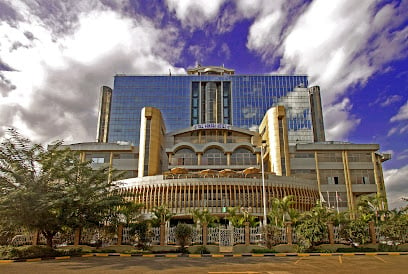
- Kenyatta International Convention Centre (KICC). The cylindrical tower in the city centre is a Nairobi landmark, and visitors can go up to its rooftop for wide views over the city. Check current access at the entrance.
- Nyama choma. Nairobi's social ritual is roast meat, usually goat or beef, grilled slowly and served chopped on a board with kachumbari (tomato and onion salad), ugali (maize porridge) and a cold Tusker. Restaurants and big garden joints fill up at weekends, and it's an easy, sociable way to spend an afternoon.
- Coffee and food. Kenyan coffee is excellent, and the city's cafés are good places to spend a slow morning. Try chapati, mandazi (fried dough) and sukuma wiki (braised greens).
- US travel advice: on 19 October 2026 the US State Department raised Kenya from Level 2 to Level 3, "Reconsider travel", citing health risks linked to Kenya's Ebola cases alongside crime, kidnapping, terrorism and civil unrest, and keeping "Do not travel" warnings for Eastleigh and Kibera and for several border and coastal counties. Level 3 is not a ban; check the latest wording on travel.state.gov before you book.
- Crime: the UK Foreign Office says muggings, armed robbery and carjacking are frequent in large cities, and names Eastleigh, the Central Business District, Mathare, Kibera and other informal settlements as higher-risk areas. Don't walk alone in isolated areas, even by day. The US advises against all travel to Eastleigh and Kibera.
- Taxis: the US warns that people using taxis hailed in the street have been robbed, kidnapped and extorted. US embassy staff are not allowed to hail taxis on the street. Never take a random taxi off the street: use a ride-hailing app (the US notes that Uber and Bolt are common in Kenya's major cities), or a driver booked through your hotel if you have no data, check that the plate and driver match the app before getting in, and keep the windows up and doors locked.
- Bars and clubs: don't accept drinks or food from strangers. The UK Foreign Office warns that spiking is used to enable theft and sexual assault.
- Fake officials: people pose as police or security guards. Ask for identification.
- Protests: avoid demonstrations and large crowds, and follow local news.
- Other regions: the US advises against all travel to several counties near the Somali border and parts of the north and coast; the UK also advises against travel to parts of Kenya. Check both before travelling beyond Nairobi and the main safari areas.
- Entry: Kenya requires visitors to apply online for an Electronic Travel Authorisation before travelling. Check the current rules and any yellow fever certificate requirement with your government's travel advice.
- Money: the currency is the Kenyan shilling (KES). Cards are accepted in hotels, malls and larger restaurants, and M-Pesa mobile money is used almost everywhere. Carry small notes for tips and markets.
- Health: talk to a travel clinic about malaria (the risk is lower in Nairobi than in many parts of Kenya), vaccinations and PEP before you go. Bring enough of any regular medicines, including PrEP. Private hospitals in Nairobi are good but expensive; get travel insurance that covers evacuation.
- Ebola: Kenya confirmed Ebola cases in October 2026, starting with a man who arrived from Congo via Uganda and died in a Nairobi hospital. By 19 October eight cases had been confirmed, contacts were in quarantine, and the Ministry of Health said the overall public risk remained low. Follow Ministry of Health and your government's health advice, and seek medical help at once if you develop a fever.
- Hotels: large international hotels are the most predictable choice. If two men are travelling together, state your bed preference when booking; you don't need to explain. Some smaller guesthouses may be less comfortable with it.
- Plastic bags: Kenya banned plastic carrier bags in 2017, with heavy penalties. Pack a reusable bag.
- Weather: the long rains usually fall from March to May and the short rains around October to December; mornings and evenings can be cool all year.
- Pride: there's no public Pride march or public LGBTQ+ event in Nairobi.
- Before you go: save your embassy's emergency number in your phone and on paper, register with your government's travel service if it has one, and share your itinerary with someone at home.
- If you're stopped or detained: stay calm and polite and ask for your embassy to be told. Don't unlock your phone voluntarily or volunteer details about your private life. Don't offer bribes.
- If you're robbed or blackmailed: get to a safe place, contact your embassy, and keep the evidence. Kenyan courts have convicted blackmailers, and local groups help victims through the process.
- If you live in Kenya and are at risk: NGLHRC, Ishtar MSM and the coalition GALCK+ support LGBTQ+ Kenyans with legal aid, health and peer support. Reach them through their official websites or social media accounts, from a safe device.
- Habari? – how are you? (reply nzuri, fine)
- Mambo? – Poa! – what's up? – cool! (the everyday Nairobi greeting)
- Asante (sana) – thank you (very much)
- Karibu – welcome, you're welcome
- Bei gani? – how much is it?
- Sawa – OK
- Pole pole – slowly, take it easy
- Nataka kuongea na ubalozi wangu – I want to speak to my embassy
Legal in one line: Section 162 of Kenya's Penal Code punishes "carnal knowledge against the order of nature" with up to 14 years in prison, Section 163 punishes attempts with up to seven years, and Section 165 punishes "indecent practices between males" with up to five years; the High Court upheld these sections in May 2019, same-sex marriage is constitutionally barred, and there's no protection from discrimination.
What the law says
The Family Protection Bill
In 2023, after the Supreme Court ruling, Homa Bay Town MP George Peter Kaluma drafted a Family Protection Bill modelled on Uganda's 2023 Anti-Homosexuality Act. The UK Home Office summarises it as proposing far harsher penalties for same-sex acts, including prison terms of at least ten years and, in some cases, the death penalty, along with a ban on "promoting" homosexuality. Parliament's own tracker shows the proposal was sent to the Committee on Social Protection for pre-publication scrutiny in 2023.
The bill has not become law. As of the latest reporting we found, from 2025, it had not been published or debated in the National Assembly. Kaluma called again in January 2025 for it to be enacted, and anti-LGBTQ+ campaigners keep pushing for it, so the issue comes back into the news regularly. Check the latest position before you travel.

How the law is used: recent cases
Prosecutions under Sections 162 and 165 are rare. ILGA World, cited by the UK Home Office, identified about 18 incidents of state targeting between 2009 and 2023 but no clear convictions for consensual sex. The danger comes mostly from blackmail, mob violence and police who extort money with the threat of arrest.
The climate in 2026
Kenya is more open than many of its neighbours: LGBTQ+ organisations are registered and operate publicly, Kenyan courts have repeatedly protected their rights, and Nairobi has a visible, articulate activist community. But public opinion is largely hostile, and politicians and religious leaders regularly campaign against "promotion" of homosexuality. When Kenya voted at the UN Human Rights Council in July 2025 to renew the mandate of the UN's independent expert on sexual orientation and gender identity, anti-LGBTQ+ politicians and groups demanded that the government withdraw the vote.
Nairobi has also seen large and sometimes deadly anti-government protests, in 2024 and again in June and July 2025. The UK Foreign Office warns that protests are common in Nairobi and can turn violent quickly, especially on anniversaries of earlier protests.
None of this means every visitor is at risk. Many LGBTQ+ travellers pass through Nairobi on their way to safari without trouble. The danger begins with things that mark you out: a stranger met online, a meeting in a private place, affection in public, intimate material on your phone, or someone who decides to make money from a suspicion.

Why we don't list venues
Some directories and blogs label particular Nairobi bars, clubs and hotels as "LGBTQ+-friendly". These are mainstream businesses that don't present themselves that way, and the label is unverified. Being known as a place where gay men go makes it easier for blackmailers and corrupt officers to find targets. Don't go anywhere expecting a gay crowd, and don't rely on any list of "friendly" venues in Nairobi. We never list cruising places in countries that criminalise gay men, and in Kenya public sex is both illegal and dangerous.
Apps, phones and your data

What you can safely enjoy in Nairobi
Getting around Nairobi safely

Practical tips
If something goes wrong

Want an open LGBTQ+ scene? Go here instead
If you want a trip where you can be yourself, South Africa, where same-sex marriage has been legal since 2006, has open scenes in Cape Town and Johannesburg. Check your government's travel advice before booking.
A few words of Swahili and Sheng
English and Swahili are Kenya's official languages, and most people in Nairobi speak both. On the street you'll hear Sheng, Nairobi's fast-changing mix of Swahili and English.
At a glance
| Topic | The situation in 2026 | What to do |
|---|---|---|
| Sex between men | Crime: Penal Code s.162 (up to 14 years), s.163 (attempts, 7 years), s.165 (5 years) | Keep your private life private |
| Court rulings | High Court upheld the law in 2019 (appeal pending); Supreme Court backed NGLHRC's registration in 2023 | Don't read court wins as decriminalisation |
| Family Protection Bill | Drafted 2023; not law, stalled before publication | Check the news before you travel |
| Gay bars, clubs, saunas, Pride | None operate openly | Use mainstream restaurants and hotel bars |
| Dating apps | Robbery, assault and blackmail widely documented | Don't use them in Kenya |
| Phone | Police have seized phones; blackmailers use photos | Clean your phone before you travel |
| Travel advice | US Level 3 "Reconsider travel" since 19 October 2026 (health, crime, terrorism, unrest) | Check US and UK advice before booking |
| Street crime | Muggings and robbery; Eastleigh, Kibera, Mathare, CBD flagged | Ride-hailing apps, never street taxis; don't walk alone |
| Protests | Common in Nairobi; deadly in 2024 and 2025 | Avoid crowds and rallies |
| Help | NGLHRC legal aid; Ishtar paralegals; your embassy | Save contacts before you go |
| If detained | Right to consular notification | Ask for your embassy and a lawyer |
Frequently asked questions
Is it illegal to be gay in Kenya?
Yes. Sections 162 and 165 of the Penal Code criminalise sex between men, with up to 14 years in prison, and the High Court upheld them in 2019.
Are there gay bars or clubs in Nairobi?
No. No bar, club or sauna in Nairobi is openly LGBTQ+ and there is no public Pride, so this guide names no venues.
Is Nairobi safe for gay travellers?
Many LGBTQ+ visitors have no trouble, but discretion is essential. The main risks are blackmail and robbery, often set up through dating apps, so skip the apps and use ride-hailing or hotel-booked cars.
Is it safe to use Grindr or other dating apps in Nairobi?
No. US travel advice warns that criminals use dating apps to target victims, and Ishtar recorded at least 226 blackmail cases against gay men in 2025. Delete the apps, or at least log out, before you arrive.
What should I do if I'm arrested or blackmailed in Nairobi?
Stay calm, ask for your embassy to be told and ask for a lawyer. If someone threatens to expose you, stop contact, keep the evidence and call your embassy before paying anything.
Part of the GayOut city guides. See the Kenya country page for the national overview. This guide is general information, not legal advice; laws and their enforcement can change quickly.
