Same-sex acts between adults were decriminalised in Azerbaijan in 2000, technically making them legal under the criminal code. In practice, this formal legality provides no meaningful protection. There are no anti-discrimination laws covering sexual orientation or gender identity, no partnership or marriage recognition, no adoption rights, and no legal gender recognition pathway. Police regularly conduct entrapment operations targeting gay men via dating apps. In September 2017, Azerbaijani…
Never miss a gay event in Baku
One email a week — the weekend lineup, parties and deals. No spam, unsubscribe anytime.
Weekly event updates. Notifications appear on your lock screen.
On iPhone: first add GayOut to your Home Screen (Share → Add to Home Screen), then open it from there to enable notifications.
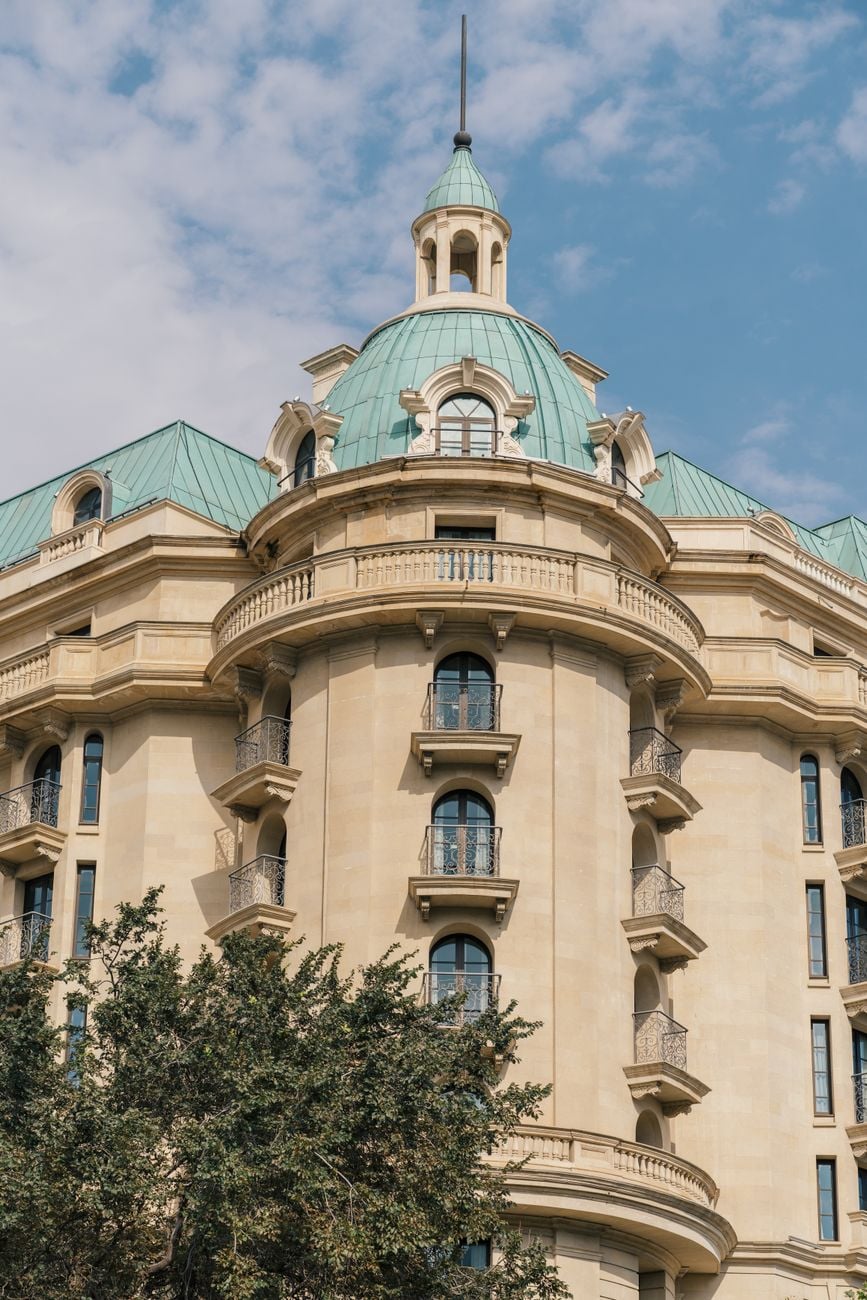
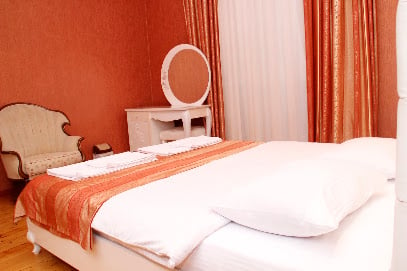
International five-star hotel in the landmark Flame Towers complex. Applies Accor Group non-discrimination standards. The safest accommodation option for LGBTQ+ visitors to Baku.
Short answer: Baku has no gay sauna, no gay bathhouse, and no bar or club that publicly calls itself gay. What it does have is a handful of mixed venues where queer locals and visitors are comfortable, a genuinely active underground scene that runs on private flats and encrypted group chats, and a legal environment that offers almost no protection if something goes wrong.
"The real scene in Baku isn't in bars. It's in people's living rooms and at private parties." — a local, 26
That sentence is the whole guide, really. Everything below is about how to find the living rooms without creating a problem for the people who live in them.
Is there a gay sauna in Baku?
No.
If you search for one, you'll land on aggregator sites like Menspaces or Menkarta with "gay sauna in [city]" pages. These are auto-generated. There are no verified venues behind them, the text is filler, and following them will waste an evening.
What Baku does have is traditional hamams in the Old City (İçərişəhər), including the 15th-century Haji Gayib bathhouse near the Maiden Tower. These are historic public baths with a men's bathing culture that some Western visitors read as homoerotic — a Windy City Times writer built an entire essay around exactly that impression back in 2003, while every Azeri expert he interviewed told him he was projecting.
They were right. These are not gay venues, they are not cruising spots, and treating them as such is a fast way to create a serious problem for yourself and for the staff. Go for the vaulted brickwork and the kisə scrub. That's the whole offer, and it's a good one.
Is there a gay bar or club?
Not officially, and the situation is more fragile than most English-language guides admit.
The Labyrinth raid. On the night of 27 December 2025, police raided Labyrinth, a central Baku club where LGBTQ+ people gathered, and detained 106 people. The stated pretext was drug use; nothing was found, and everyone detained was ultimately fined under an administrative smoking rule — 30 to 50 manat, roughly $18–30. Detainees and witnesses described violence, humiliating interrogation about their private lives, phones taken and searched, and personal photos copied by officers. ILGA-Europe issued a statement of concern. This followed a similar mass operation in September 2017, when 83 people were detained in what the community calls the "LGBTI+ hunt."
Local queer media (Qıy Vaar!) and JAMnews covered the raid in Azerbaijani and Russian before anyone covered it in English. Activist Ali Malikov told Meydan TV that raids like this are a recurring instrument of pressure, and that earlier in 2025 police had gathered information from gay dating apps and used it to blackmail users.
The practical takeaway: venues where the community concentrates are known to the police and periodically targeted. Any "queer club" listing you find for Baku — including ours — describes a place that exists on some nights, not a stable scene.
Mixed venues, and what walking in actually feels like
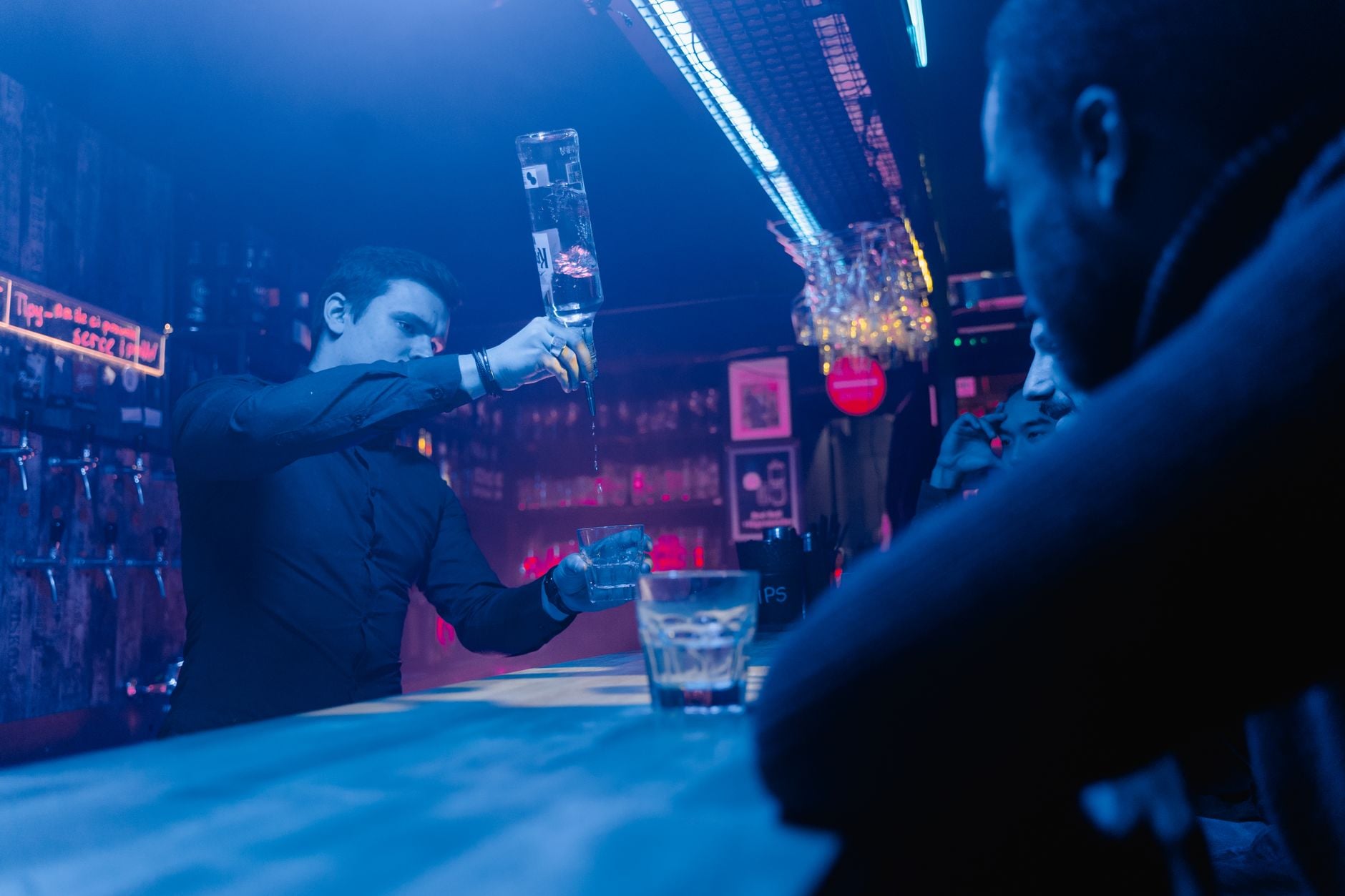
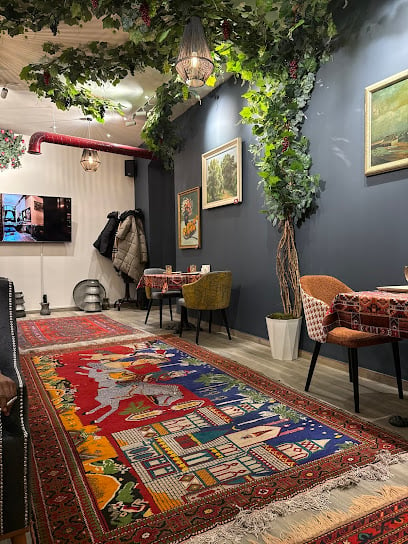
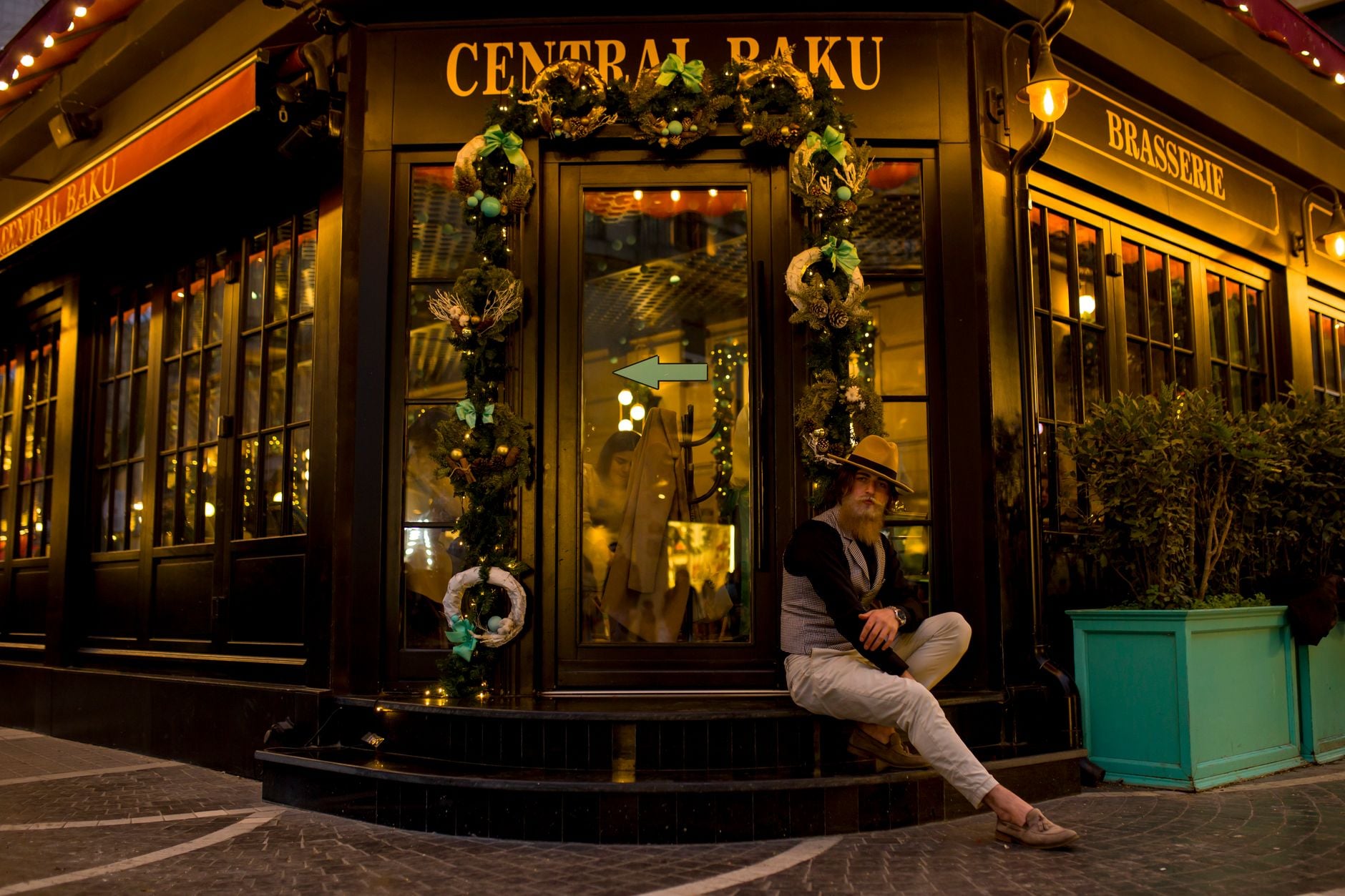
None of these are gay bars. They're places with a young, international, unbothered crowd.
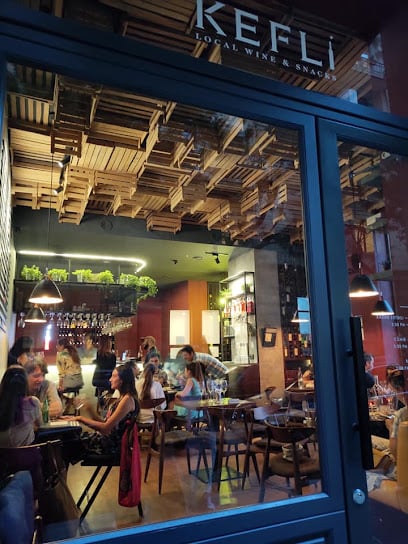
Kefli Wine Bar is the closest thing Baku has to a queer-adjacent regular — gay-owned and openly gay-friendly. It's small, wine-focused, and the first thing you'll notice is that nobody looks up when you come in. That sounds like nothing. It isn't. After a few days of being read and re-read on the street, walking into a room where your presence is unremarkable lands with more force than you expect. You'll still be sitting with a straight-passing posture out of habit, and about twenty minutes in you'll notice you've stopped. That's the closest thing to a gay bar experience Baku offers, and it's enough.
The others are simply easy rooms rather than affirming ones:
Room Baku — art-and-wine space, mixed, design-conscious crowd.
Loft Speakeasy — busier at weekends, more of an actual night out.
Jolly Joker — mainstream, mixed, unremarkable in the good way.
FOMO Club — techno and visiting international DJs; doubles as an event hall.
Ask a local before assuming any of these is "the" spot on a given night. Instagram is where Baku venues actually live; the websites are mostly dead.
This isn't only an outsider's read. On Azerbaijani-language forums, when someone asks whether Baku has bars or clubs where gay men gather "like abroad," the answers from locals are consistent and slightly weary: there is no specific place. What exists is informal — people who know people, a few tolerant rooms, and periods where something semi-regular runs until it doesn't.
Namus: why the discretion runs so deep
Western visitors tend to assume that if the police are the problem, then avoiding the police solves it. In Azerbaijan that's only half the picture.
Namus — honour, and specifically the honour a person's conduct confers on or costs their family — is the organising social value here, reinforced by el nə deyər: "what will people say." Being outed doesn't just expose someone to the state. It can cost them their family, their housing, their marriage prospects, and their standing in a network they'll depend on for the rest of their life. Nafas has documented cases of young men abused by their own families after being outed, including a 17-year-old in Salyan.
This is why a man who was affectionate with you in a flat at 2am will walk two metres away from you on the street at noon, and why he may not want a photo, a follow, or a saved contact. It isn't shame and it isn't rejection. It's a completely rational assessment of what a single screenshot costs. Take it at face value and don't negotiate.
Apps, Telegram, and digital hygiene
Telegram is the real infrastructure, not Grindr. Across the post-Soviet space, queer life organises in Telegram groups and channels — private parties, mutual-aid networks, community news — and Baku is no exception. You will not find these by searching. You get added by someone who already trusts you, usually after meeting in person. This is a feature of the design, not an obstacle to route around.
Grindr works but expect a high proportion of blank profiles, headless torsos, and thin accounts. That caution is rational, not rude: after the 2025 app-based blackmail cases, a visible face is a liability. Hornet has decent penetration across the region and is worth running alongside.
Practical digital hygiene:
Bring a VPN and install it before you land. Azerbaijan's everyday internet is mostly open and VPNs are legal, but the government has repeatedly imposed sudden platform-wide blocks — during the 2020 Karabakh war it took out Facebook, Instagram, TikTok, YouTube, WhatsApp, Skype and Zoom simultaneously — and OONI measurements through 2026 continue to show sustained network interference. Blocks arrive without warning; app stores may be among the things you can't reach. Proton VPN and Mullvad are the sane choices for anyone who wants jurisdiction and no logs.
Lock down Telegram before you arrive. Enable a passcode and Two-Step Verification, hide your phone number from everyone, disable "who can find me by my number," turn off Last Seen, and use Secret Chats with self-destruct timers for anything sensitive. Set an auto-delete timer on regular chats too.
Assume public and hotel Wi-Fi is observed. There's no published evidence of routine monitoring of tourist traffic in Baku, but the cost of assuming otherwise is zero and the cost of being wrong isn't. VPN on, always, on any network you don't control.
Don't put a face picture on a dating profile and don't send one early. Verify with a short video call before meeting.
Think about what's on your lock screen and in your recent photos. In the Labyrinth raid, phones were searched and images copied on the spot. If you use a phone with a secondary profile or a hidden album, this is the trip for it.
Dressing for the street
This one surprises people, and it operates before anyone gets to the question of who you sleep with.
Azerbaijani street norms for men are conservative and fairly narrow. Adult men in shorts, visible jewellery beyond a watch, earrings, bright or tight clothing, or anything read as styled will draw attention — from stares up to comments and occasional street-level policing of masculinity by other men. A twenty-year-old in Baku dresses more formally than a forty-year-old in Tel Aviv.
What works: long trousers, dark or muted colours, a plain shirt or polo, closed shoes. Slightly smarter than you'd wear at home. Baku is a dressed-up city and blending in means dressing up, not down. Save the shorts for the Caspian shoreline outside the city and the hotel.
None of this is about hiding who you are. It's about not handing a stranger on Nizami Street a reason to start something before you've even opened your mouth.
Getting around
Use apps, never street taxis. Bolt, Yango and Uber Azerbaijan (which runs on Yango's fleet) all cover Baku, and rides in the centre run $2–6. Yango tends to be cheapest; Bolt has the widest coverage in outer districts.
The reason to insist on apps isn't only price. A street taxi involves negotiating a fare with a stranger, in Azerbaijani or Russian, sometimes late at night, sometimes after he's watched you come out of a particular door. An app removes the negotiation, fixes the price, logs the trip and the driver, and lets you sit in silence. That's worth more than the manat you'd save.
Unmarked cars cluster around Nizami Street and the Old City and are unlicensed. Skip them. If you do end up in a street taxi, confirm the meter is running before you move. The metro is clean, cheap and easy, and runs until midnight.
Where to stay
International chains apply their own non-discrimination standards and won't blink at two men sharing a double: Hyatt Regency Baku, Fairmont Baku (Flame Towers), Hilton Baku, Boutique Hotel Baku. misterb&b has decent coverage in Baku, and a host is often the fastest route to understanding what's actually happening that week.
Base yourself around Torgovaya (Nizami Street) and the centre — most convenient and most relaxed.
Same-sex relations were decriminalised in 2000. There is no anti-discrimination law covering sexual orientation or gender identity.
Azerbaijan has ranked last of 49 European countries on ILGA-Europe's Rainbow Index for nine consecutive years.
Trans people face substantially higher risk than cis gay men, including in detention.
Street crime is low and Baku feels safe day to day. The risk here isn't muggers; it's police and public attention.
Skip public displays of affection. Presenting as friends in public costs you nothing.
If you're detained, blackmailed, or attacked:
Your embassy or consulate first. Save the number and the address before you land. Ask for consular contact immediately and say nothing about your private life. You are not obliged to discuss it.
Nafas LGBTI Azerbaijan Alliance (nafaslgbti.org) — the main grassroots LGBTI+ organisation in the country, working since 2012, with legal aid and mental health programmes. They document cases and can point you to lawyers. Contact them through their site or social channels rather than by phone.
Minority Azerbaijan (minorityaze.org) — queer media outlet that also documents abuses and has strong ties to the legal-aid network.
Rainbow Railroad (rainbowrailroad.org) — for anyone facing a genuine threat to their safety who needs to get out. Relevant for locals more than tourists, but worth knowing exists.
Note on blackmail: paying never ends it. Nafas and Minority have handled these cases before and know the pattern. Contact them before you contact anyone else.
There is no state-run LGBTQ+ hotline in Azerbaijan. Activists petitioned for one back in 2014 after İsa Şahmarlı's death and never got it.
What to do instead of a scene
Baku rewards travellers who came for the country:
İçərişəhər — UNESCO-listed Old City, Maiden Tower, Shirvanshahs' Palace.
Heydar Aliyev Centre — Zaha Hadid's building, reason enough on its own.
Gobustan — 40,000-year-old rock art plus live mud volcanoes, about 1.5 hours out.
Atashgah and Yanardag — the fire temple, and the hillside that's been burning for centuries.
YARAT Contemporary Art Space — Baku's most interesting contemporary programme.
Sheki — 5–6 hours by bus for around $8; the Khan's Palace earns every one of them.
Baku Free Walking Tours — reliably draws a mixed international crowd, and the lowest-stakes way to meet people in the city.
Nearby, if you want an actual scene
Tbilisi is a short flight or an overnight train, and Georgia's queer nightlife — with its own difficulties — genuinely exists. Istanbul is three hours away and has the closest real scene, saunas included. Plenty of travellers do Baku for the country and Tbilisi or Istanbul for the weekend.
Sources consulted include JAMnews (Azerbaijani and Russian editions), Qıy Vaar! queer media portal, Meydan TV, Nafas LGBTI Azerbaijan Alliance, Minority Azerbaijan, ILGA-Europe's Rainbow Index, OONI network measurement data, Mixmag, Nomadic Boys, and Azerbaijani-language community forums. Last verified: August 2026.
Conditions in Azerbaijan change quickly, and this page is better when locals shape it. If you live in Baku or have travelled there recently and want to add something — anonymously — get in touch.
Frequently asked questions
Same-sex activity is legal (decriminalized in 2000), but there are no anti-discrimination protections, and police entrapment, blackmail via dating apps, and raids on venues are documented — including a December 2025 police raid on a Baku club. Street crime is low; the real risk is police and public attention. Avoid public displays of affection and keep a low profile.
Baku does not have visible LGBTQ+ neighborhoods or dedicated venues. A discreet social scene exists, largely among younger, educated professionals, primarily connecting through online apps and forums.
Baku has no bar or club that publicly identifies as gay. A few central venues draw a discreet, queer-friendly crowd — Kefli Wine Bar (gay-owned) and Room Baku are the names travelers mention most — while Labyrinth, a club where LGBTQ+ people gathered, was raided by police in December 2025. Treat any 'queer venue' listing as a place that exists on some nights, not a stable scene.
Staying in the Sabail or Nizami districts is recommended as they are modern and international areas. High-end international hotel chains in these areas are accustomed to international guests, though discretion is still advisable.
There are no Pride parades in Baku. The LGBTQ+ scene is not visible in the way it might be in other cities.
The LGBTQ+ social scene is largely driven by younger, educated professionals who primarily connect through online apps and forums. International hotel bars and upscale clubs might offer some opportunities for discreet social interaction.
Your privacy choices.
We use cookies to run GayOut and, with your consent, measure usage. Learn more
Your privacy choices
We use cookies to keep GayOut running, remember your preferences, and (with your permission) measure how the site is used. You can accept all, reject all, or pick what you allow. Learn more
Essential
Required for sign-in, fraud prevention, CSRF protection and remembering your language. Cannot be disabled.
Always on
Remembers your favourites, dark mode and other interface preferences across visits.
Helps us understand which pages people visit (Google Analytics, server-side stats) so we can improve.
Used by campaign tracking pixels. None are active right now, reserved for future use.
Install GayOut
Add GayOut to your home screen for faster access, offline favourites, and Pride alerts.


 Gay-Friendly Bars & Clubs
Featured
(362)
Gay-Friendly Bars & Clubs
Featured
(362)