Marriage equality since 2009. First country in the world to allow legal gender change (1972); medical sterilisation requirement removed in 2013. Consistently one of the most progressive countries for LGBTQ+ rights.
Gothenburg's LGBTQ+ history reflects Sweden's gradual evolution toward legal equality and social acceptance. Sweden decriminalized same-sex relationships in 1944 and legalized same-sex marriage in 2009, positioning the country as a European leader in LGBTQ+ rights. Gothenburg developed its modern gay scene in the 1980s and 1990s, with community organizations and venues gradually establishing themselves as the city industrialized and became more cosmopolitan. Today, the scene is characterized by a blend of dedicated gay venues and mainstream spaces that are actively welcoming to LGBTQ+ patrons.
Neighborhoods
The Centrum (city center) is the primary area for LGBTQ+ life in Gothenburg. This historic district contains most of the city's gay bars and cafes, with establishments clustered around Drottninggatan and Kungstorget and the surrounding blocks. The neighborhood is walkable, vibrant during evenings, and well-integrated with other dining and entertainment options. Haga, immediately adjacent to Centrum, is a charming historic quarter with 19th-century wooden buildings, independent shops, restaurants, and cafes. While not exclusively gay, Haga attracts LGBTQ+ visitors for its bohemian atmosphere and creative community. Both neighborhoods offer good accommodation options ranging from budget hostels to boutique hotels.
Venues and Nightlife
Gothenburg's gay venue scene is modest compared to larger European capitals, reflecting the city's size and the Swedish tendency toward integration rather than ghettoization. The city's flagship gay venue is Gretas, at Drottninggatan 35 in Centrum — Gothenburg's long-running gay nightclub, named after Greta Garbo, with a schlager and disco floor downstairs and a house floor upstairs, open Fridays and Saturdays. Nearby, Bee Kök & Bar by Kungstorget is a restaurant that becomes a relaxed gay bar in the evenings, while Haket in Masthugget is a popular LGBTQ+-friendly pub. RFSL Göteborg and the municipal Regnbågshuset (Rainbow House) round out the community's social spaces.
Gothenburg has no dedicated gay sauna — Sweden's bathhouse scene never returned after the ban of the 1980s, and the nearest gay sauna is in Stockholm. Cruising has largely moved indoors and online; Club Deluxe, a cruise and play club on Hisingen, runs dedicated gay nights. Club nights and special events vary seasonally, so consulting local event listings closer to travel dates is advisable.
Gothenburg's gay venue scene is smaller and more low-key than Stockholm's, which some travelers prefer for its authenticity and less touristy atmosphere. The integration of gay-friendly spaces into mainstream venues means that many bars, clubs, and restaurants throughout the city are welcoming to LGBTQ+ patrons without being explicitly marketed as such.
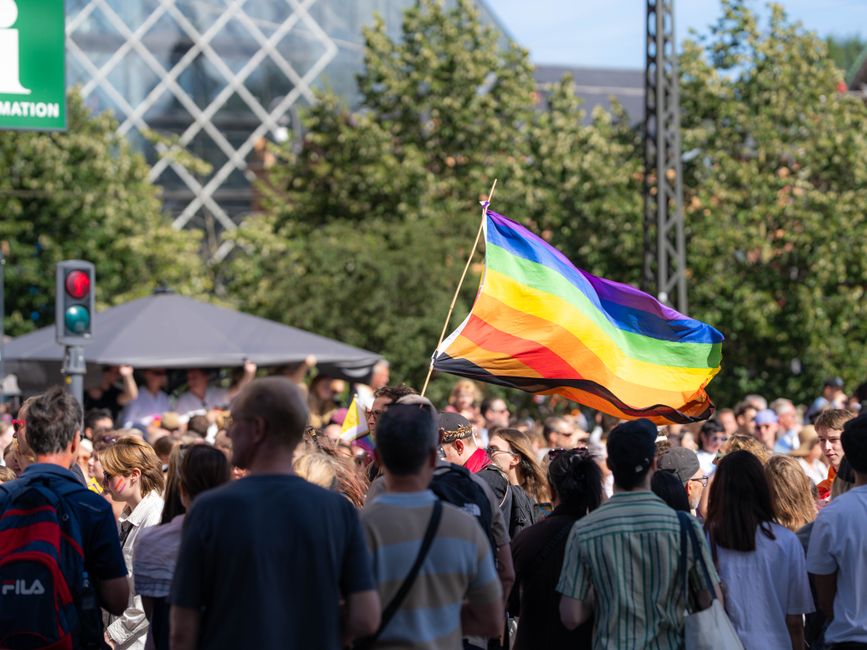
West Pride, held annually in June, is the city's marquee LGBTQ+ event and the largest Pride in western Sweden. In 2026 it runs 8–14 June, with the parade on Saturday 13 June winding from Gustav Adolfs Torg along Kungsportsavenyn to Götaplatsen, plus a Pride Park at Bananpiren and a Pride House cultural programme. Attendance reaches tens of thousands. The programme features live music, debates, film screenings, and family-friendly activities, making it accessible to diverse audiences. The event occurs during Swedish early summer, so weather is generally pleasant, though it's advisable to book accommodation well in advance.
Beyond Pride, Gothenburg hosts smaller LGBTQ+ cultural events and film festivals throughout the year, though June, around West Pride, is the peak season for LGBTQ+ visitors.
Accommodation
Gothenburg offers accommodation across all price ranges. Central Gothenburg and Haga are the most convenient areas for LGBTQ+ visitors, with proximity to gay venues and mainstream attractions. Boutique hotels like those in Haga cater to travelers seeking character and local flavor. Larger chain hotels are available in Centrum and around the main train station. Hostels like Gothenburg Hostel offer budget options. Airbnb is widely available and popular. For LGBTQ+ visitors, there are no explicitly gay-only hotels in Gothenburg, but the city's general acceptance means mainstream accommodations are genuinely welcoming. Staff at central hotels are accustomed to same-sex couples and will treat guests with standard Swedish professionalism.
Gothenburg is served by Gothenburg Airport (Landvetter), approximately 25 kilometers east of the city center. Direct buses and trains connect the airport to central Gothenburg in 25-30 minutes. The city center is compact and highly walkable. Public transportation consists of trams, buses, and commuter trains operated by Västtrafik. A rechargeable transit card (Göteborgskortet) or single tickets can be purchased at kiosks or via mobile apps. The transit system is efficient, safe, and widely used by locals and visitors.
Food and Dining
Gothenburg is renowned in Sweden for culinary quality, with excellent seafood due to its coastal location. The city has a strong food culture and numerous restaurants catering to diverse tastes and budgets. Haga and Centrum contain numerous cafes, bistros, and restaurants popular with LGBTQ+ visitors. Swedish cuisine emphasizes fresh, seasonal ingredients, and Gothenburg's position on the west coast means seafood restaurants are particularly strong. The city supports international cuisine as well, including Mediterranean, Asian, and vegetarian options. Swedish coffee culture is excellent, and cafes double as social spaces throughout the day.
Safety and Practical Considerations
Sweden, including Gothenburg, is one of the safest and most welcoming countries globally for LGBTQ+ travelers. Same-sex couples can walk hand-in-hand without concern, and legal protections for LGBTQ+ people are comprehensive. Discrimination is illegal, and public attitudes are overwhelmingly accepting. Gothenburg, as a major city with progressive values, has an active LGBTQ+ community presence that contributes to a welcoming atmosphere.
Visitors should follow standard urban safety practices: avoid isolated areas late at night, secure personal belongings in crowded places, and be aware of surroundings. Swedish people tend toward reserved politeness in public, but this reflects cultural norms rather than hostility.
Language: English is widely spoken in Gothenburg, particularly among younger people and in the service industry. Most signs, menus, and information are available in English. Learning a few Swedish phrases ("Tack" for thank you, "Hej" for hello) is appreciated but not necessary.
Weather and When to Visit
Gothenburg experiences a temperate oceanic climate. Summer (June-August) offers mild temperatures (15-20°C / 59-68°F), long daylight hours, and is the peak tourist season. June is ideal, coinciding with West Pride. Autumn (September-October) remains pleasant but cooler and wetter. Winter (November-February) is cold and dark, with limited daylight, though the city is beautifully decorated during Christmas. Spring (March-May) sees improving weather and increasing daylight.
Day Trips and Attractions
Beyond the city center, Gothenburg offers numerous day trip possibilities. The archipelago islands (Göta Älv archipelago) are accessible by ferry and offer scenic walks and island culture. Liseberg amusement park is one of Scandinavia's largest and a major attraction. The Gothenburg Botanical Garden is one of Europe's largest and is accessible by tram. Nearby coastal towns like Marstrand offer seaside charm. These attractions are easily accessible via public transport and appeal to diverse visitor interests.
Practical Resources
Visitors should check Visit Gothenburg (the official city tourism site) for current event information, accommodation listings, and cultural attractions. LGBTQ+-specific information can be found through Swedish LGBTQ+ organizations and community websites, though much of the scene is integrated into mainstream tourism information.
Conclusion
Gothenburg represents a model of progressive, integrated LGBTQ+ acceptance within Scandinavian culture. Rather than a concentrated "gay district" typical of larger capitals, the city offers a diffuse, inclusive atmosphere where LGBTQ+ travelers can enjoy nightlife, culture, dining, and outdoor activities without segregation or stigma. The city's West Pride in June is the peak LGBTQ+ travel season, but the city welcomes LGBTQ+ visitors year-round. Gothenburg suits travelers seeking Scandinavian design, culinary quality, coastal charm, and authentic acceptance of diverse identities.
Frequently asked questions
Gothenburg has a history of progressive sexual orientation legislation and is considered a welcoming destination. The LGBTQ+ community is visible and integrated, with a community-focused approach.
Centrum is the primary gay hub, with most gay bars and social venues. Haga offers a more relaxed, bohemian atmosphere attractive to LGBTQ+ individuals, while Linné has an increasingly popular integrated scene.
The main dedicated gay venue is Gretas at Drottninggatan 35 in central Gothenburg — a long-running gay nightclub with schlager, disco and house floors, open Fridays and Saturdays. Bee Kök & Bar by Kungstorget is a restaurant that doubles as a relaxed gay bar in the evenings, and Haket in Masthugget is a popular LGBTQ+-friendly pub. Most venues sit within the walkable central Centrum area.
West Pride is Gothenburg's main Pride and the largest in western Sweden, held every June. In 2026 it runs 8–14 June, with the parade on Saturday 13 June from Gustav Adolfs Torg along Kungsportsavenyn to Götaplatsen, plus a Pride Park at Bananpiren and a Pride House programme of talks, film and culture.
Gothenburg's gay venues tend to be more modest in scale than Stockholm's, reflecting a preference for intimate gathering spaces. The scene is community-focused, encouraging natural interaction between locals and visitors.
Gothenburg has no exclusively gay hotels, but the city's strong acceptance means mainstream hotels are genuinely welcoming to LGBTQ+ guests. Central options close to the gay venues and the West Pride route include Hotel Royal, Avalon Hotel, Dorsia Hotel & Restaurant and Scandic Rubinen on Avenyn.
Your privacy choices.
We use cookies to run GayOut and, with your consent, measure usage. Learn more
Your privacy choices
We use cookies to keep GayOut running, remember your preferences, and (with your permission) measure how the site is used. You can accept all, reject all, or pick what you allow. Learn more
Essential
Required for sign-in, fraud prevention, CSRF protection and remembering your language. Cannot be disabled.
Always on
Remembers your favourites, dark mode and other interface preferences across visits.
Helps us understand which pages people visit (Google Analytics, server-side stats) so we can improve.
Used by campaign tracking pixels. None are active right now, reserved for future use.
Install GayOut
Add GayOut to your home screen for faster access, offline favourites, and Pride alerts.







 Gay Bars & Clubs
Featured
(455)
Gay Bars & Clubs
Featured
(455)