Tout ce qu\'il faut savoir avant de partir.
La Porte, dans l'Indiana, n'est pas un haut lieu de la vie LGBTQ+. Ville ouvrière du comté de La Porte, elle ne dispose pas des quartiers queer visibles ni de l'infrastructure dédiée que l'on trouve dans les grands centres urbains du Midwest. Comprendre ce que La Porte a à offrir et ses limites vous aidera à avoir des attentes réalistes en tant que visiteur.
Historiquement, la communauté LGBTQ+ de La Porte a été discrète, et sa visibilité ainsi que son organisation n'ont émergé que ces dernières décennies. La ville n'a pas accueilli de grand festival de la Fierté ni développé de quartier gay distinct. De nombreux résidents et visiteurs LGBTQ+ ont traditionnellement cherché la vie nocturne, les événements culturels et les liens sociaux dans les grandes villes voisines. C'est encore la réalité actuelle. Si le nord-ouest de l'Indiana a connu des évolutions sociales progressives, avec une visibilité accrue des jeunes LGBTQ+, La Porte conserve des attitudes culturelles conservatrices dans de nombreux domaines, reflétant son héritage industriel et agricole. La ville n'est pas ouvertement hostile, mais plutôt discrète et dispersée.
Le centre-ville de La Porte est situé près de l'intersection de l'US Route 35 et de la State Road 2. La ville dépend fortement de la voiture ; les transports en commun sont minimes, et la plupart des destinations nécessitent un véhicule personnel ou des services de covoiturage. Les zones résidentielles sont étendues, sans quartier LGBTQ+ identifiable. Les résidents LGBTQ+ sont dispersés dans toute la ville et les cantons environnants.
Il n'y a pas de bars, de clubs ou de lieux spécifiquement LGBTQ+ à La Porte. La scène des bars du centre-ville est limitée et s'adresse à une clientèle générale. Pour la vie nocturne LGBTQ+, les voyageurs devraient prévoir des excursions à South Bend, à environ 45 minutes à l'est, ou à Chicago, à environ 90 minutes à l'ouest, deux villes qui offrent des scènes de bars et de clubs gays bien établies.
La Porte n'organise pas sa propre fête de la Pride, mais la célébration LGBTQ+ la plus proche se trouve à proximité, dans le comté : le Michigan City Pride Fest, qui a lieu chaque année en juin à l'amphithéâtre Guy Foreman, dans le Washington Park, sur les rives du lac Michigan, à environ 20 kilomètres au nord. Le comté de LaPorte est également desservi par PFLAG Michigan City, une antenne fondée en 1994 qui offre soutien et plaidoyer dans tout le comté. Parmi les autres options régionales, citons le NWI PrideFest chaque juin (qui se déroule dans le nord-ouest de l'Indiana, récemment au Sunset Hill Farm à Valparaiso), le Michiana Pride à South Bend, tout proche, et le Chicago Pride Parade.
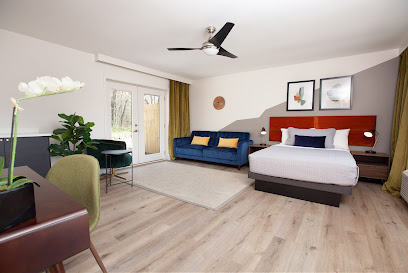
Les options d'hébergement à La Porte se composent d'établissements de chaîne de milieu de gamme, principalement situés le long de l'autoroute 35. Ils offrent des hébergements standards et sûrs. Pour un séjour plus personnalisé, les voyageurs devraient plutôt se tourner vers Michigan City ou Chicago.
La scène culinaire de La Porte comprend des diners locaux, des chaînes décontractées et quelques restaurants indépendants, particulièrement dans le centre-ville. Il n'y a pas d'établissements connus appartenant à des personnes LGBTQ+.
La Porte est généralement sûre pour les voyageurs LGBTQ+, sans schéma notable d'hostilité. Cependant, le contexte culturel conservateur de la ville implique que les démonstrations d'affection publiques peuvent attirer l'attention. Les démonstrations publiques d'affection entre personnes de même sexe sont peu communes et peuvent susciter des regards ou des commentaires dans certains milieux sociaux. Les voyageurs devront faire preuve de discrétion, comme on pourrait s'y attendre dans de nombreuses villes rurales du Midwest. Les ordonnances locales n'offrent pas de protections spécifiques basées sur l'orientation sexuelle ou l'identité de genre, bien que la loi de l'État de l'Indiana offre des protections limitées en matière d'emploi.
La Porte est accessible via la US Route 35, qui se connecte à l'Interstate 94 à environ 30 minutes à l'ouest en direction de Chicago. L'aéroport international majeur le plus proche est l'aéroport international O'Hare de Chicago, à environ 90 minutes en voiture. Un véhicule personnel ou un service de covoiturage est nécessaire pour se déplacer.
L'attraction régionale principale est le parc national des Indiana Dunes, situé à 30 miles au nord près de Michigan City et Chesterton, offrant des sentiers de randonnée et un accès à la plage. Le front de lac de Michigan City mérite également une visite. South Bend, à 60 minutes au nord, est une ville universitaire dotée d'une offre plus étendue en matière de restauration, de culture et de vie sociale. Chicago, à 90 minutes au sud-ouest, propose des musées de renommée mondiale, une architecture exceptionnelle et une scène LGBTQ+ complète.
La Porte connaît un climat typique du Midwest, avec des hivers froids et des étés chauds. L'été (juin-août) est idéal pour les activités de plein air et les excursions d'une journée. Le printemps et l'automne offrent un temps agréable. L'hiver (décembre-février) est caractérisé par la neige et le froid.
La Porte convient mieux aux voyageurs recherchant une base tranquille, abordable et de petite ville, avec un accès aux attractions naturelles comme les Indiana Dunes. Ce n'est pas une destination LGBTQ+ majeure, mais elle peut servir de point de départ régional. Les voyageurs LGBTQ+ devraient prévoir de profiter de la vie nocturne, des restaurants et des expériences culturelles dans les grandes villes voisines, en particulier Chicago. La Porte est davantage un lieu de passage qu'une destination pour un séjour prolongé axé sur une vie nocturne animée.


 Hôtel gay-friendly
(403)
Hôtel gay-friendly
(403)