

Neste guia · 31 seções
- Gay Nairobi in 2026: the honest summary
- Safety first: the real risks and how to avoid them
- Emergency contacts: save these before you travel
- The law in November 2026
- The Family Protection Bill
- How the law is used: recent cases
- The climate in 2026
- Where "the scene" is, and why we do not map it
- Bars, clubs, saunas and cruising: the honest answer
- Hotels: the predictable choice
- Organisations that help
- Events and Pride
- Getting around Nairobi at night
- Apps and your data
- Health
- What you can safely enjoy in Nairobi
- Day trips and nearby
- Practical tips
- If something goes wrong
- A few words of Swahili and Sheng
- At a glance
- Frequently asked questions
- Is it illegal to be gay in Kenya?
- Are there gay bars or clubs in Nairobi?
- Is Nairobi safe for gay travellers?
- Is it safe to use Grindr in Nairobi?
- Can two men share a hotel room in Nairobi?
- Is there a Pride in Nairobi?
- What is the Family Protection Bill and has it passed?
- What should I do if I am arrested or blackmailed in Nairobi?
- Keep this page honest
Gay Nairobi in 2026: the honest summary
Read this first: this is a Safety Mode guide. Sex between men is a crime in Kenya under Sections 162 and 165 of the Penal Code, with up to 14 years in prison. Prosecutions are rare, but blackmail, robbery and violence against gay men are common, and most attacks begin on dating apps or Facebook. Nairobi has no openly gay bar, club or sauna, no public Pride march and no safe cruising area, and this page deliberately lists none: a list like that helps the people who prey on gay men more than it helps you. What Nairobi does have is a registered, articulate LGBTQ+ movement that keeps winning in court, a handful of community organisations that help victims, and a city that LGBTQ+ travellers pass through every day on their way to safari without trouble, as long as they stay discreet. Below: the law as it stands in November 2026, how it is actually used, the apps problem, which hotels are the predictable choice, who to call, and what you can enjoy.
Nairobi sits high, at about 1,700 metres, so mornings are cool and the light is sharp. Matatus painted with graffiti portraits and pumping music jostle along the roads, smoke from nyama choma grills drifts out of roadside joints, and in October and November the jacaranda trees turn whole streets purple. On the city's southern edge, giraffes and rhino graze in a national park with office towers on the horizon. It is East Africa's business hub, young, creative and sociable. It also has a criminal law against sex between men, a loud anti-LGBTQ+ political current and an organised blackmail problem. Searches for "gay Nairobi" or "gay clubs in Nairobi" mostly turn up old blog lists of mainstream bars; treat those with suspicion. Here is what you need to know.
Safety first: the real risks and how to avoid them
The danger in Nairobi does not usually come from the courts. It comes from things that mark you out: a stranger met online, a meeting in a private place, affection in public, intimate material on your phone, or someone who decides to make money from a suspicion.
- Dating apps are where most attacks start. The US government says its embassy has received many reports of gay travellers being assaulted after meeting Kenyans on dating apps. The UK Foreign Office says criminals use dating apps to identify victims to rob or sexually assault, and that there has been an increase in criminals targeting LGBT+ travellers in particular. Kenyan rights groups describe the pattern: someone poses as a date on Grindr, another app or Facebook, collects personal details, then lures the victim to a private address, where a group robs, beats or sexually assaults him, films him and demands money for silence. Victims are sometimes taken to cash machines or made to call relatives for mobile-money transfers. Our advice: do not use dating apps in Kenya at all. Delete Grindr and any other dating app before you land, or at the very least log out and hide them.
- Never go to a private address or get into a car with someone you have just met, and never bring a stranger back to your room.
- No public affection. The UK Foreign Office's wording is blunt: showing affection in public could lead to arrest and imprisonment. Hand-holding, kissing or embracing between two men will draw attention anywhere in the city, including in cosmopolitan Westlands or Gigiri.
- Your phone: before you travel, delete intimate photos and chats from the device and any synced cloud album, turn off lock-screen message previews and use a strong passcode. Police have seized phones during raids and blackmailers use what they find.
- Extortion: if someone threatens to expose you, stop all contact, keep screenshots and call your embassy. Paying usually leads to further demands. NGLHRC and Ishtar help victims report blackmail, and Kenyan courts have jailed blackmailers (see the March 2026 case below).
- Do not post anything LGBTQ+-related or location-tagged while you are in Kenya, and be wary of friendly strangers who contact you on social media.
- Drinks: do not accept drinks or food from strangers in bars or clubs. The UK Foreign Office warns that criminals spike drinks to weaken victims before theft or sexual assault.
- Local emergency numbers: 999 or 112 for police, fire and ambulance.
- United States: US Embassy Nairobi, United Nations Avenue, Gigiri; +254 20 363 6000, the same number after hours. Current advice: travel.state.gov.
- United Kingdom: the Foreign Office in London answers 24 hours a day on +44 20 7008 5000. The British High Commission is in Nairobi; check its current contacts and the Kenya advice on gov.uk before you go.
- Help organisations: the National Gay and Lesbian Human Rights Commission (NGLHRC) runs a legal aid centre offering free legal advice and representation to LGBTQ+ people in Kenya; UNHCR Kenya's help site lists its number as 020 4400525 (+254 20 4400525 from abroad), and its website is nglhrc.com. Ishtar MSM has paralegals who help victims of blackmail report crimes; ask NGLHRC to put you in touch. Make contact from a safe device.
- If you are detained: Kenya, the US and the UK are all parties to the 1963 Vienna Convention on Consular Relations. If you ask, the authorities must inform your embassy without delay. Ask for a lawyer, and do not sign any statement you do not fully understand.
- Section 162, Penal Code ("unnatural offences"). It punishes "carnal knowledge of any person against the order of nature" with up to 14 years in prison, and is interpreted to cover consensual sex between men. The section is worded for "any person", and its higher 21-year penalty applies where there was no consent or consent was obtained by force or threats. Section 163 punishes attempts with up to seven years.
- Section 165 ("indecent practices between males"). It punishes "gross indecency" between men, in public or in private, with up to five years.
- May 2019, High Court. On 24 May 2019 a three-judge bench refused to declare Sections 162 and 165 unconstitutional. The petitioners appealed.
- November 2025, Court of Appeal. On 10 November 2025 the Court of Appeal heard preliminary proceedings in the appeal against Sections 162(a), 162(c) and 165 and referred the case to a five-judge bench, according to the Kenyan health-rights network KELIN. We found no published judgment and no new hearing date as of early November 2026. Until a judgment is handed down, the law is unchanged.
- February 2023, Supreme Court. By a 3-2 majority, the Supreme Court dismissed the government's appeal and confirmed that the NGO Co-ordination Board had acted unconstitutionally in refusing to register NGLHRC because of its name. The majority held that Article 27 of the Constitution protects sexual minorities from discrimination, including when they form associations. The ruling did not change the criminal law. An attempt by MP George Kaluma to have the ruling reviewed was rejected in September 2023.
- Marriage and recognition. Kenya's 2010 Constitution gives every adult the right to marry "a person of the opposite sex". There is no recognition of same-sex couples, no adoption, and no anti-discrimination protection based on sexual orientation.
- Transgender people. On 20 May 2026 Justice Bahati Mwamuye of the High Court in Nairobi ruled, in a petition brought by activist Audrey Mbugua and two others in 2020, that refusing to amend gender markers on official identity documents breaches transgender people's constitutional rights, and ordered the registrars to start receiving and considering applications within 60 days. Approval is case by case, not automatic, and we found no reporting on how implementation is going. In practice, trans people still face serious harassment, and the law remains unsettled.
- Blackmail at scale. NGLHRC recorded 679 blackmail and extortion cases between 2014 and 2022, and its legal aid centre handled 901 cases in 2022 alone. Ishtar recorded at least 226 blackmail and extortion cases against LGBTQ+ people in 2025, and 61 in January and February 2026, and says many more go unreported.
- March 2026, Nairobi. On 3 March 2026 two men were sentenced at Milimani Law Courts in Nairobi to 15 years for robbery with violence. In April 2023 they and three others lured two gay men through Facebook, held them for about four hours, beat them, threatened to out and kill them, and forced them to transfer about 100,000 shillings. Ishtar and NGLHRC helped the victims report it and supported them through the trial. NGLHRC's executive director, Njeri Gateru, said the men were part of a larger gang, and that some police officers are alleged to work with such gangs; a police spokesman said he would act on any complaint.
- Police extortion. The UK Home Office reports that police use public order laws to arrest and extort LGBTQ+ people, have raided homes and seized phones, and in 2021 reportedly used a dating app to lure people for extortion.
- Edwin Chiloba, 2023. In January 2023 the body of Edwin Chiloba, a fashion designer and LGBTQ+ activist, was found in a metal box near Eldoret. His housemate, Jacktone Odhiambo, was convicted of his murder by the High Court in Eldoret and sentenced to 50 years in December 2024. The killing shook Kenya's queer community.
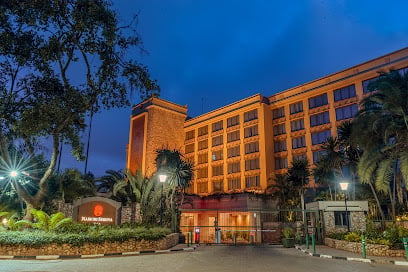
- Nairobi Serena Hotel, Processional Way, Central Park. Five-star, in gardens on the edge of the centre, with a pool and several restaurants. The safest-feeling base near the CBD.
- Sarova Stanley, Kenyatta Avenue and Kimathi Street. Nairobi's oldest hotel (1902), with the Thorn Tree Café, a pool and a spa. Central, so use ride-hailing after dark.
- Tribe Hotel, Limuru Road, Gigiri. Contemporary design hotel next to Village Market and the UN complex; its guests are mostly business and NGO travellers, and the area is the most relaxed in the city.
- Emara Ole-Sereni, Mombasa Road. Big business-and-leisure hotel overlooking Nairobi National Park, close to the airport; a common layover choice.
- The Panari Hotel, Panari Sky Centre, Mombasa Road. Large business hotel halfway to the airport, with a rooftop bar and an indoor ice rink.
- NGLHRC: founded 2012; free legal aid, documentation of violence, arrests and blackmail, strategic litigation. The applicant in the 2023 Supreme Court case.
- Ishtar MSM: founded 1997; sexual-health services, HIV prevention, peer support and paralegals for gay and bisexual men. Its clinic is the longest-running gay-men's health service in Kenya.
- GALCK+: the national coalition of Kenyan LGBTQ+ organisations; advocacy, documentation and capacity-building for member groups.
- Jinsiangu: support, safe-space meetings and advocacy for intersex, transgender and gender-non-conforming Kenyans.
- US travel advice: on 19 October 2026 the US State Department raised Kenya from Level 2 to Level 3, "Reconsider travel", citing health risks linked to Kenya's Ebola cases alongside crime, kidnapping, terrorism and civil unrest, and keeping "Do not travel" warnings for Eastleigh and Kibera and for several border and coastal counties. Level 3 is not a ban; check the latest wording before you book.
- Crime: the UK Foreign Office says muggings, armed robbery and carjacking are frequent in large cities, and names Eastleigh, the Central Business District, Mathare, Kibera and other informal settlements as higher-risk areas. Do not walk alone in isolated areas, even by day. The US advises against all travel to Eastleigh and Kibera.
- Taxis: the US warns that people using taxis hailed in the street have been robbed, kidnapped and extorted, and US embassy staff are not allowed to hail taxis on the street. Use a ride-hailing app (Uber and Bolt are common) or a driver booked through your hotel, check that the plate and driver match the app before getting in, and keep the windows up and doors locked.
- Bars and clubs: do not accept drinks or food from strangers. Spiking is used to enable theft and sexual assault.
- Fake officials: people pose as police or security guards. Ask for identification, and do not hand over your phone unlocked.
- Protests: avoid demonstrations and large crowds, and follow local news.
- Other regions: the US advises against all travel to several counties near the Somali border and parts of the north and coast; the UK also advises against travel to parts of Kenya. Check both before travelling beyond Nairobi and the main safari areas.
- Ebola, November 2026: Kenya confirmed its first imported case of Bundibugyo Ebola virus disease on 6 October 2026, in a man who arrived from Congo via Uganda and died in a Nairobi hospital. By 30 October the Ministry of Health had confirmed nine cases and two deaths; on 3 November it reported five patients recovered and discharged, two still in hospital, no new infections for ten days and quarantine releases under way. The 42-day countdown to declaring the outbreak over had not yet started. Follow Ministry of Health and your government's advice, and seek medical help at once if you develop a fever.
- Before you go: talk to a travel clinic about malaria (the risk is lower in Nairobi than in many parts of Kenya), vaccinations and PEP. Bring enough of any regular medicines, including PrEP, in original packaging with a prescription.
- HIV and sexual health in the city: Ishtar MSM runs a community clinic for gay and bisexual men offering HIV and STI testing, counselling and referrals; contact them first rather than walking into a general clinic and explaining yourself. Private hospitals such as the Nairobi Hospital and Aga Khan University Hospital are good but expensive, and PEP is available through them within 72 hours. Get travel insurance that covers evacuation.
- Water and food: drink bottled or filtered water; nyama choma joints and busy restaurants are generally safe.
- Nairobi National Park. Kenya's first national park, opened in 1946, sits just south of the city. Lions, giraffes, zebras and rhino roam open plains with the city skyline behind them. Go early in the morning with a registered operator or a booked driver.
- Karura Forest. A large urban forest in the north of the city, with walking and cycling trails, a waterfall and caves. It was saved from land-grabbers in the late 1990s by protests led by Wangari Maathai, who later won the Nobel Peace Prize. Use the main gates and stay on marked trails.
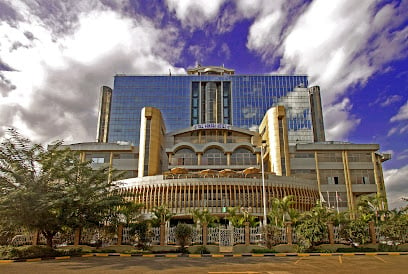
- Kenyatta International Convention Centre (KICC). The cylindrical tower in the city centre is a Nairobi landmark, and visitors can go up to its rooftop for wide views over the city. Check current access at the entrance.
- Nyama choma. Nairobi's social ritual is roast meat, usually goat or beef, grilled slowly and served chopped on a board with kachumbari, ugali and a cold Tusker. Garden joints fill up at weekends, and it is an easy, sociable way to spend an afternoon.
- Coffee and food. Kenyan coffee is excellent, and the cafés of Westlands, Kilimani and Karen are good places to spend a slow morning. Try chapati, mandazi and sukuma wiki.
- Art and music. Nairobi's galleries, design studios and live-music nights are among the best in Africa, and a mixed group of friends will enjoy them without anyone caring who you are.
- Karen: the Karen Blixen Museum and the Giraffe Centre, 30-45 minutes from the centre; an easy half day by booked car.
- Lake Naivasha and Hell's Gate: about two hours north-west; cycling among zebra and giraffe in Hell's Gate is one of Kenya's great day trips.
- Safari: the Maasai Mara, Amboseli and Tsavo are the reason most LGBTQ+ travellers are in Kenya at all. Lodges and camps are used to international couples and a shared tent is unremarkable; book through an operator used to foreign guests, and keep the same discretion in villages and towns on the way.
- The coast: Mombasa, Diani and Lamu are beautiful, but the US and UK advise against travel to parts of the northern coast; check the current maps.
- Entry: Kenya requires visitors to apply online for an Electronic Travel Authorisation before travelling. Check the current rules and any yellow fever certificate requirement with your government's travel advice.
- Money: the currency is the Kenyan shilling (KES). Cards are accepted in hotels, malls and larger restaurants, and M-Pesa mobile money is used almost everywhere. Carry small notes for tips and markets.
- Plastic bags: Kenya banned plastic carrier bags in 2017, with heavy penalties. Pack a reusable bag.
- Weather: the long rains usually fall from March to May and the short rains around October to December; mornings and evenings can be cool all year.
- Before you go: save your embassy's emergency number in your phone and on paper, register with your government's travel service if it has one, and share your itinerary with someone at home.
- If you are stopped or detained: stay calm and polite and ask for your embassy to be told. Do not unlock your phone voluntarily or volunteer details about your private life. Do not offer bribes.
- If you are robbed or blackmailed: get to a safe place, contact your embassy, and keep the evidence. Kenyan courts have convicted blackmailers, and local groups help victims through the process.
- If you live in Kenya and are at risk: NGLHRC, Ishtar MSM, GALCK+ and Jinsiangu support LGBTQ+ Kenyans with legal aid, health and peer support. Reach them through their official websites or social media accounts, from a safe device.
- Habari? – how are you? (reply nzuri, fine)
- Mambo? – Poa! – what's up? – cool! (the everyday Nairobi greeting)
- Asante (sana) – thank you (very much)
- Karibu – welcome, you're welcome
- Bei gani? – how much is it?
- Sawa – OK
- Pole pole – slowly, take it easy
- Nataka kuongea na ubalozi wangu – I want to speak to my embassy
- Sex between men: crime, Penal Code s.162 (up to 14 years), s.163 (attempts, 7 years), s.165 (5 years). Keep your private life private.
- Court rulings: High Court upheld the law in 2019; appeal referred to a five-judge Court of Appeal bench in November 2025, no judgment yet; Supreme Court backed NGLHRC's registration in 2023; High Court allowed gender-marker changes in May 2026. Do not read court wins as decriminalisation.
- Family Protection Bill: drafted 2023, not law, still unpublished. Check the news before you travel.
- Gay bars, clubs, saunas, Pride: none operate openly. Use mainstream restaurants and hotel bars.
- Dating apps: robbery, assault and blackmail widely documented. Do not use them in Kenya.
- Phone: police have seized phones; blackmailers use photos. Clean it before you travel.
- Travel advice: US Level 3 "Reconsider travel" since 19 October 2026. Check US and UK advice before booking.
- Ebola: 9 cases, 2 deaths, no new cases since late October 2026; outbreak not yet declared over.
- Street crime: muggings and robbery; Eastleigh, Kibera, Mathare and the CBD flagged. Ride-hailing apps, never street taxis; do not walk alone.
- Help: NGLHRC legal aid, Ishtar paralegals, your embassy. Save contacts before you go.

Emergency contacts: save these before you travel
The law in November 2026
In one line: Section 162 of Kenya's Penal Code punishes "carnal knowledge against the order of nature" with up to 14 years in prison, Section 163 punishes attempts with up to seven years, and Section 165 punishes "indecent practices between males" with up to five years; the High Court upheld these sections in May 2019, the appeal is now before a five-judge bench of the Court of Appeal, same-sex marriage is constitutionally barred, and there is no protection from discrimination.

The Family Protection Bill
In 2023, after the Supreme Court ruling, Homa Bay Town MP George Peter Kaluma drafted a Family Protection Bill modelled on Uganda's 2023 Anti-Homosexuality Act. The UK Home Office summarises it as proposing far harsher penalties for same-sex acts, including prison terms of at least ten years and, in some cases, the death penalty, along with a ban on "promoting" homosexuality. Parliament's own tracker shows the proposal was sent to the Committee on Social Protection for pre-publication scrutiny in 2023.
The bill has not become law. As of early November 2026 we found no report that it had been published as a bill or debated in the National Assembly. Kaluma called again in January 2025 for it to be enacted, religious leaders have petitioned Parliament to ban same-sex relations, and anti-LGBTQ+ campaigners keep pushing, so the issue comes back into the news regularly. Check the latest position before you travel.
How the law is used: recent cases
Prosecutions under Sections 162 and 165 are rare. ILGA World, cited by the UK Home Office, identified about 18 incidents of state targeting between 2009 and 2023 but no clear convictions for consensual sex. The danger comes mostly from blackmail, mob violence and police who extort money with the threat of arrest.

The climate in 2026
Kenya is more open than many of its neighbours: LGBTQ+ organisations are registered and operate publicly, Kenyan courts have repeatedly protected their rights, and Nairobi has a visible, articulate activist community. But public opinion is largely hostile, and politicians and religious leaders regularly campaign against "promotion" of homosexuality. When Kenya voted at the UN Human Rights Council in July 2025 to renew the mandate of the UN's independent expert on sexual orientation and gender identity, anti-LGBTQ+ politicians and groups demanded that the government withdraw the vote.
2026 has also been a hard year for the organisations themselves. US aid cuts in 2025 closed or shrank HIV and community programmes across Kenya; DW reported in June 2026 that one Nairobi group had laid off almost 25 staff and 110 volunteers, and that outreach and health-worker training had been cut back. Pride-month gatherings in June 2026 went ahead on a smaller scale, at undisclosed, invitation-only locations, as they did in 2025.
Nairobi has also seen large and sometimes deadly anti-government protests, in 2024 and again in June and July 2025. The UK Foreign Office warns that protests are common in Nairobi and can turn violent quickly, especially on anniversaries of earlier protests.
None of this means every visitor is at risk. Many LGBTQ+ travellers pass through Nairobi on their way to safari without trouble. The risk begins when you stop being an anonymous tourist.
Where "the scene" is, and why we do not map it
There is a queer Nairobi. It lives in private homes, in WhatsApp and Telegram groups, in invitation-only parties announced the same day, in the ballroom and drag collectives that performed at a closed event in May 2025, and in the offices of the organisations below. It does not live in any bar you can walk into. The neighbourhoods where expats and the creative class go out, Westlands, Kilimani, Lavington and Gigiri, are more relaxed than the CBD, and a mixed group of friends will not be bothered in a mainstream restaurant or hotel bar there. But "relaxed" is not "gay-friendly", and nothing in those areas advertises itself to queer customers.
Some directories and blogs label particular Nairobi bars and clubs as "LGBTQ+-friendly". These are mainstream businesses that do not present themselves that way, and the label is unverified. Being known as a place where gay men go makes it easier for blackmailers and corrupt officers to find targets. Do not go anywhere expecting a gay crowd, and do not rely on any list of "friendly" venues in Nairobi. We removed the bars and clubs that older versions of this directory listed, and we never list cruising places in countries that criminalise gay men; in Kenya public sex is both illegal and dangerous.

Bars, clubs, saunas and cruising: the honest answer
Gay bars and clubs in Nairobi: none operate openly. Nairobi's nightlife is real and good, from the big open-air bar compounds in Westlands to the rooftop lounges of Kilimani and the late clubs of the CBD, and a discreet traveller can enjoy it as any visitor does. Go with friends, use a ride-hailing car there and back, and keep the night about the music, not about meeting someone.
Gay saunas: none. Listings for "gay massage" services in Nairobi circulate on Facebook and classified sites; we do not list them, because nothing about them can be verified and a private-address appointment is exactly the set-up used in blackmail cases.
Cruising: we list no cruising spots in Nairobi, and we will not. Parks and public toilets are patrolled, public indecency is prosecuted, and the men waiting there are as likely to be working with a gang as to be looking for company.
If you want a trip where you can be yourself and go out openly, South Africa, where same-sex marriage has been legal since 2006, has open scenes in Cape Town and Johannesburg, a few hours' flight from Nairobi. Check your government's travel advice before booking.
Hotels: the predictable choice
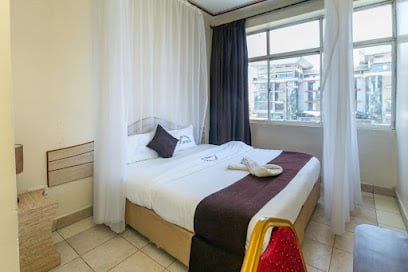
Large international and upper-mid-range hotels are the most reliable choice for two men travelling together: they operate to international standards, host diplomats and NGO staff, and will not comment on two guests sharing a room. State your bed preference when booking through a secure platform; you do not need to explain. Smaller guesthouses and budget city hotels may be less comfortable with it. None of the hotels below is a gay venue; they are mainstream properties where a same-sex couple booked as two travellers will have no problem. The full list is on our Nairobi hotels page.
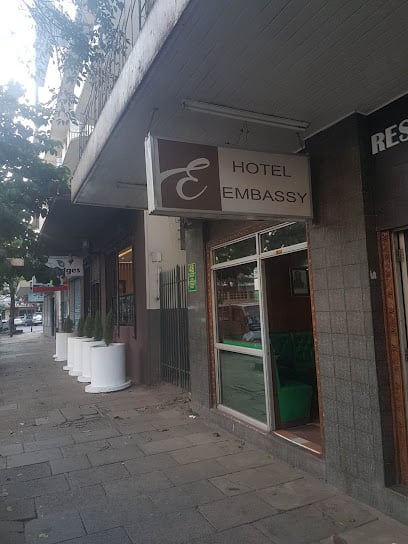
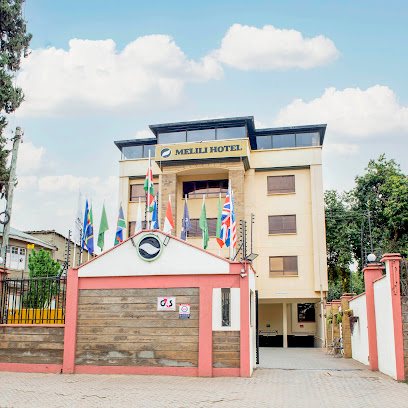
Budget and mid-range options in and around the CBD include Kenya Comfort Hotel (Muindi Mbingu Street), Hotel Embassy (Tubman Road), Decasa Hotel (Upper River Road) and Fahari Bliss Hotel (Sheikh Karume Road). They are fine for a night, but the River Road and eastern CBD streets are rough after dark, so take a car to the door. ACK Guest House is run by the Anglican Church of Kenya; treat any "gay-friendly" label on it with caution. We also list Melili Hotel, Mercury Hotel and The Drexel House, with few details on file; confirm location and facilities before booking.

Organisations that help
These are the people who actually hold Nairobi's LGBTQ+ community together. None has a public walk-in address, for security reasons; reach them through their websites or official social accounts, from a safe device. The full list is on our Nairobi organisations page.
Events and Pride
There is no public Pride march in Nairobi and no public LGBTQ+ festival. Kenya's first Pride gathering, in 2012, was held inside the US Embassy compound. Since then Pride month has been marked with private, invitation-only events whose locations are not disclosed, and in 2026 funding cuts made the calendar thinner still. We list no event dates for Nairobi because there are no public ones to list: dates not announced yet, and they will not be. If you are invited to a community event by someone you trust, go by ride-hailing car, do not post about it, and leave the way you came.
Getting around Nairobi at night
Apps and your data
Grindr, Scruff, Tinder and the rest all work in Kenya, and that is the problem: they are the main hunting ground for the gangs described above, and rights groups say reported profiles often stay active. The only safe setting is off. If you cannot bring yourself to delete them, log out, hide the icons, never share your hotel name, never go to a private address, never let someone come to yours, and tell someone where you are. WhatsApp and Signal are more private for messaging than SMS, but a phone in a police officer's hand is open no matter which app you used, so keep nothing on it you would not want read aloud.
Health
What you can safely enjoy in Nairobi
Day trips and nearby
Practical tips
If something goes wrong
A few words of Swahili and Sheng
English and Swahili are Kenya's official languages, and most people in Nairobi speak both. On the street you will hear Sheng, Nairobi's fast-changing mix of Swahili and English.
At a glance
Frequently asked questions
Is it illegal to be gay in Kenya?
Being gay is not itself an offence, but sex between men is: Sections 162 and 165 of the Penal Code carry up to 14 years in prison. The High Court upheld them in 2019 and the appeal is still before the Court of Appeal in late 2026.
Are there gay bars or clubs in Nairobi?
No. No bar, club or sauna in Nairobi is openly LGBTQ+, there is no public Pride, and old blog lists of "gay-friendly" bars are unverified and potentially dangerous. This guide names no bars or clubs.
Is Nairobi safe for gay travellers?
Many LGBTQ+ visitors have no trouble, but discretion is essential. The main risks are blackmail and robbery, usually set up through dating apps or Facebook, so skip the apps and use ride-hailing or hotel-booked cars.
Is it safe to use Grindr in Nairobi?
No. US and UK travel advice both warn that criminals use dating apps to target gay visitors, and Ishtar recorded at least 226 blackmail cases in 2025. Delete the apps, or at least log out, before you arrive.
Can two men share a hotel room in Nairobi?
Yes, at international and upper-mid-range hotels such as the Nairobi Serena, Sarova Stanley or Tribe. Book as two travellers, state your bed preference, and do not explain. Small guesthouses are less predictable.
Is there a Pride in Nairobi?
Not a public one. Pride-month events happen privately, by invitation, at undisclosed locations, and in 2026 they were scaled back by funding cuts.
What is the Family Protection Bill and has it passed?
A 2023 private member's proposal modelled on Uganda's law, with penalties up to life or death and a ban on "promotion". As of November 2026 it has not been published or passed, but campaigners keep pushing for it.
What should I do if I am arrested or blackmailed in Nairobi?
Stay calm, ask for your embassy to be told and ask for a lawyer. If someone threatens to expose you, stop contact, keep the evidence and call your embassy before paying anything. NGLHRC gives free legal aid.
Keep this page honest
This guide was rechecked in November 2026 against the US and UK travel advice, the Kenyan Ministry of Health's Ebola updates, KELIN's report on the Court of Appeal referral, and Kenyan and international reporting on blackmail cases and the May 2026 gender-marker ruling. Laws, bills and enforcement in Kenya can change quickly. If the Court of Appeal rules, the Family Protection Bill moves, a hotel closes or you were treated badly somewhere we list, tell us through the report link on this page and we will update it. We will not add bars, clubs, saunas or meeting places to this page while sex between men remains a crime in Kenya. It is general information, not legal advice.
