Same-sex marriage (Ehe für alle) legalised 1 October 2017. Civil partnerships (Lebenspartnerschaft) had been available since 2001. Joint adoption rights for same-sex couples since 2017. Strong federal anti-discrimination protections (AGG, General Equal Treatment Act 2006) covering employment, goods and services. Conversion therapy banned for minors 2020; full ban for adults proposed but not yet enacted as of 2026. Trans legal gender change requires psychological assessment and court order…
Augsburg carries profound historical significance as one of Germany's oldest cities, founded by the Romans in 15 BC. While its LGBTQ+ liberation history is less prominent than Berlin or Cologne's, Augsburg has developed a welcoming, if understated, gay community over recent decades. The city's progressive Bavarian character and strong cultural institutions have fostered an environment where LGBTQ+ people and visitors are generally accepted and respected.
The heart of Augsburg's LGBTQ+ social scene is the Innenstadt, the historic old town surrounded by medieval walls and Renaissance buildings. The Jakobervorstadt area, just outside the old town center, also hosts some gay-friendly venues. Unlike larger German cities with distinct gay neighborhoods, Augsburg's scene is integrated throughout the city center, which means venues are dispersed but within walking distance of each other.
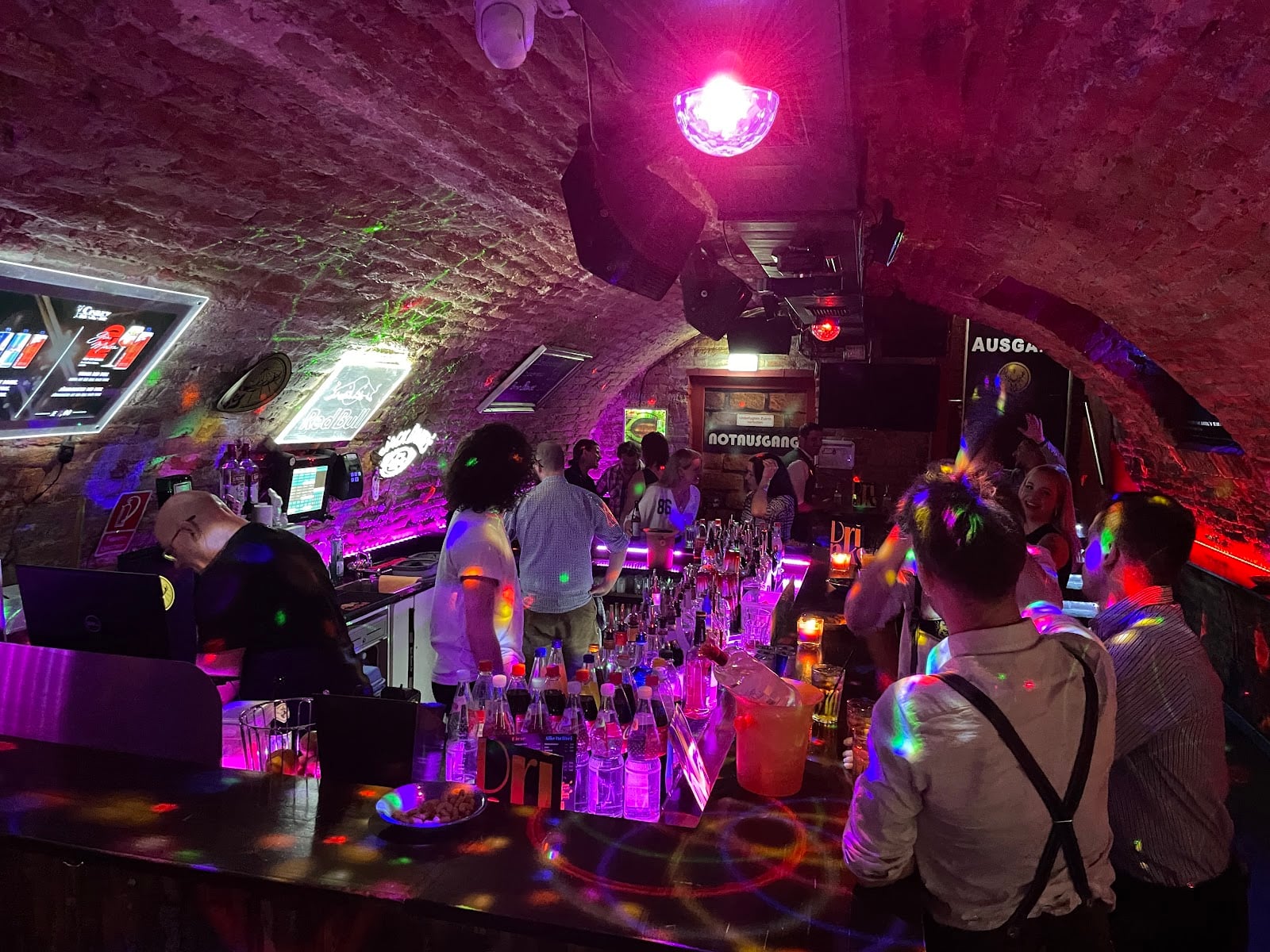
Key venues in Augsburg include Die Kneipe, a traditional gay bar located in the city center that serves as a social hub for the local community and welcomes visitors. Café Kitsch, while not exclusively gay, maintains a very welcoming atmosphere and attracts a mixed LGBTQ+ clientele. These establishments tend toward the casual, neighborly style characteristic of smaller German cities—places to have a drink and conversation rather than large dance floors, though some venues host occasional themed parties or events. The scene is best experienced on weekends when both locals and visitors are out.
Augsburg Pride (Augsburger CSD) takes place annually in July, typically over several days, featuring a parade through the city center, open-air stages, live music, and community stalls. The event has grown substantially and now attracts several thousand visitors, making it one of Bavaria's notable Pride celebrations. The pride parade route winds through the Innenstadt, ending in the Kongress at Park, where an outdoor festival continues throughout the day. This is the year's major LGBTQ+ event; outside of Pride, the scene is more low-key and community-focused.
For accommodation, visitors have several options. The city center offers numerous hotels ranging from budget to upscale, all within the Innenstadt and walking distance to gay venues. The Hotel Drei Mohren and Steigenberger Drei Mohren are well-regarded mid to upscale options in the heart of the old town. Budget travelers might consider hostels or smaller hotels in the surrounding neighborhoods. Augsburg is compact enough that location within the city center ensures easy access to everything.
Getting Around
Getting around Augsburg is straightforward. The city has excellent public transportation with trams and buses covering the entire area. Most LGBTQ+ venues and cultural attractions are within the walkable Innenstadt. Regional trains connect Augsburg to Munich (about 40 minutes), allowing easy day trips or connections to Bavaria's larger cities and attractions. The Augsburg Hauptbahnhof (main train station) is on the southern edge of the old town, a 10-15 minute walk from the city center.
Safety
Safety for LGBTQ+ travelers in Augsburg is generally very good. Germany as a whole has strong legal protections for LGBTQ+ people, and Augsburg is a culturally progressive city. Public displays of affection between same-sex couples are normal and accepted. Like any city, standard travel precautions apply, but there are no specific safety concerns for LGBTQ+ visitors.
Culturally, Augsburg offers substantial attractions beyond the gay scene. The Fugger family, Renaissance merchants, shaped the city's development, and their palazzo and social housing projects remain architectural highlights. St. Ulrich and Afra Church is a masterpiece of German Gothic architecture. The Augsburg Cathedral houses important medieval art. The City Hall and Perlachturm offer views over the city. The Schaezlerpalais contains an outstanding art collection. These attractions form a rich itinerary for daytime exploration.
Food & Drink
Food culture in Augsburg reflects Bavarian traditions. Schwäbische Maultaschen (a local pasta specialty), Spätzle, and other regional dishes dominate menus. The Innenstadt has numerous restaurants and cafés ranging from casual to upscale. Local beer culture is strong; Augsburger Brauerei and local breweries provide excellent traditional beers. Gay-friendly restaurants and cafés tend to cluster in the Innenstadt where the social scene is based.
Daytrips from Augsburg are easily arranged. Munich is reachable by train in under an hour and offers an exponentially larger gay scene if visitors want to spend an evening there. The Bavarian countryside, alpine foothills, and smaller villages are accessible by train or car rental. Neuschwanstein Castle, Bavaria's fairy-tale fortress, is about two hours away and a quintessential Bavarian experience.
Visitors should note that Augsburg's LGBTQ+ scene, while welcoming, operates on a smaller scale than major gay capitals. There are no dedicated gay hotels, bath houses, or large nightclubs with regular dance programming. This makes Augsburg best suited for travelers valuing authenticity and cultural immersion over a concentrated party scene. The city rewards exploration of its Renaissance architecture, museums, and local character, with LGBTQ+ social spaces providing a comfortable base for experiencing authentic Bavarian culture.
The best time to visit is May through September for weather, with July particularly special during Pride season. Outside Pride, the scene is consistent year-round but quieter. Winter months are beautiful for Christmas markets and holiday atmosphere, though fewer visitors travel then.
Frequently asked questions
Augsburg has a genuine, local LGBTQ+ community that welcomes visitors. The community is integrated into daily city life rather than being confined to a specific neighborhood.
LGBTQ+ venues are scattered and integrated into the broader city fabric, not concentrated in a specific 'gay quarter'. Many bars and cafés are located in the Altstadt (Old Town), and some venues can be found in the Jakobervorstadt (St. James district) and along the Obere Wertachstraße corridor.
Augsburg's gay scene is intimate and primarily social and daytime-oriented. For larger clubs and events, many locals travel to Munich.
Venue information can change, so it's recommended to check current listings through German gay portals like Gayromeo or by asking local information services.
No, Augsburg does not have a concentrated 'gay quarter'. LGBTQ+ individuals and venues are distributed throughout the city.
The source guide mentions annual events but does not specify dates for Pride celebrations in Augsburg.
Your privacy choices.
We use cookies to run GayOut and, with your consent, measure usage. Learn more
Your privacy choices
We use cookies to keep GayOut running, remember your preferences, and (with your permission) measure how the site is used. You can accept all, reject all, or pick what you allow. Learn more
Essential
Required for sign-in, fraud prevention, CSRF protection and remembering your language. Cannot be disabled.
Always on
Remembers your favourites, dark mode and other interface preferences across visits.
Helps us understand which pages people visit (Google Analytics, server-side stats) so we can improve.
Used by campaign tracking pixels. None are active right now, reserved for future use.
Install GayOut
Add GayOut to your home screen for faster access, offline favourites, and Pride alerts.



 Gay-Friendly Bars & Clubs
(34)
Gay-Friendly Bars & Clubs
(34)





