







In this guide · 25 sections
- Gay Rijeka in 2026: the honest summary
- Where the scene is
- Bars, clubs and queer nights
- Saunas
- Cruising and beaches on the Kvarner coast
- Bunker Beach, Preluk (FKK)
- Bivio
- City beaches
- Hotels
- Events and Pride
- Getting there and getting around at night
- Apps
- The law
- Health
- Safety
- Day trips and nearby
- FAQ
- Is there a gay bar in Rijeka?
- Is there a gay beach near Rijeka?
- Does Rijeka have a Pride?
- Is Rijeka safe for gay travellers?
- Can same-sex couples marry in Croatia?
- Is there a gay sauna in Rijeka?
- What is LORI?
- Keep this page honest
Gay Rijeka in 2026: the honest summary
Rijeka is Croatia's third-largest city and its main port, and it has the most left-leaning reputation of any Croatian city. That shows in its queer life, though not in the way a nightlife guide would. There is no permanent gay bar, no gay sauna and no gay district. The community runs on events, most of them organised by LORI (Lezbijska organizacija Rijeka), one of the oldest LGBTQ+ organisations in Croatia, plus a handful of friendly cafés and an alternative club. In summer things move to the coast, above all to the naturist cove at Preluk on the Opatija side of town. Come for a relaxed, unpretentious port city, the Kvarner beaches and easy day trips. Do not come expecting a party scene. If you search in Croatian, the terms are gay Rijeka, gay plaža Preluk and LGBT Rijeka, and they all lead to the same small, friendly community.
Where the scene is
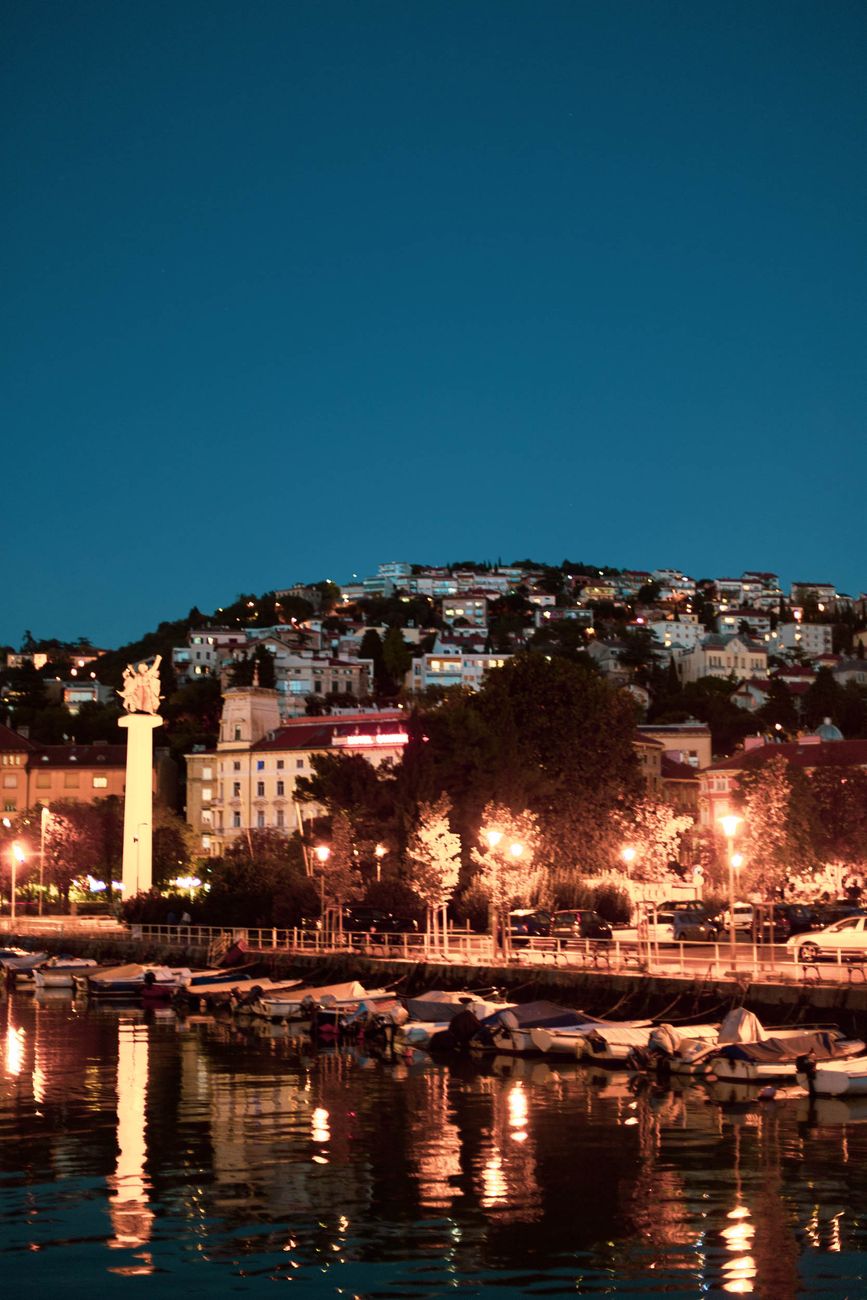
Rijeka's centre is compact and you can walk all of it. The Korzo, the wide pedestrian street that runs parallel to the harbour, is where the whole city meets for coffee, and visible queer life plays out there as ordinary café culture rather than in a separate quarter. The old town (Stari grad) behind it holds the Leaning Tower, the Cathedral of St Vitus and small squares full of terraces.
The Benčić cultural quarter, a restored industrial complex just west of the centre, houses the Museum of Modern and Contemporary Art, the City Museum and the City Library. It was one of the main projects left over from Rijeka's turn as European Capital of Culture (2020, largely staged in 2021). Queer festival programmes, exhibitions and talks often take place in venues like these. Uphill, Trsat has the castle, views over the Kvarner Gulf and the university campus, which brings a younger crowd to the city all year.
West of the centre, the coastal districts of Kantrida and Preluk are where the swimming is, and where Rijeka runs into the Opatija Riviera.

Bars, clubs and queer nights
Rijeka has had no dedicated gay bar for years. Older lists still name places such as Phanas Pub or Gentleman Bar as gay bars. They were mainstream pubs or are gone, and we have archived them. What actually works in 2026:
- OKC Palach (Klub Palach) at Kružna 8, just off the Korzo, is the city's long-running alternative youth and culture club. It has hosted LORI's Queer-UP! parties and other queer nights over the years. These are dated events, not a weekly fixture, so check the club's and LORI's channels before you go.
- Caffe Bar Kosi Toranj, beside the Leaning Tower at Pul Vele Crikve 1, is an all-day café with a terrace on one of the oldest squares in town. It is a mainstream place with a long gay-friendly reputation, and a good spot to start an evening.
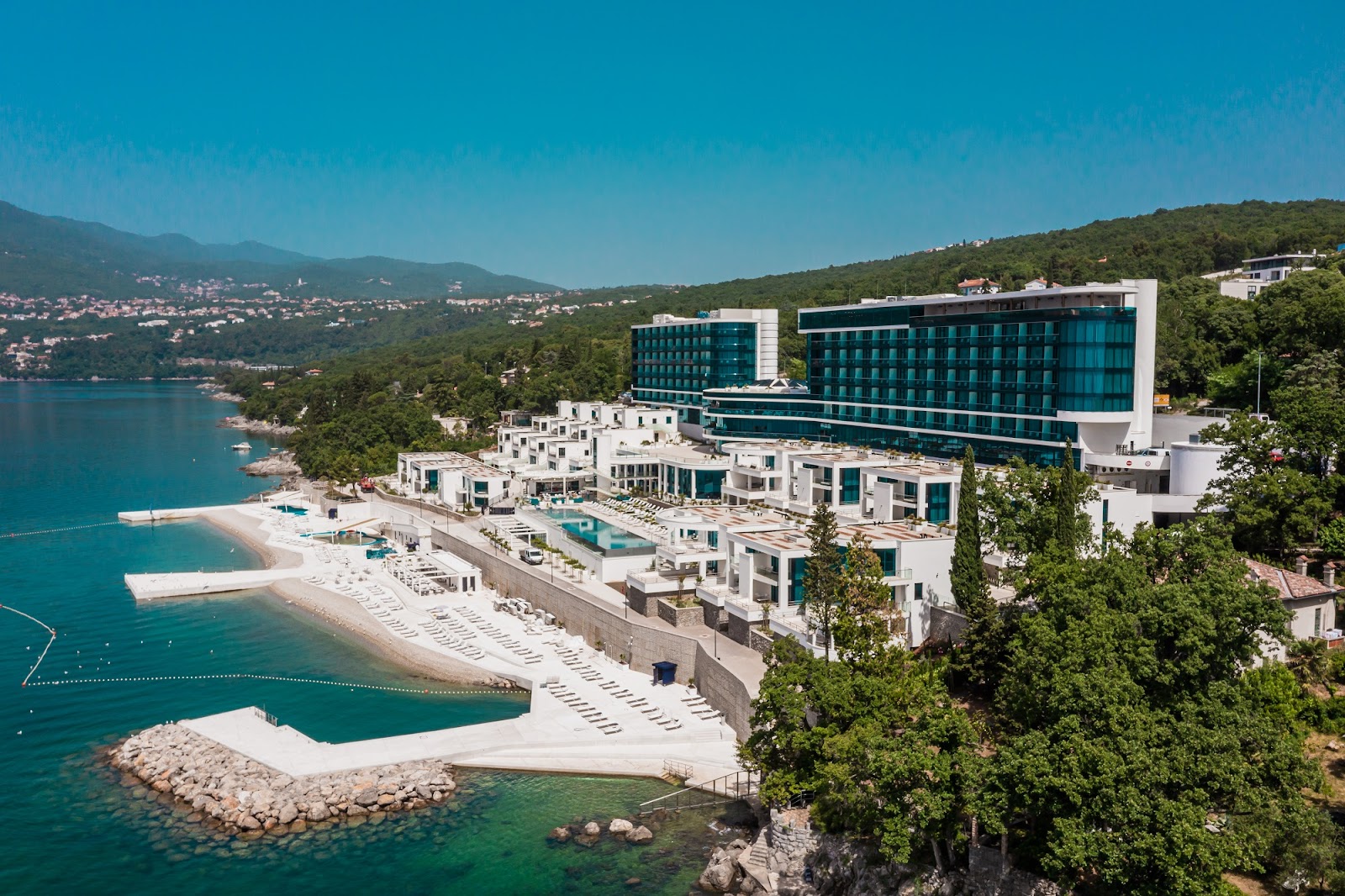
- Hilton Rijeka Costabella Beach Resort & Spa: a five-star beach resort on the Opatija road, a short walk from Preluk. Best choice if your trip is about the beach.
- Grand Hotel Bonavia: the classic city-centre hotel at Dolac 4, a minute from the Korzo.
- Botel Marina: a converted passenger ship moored on the Riva, with compact cabins and dorms right by the bus and ferry terminals.
- Budget: Hostel Kvarner, Hostel Kosy and Ri Rooms near the main bus station.
- Smoqua – Festival of Queer and Feminist Culture is organised by LORI and normally runs over three days in early October, with talks, exhibitions, film, performances and a closing Queer-UP! party. Events are free, with donations at the party. The 9th edition (9 to 11 October 2025) celebrated LORI's 25th anniversary, and the 10th edition ran from 1 to 3 October 2026 under the theme "Back to the Roots". Exact dates for 2027 are not announced yet; early October is the usual slot.
- IDAHOBIT (17 May): LORI has marked the International Day Against Homophobia, Biphobia and Transphobia in Rijeka every year for more than a decade. In 2013 Rijeka became the first Croatian city to fly the rainbow flag on its city hall for the day.
- Rijeka Carnival (Riječki karneval), one of the biggest in Europe, takes over the city in the weeks before Lent. It is not a queer event, but costume and drag are everywhere and the mood is very open.
- HIV and STI testing: Rijeka is one of seven Croatian cities with a free, anonymous HIV counselling and testing centre under the national prevention programme, run by the public health institute of Primorje-Gorski Kotar County (Nastavni zavod za javno zdravstvo PGŽ). The association Hepatos Rijeka also offers free, anonymous HIV and hepatitis testing. Hours change, so call ahead. Anonymous testing needs no referral or ID.
- PrEP and PEP: Croatia's specialist HIV centre is the Dr Fran Mihaljević Clinic for Infectious Diseases in Zagreb, and people diagnosed in Rijeka are referred there for care. If you use PrEP, bring enough for your whole stay. If you need PEP after a risk, go to the emergency department of the Clinical Hospital Centre Rijeka (KBC Rijeka) as soon as you can, ideally within 24 hours and no later than 72.
- Emergencies: dial 112 for all services, or 194 for an ambulance. EU visitors should carry their EHIC card; everyone else needs travel insurance.
- Summer: the rocky beaches have sea urchins, so wear water shoes, and take more sun protection and water than you think you need to Preluk, where there is no shade or kiosk.
- Opatija and Volosko (15 to 20 minutes on bus 32): a Habsburg-era resort town with a 12 km seaside promenade, the Lungomare, that you can walk from Preluk. Volosko, the fishing village at the Rijeka end, has some of the best seafood restaurants in the region. Opatija is mainstream but very used to gay couples, especially from Austria and Germany.
- Krk (about 45 minutes by road over the Krk Bridge): the island has several naturist beaches. Bunculuka, below a naturist camp near Baška, is about a 20-minute walk from Baška town, and Konobe near Punat is another option. Neither is a gay beach as such, but both are relaxed and mixed.
- Rab (ferry from Valbiska on Krk to Lopar, or from Stinica on the mainland): Kandarola, on the Frkanj peninsula near Rab town, is one of the oldest naturist beaches on the Adriatic, and its far western end has a reputation as a gay corner. Entry was charged in 2025, and parts of the area face development plans, so check before you go.
- Pula (about 1.5 to 2 hours by coach): the Roman amphitheatre, Istrian food and, in June, Pula Pride. A good add-on for a few days in Istria.
- Zagreb (about 2 hours): Croatia's only real gay scene, with bars, parties and a gay sauna, plus Zagreb Pride in June.
- Trieste and Ljubljana: each about 1.5 to 2 hours away and easy to combine with Rijeka.
Queer nights move between venues. The closing Queer-UP! party of Smoqua 2025 was held at The Rock Pub, and in autumn 2026 the collective Kolektiv Bučkviriš was running queer karaoke nights at Ivex. The most reliable way to find what is on during your visit is LORI's website and social accounts, plus the event listings on this page. Beyond those nights, queer locals simply mix into the general bar scene around the Korzo, the market area and Benčić, which is laid-back and mostly young.
Saunas
Rijeka has no gay sauna. Several places once listed under that heading on directories were ordinary bars or wellness centres, and we have removed them. The spa at the Hilton Costabella is a standard hotel spa, not a gay venue. The nearest gay sauna is in Zagreb, about two hours away by car or coach.

Cruising and beaches on the Kvarner coast
Summer is when gay Rijeka is most visible, and the beaches on the western side of town are the reason. The Kvarner Gulf is rocky and pebbly with very clear water, so bring sea shoes.
Bunker Beach, Preluk (FKK)
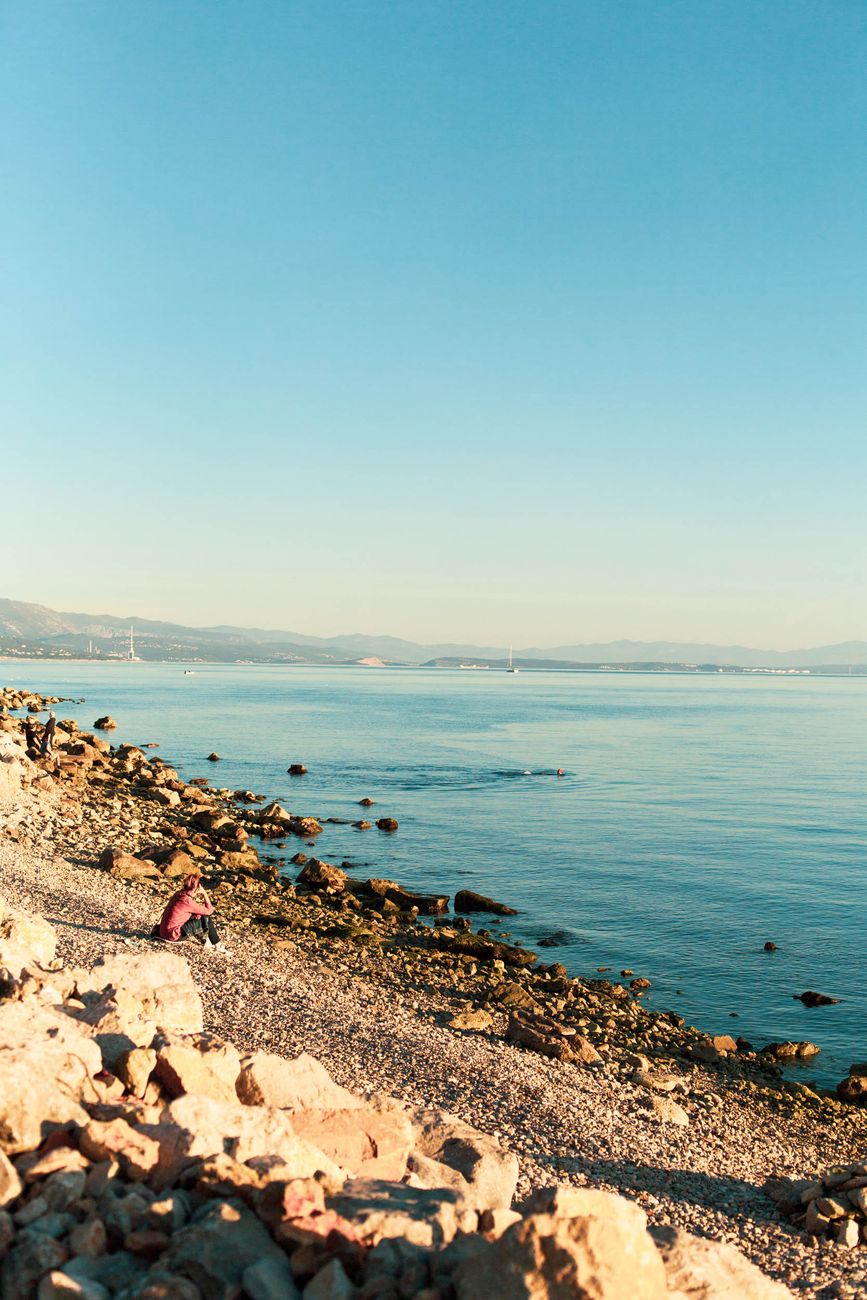
Bunker Beach is a small rocky naturist cove at Preluk, on the border between Rijeka and Opatija and close to the Hilton Costabella. Local LGBTQ+ people call it "Bunker", after the old wartime bunker beside it, and gay travel guides list it as one of the best-known gay beaches in Croatia. It is busiest on warm afternoons and at weekends from June to September, and quieter but not empty in the shoulder season. There are no facilities, so bring water, shade and food. Getting there: Autotrolej bus line 32 between Rijeka and Opatija stops in Preluk, and the cove is a short walk down from the coast road. Preluk bay itself is a windsurfing spot used by families, so the naturist area is the rocky stretch away from the main bay.

Bivio
Bivio, a pebble beach with a promenade and wooded shoreline near Kantrida, is an ordinary city swimming spot that older cruising guides also list as a gay meeting area on summer afternoons and evenings. We have not been able to confirm current activity, so treat it as a maybe.
For both places: nudity is tolerated in naturist areas, but sex in public is an offence in Croatia and these are shared public spaces. Be discreet, keep your distance from families, and leave valuables at your hotel. For other spots across the region, see the gay cruising map.
City beaches
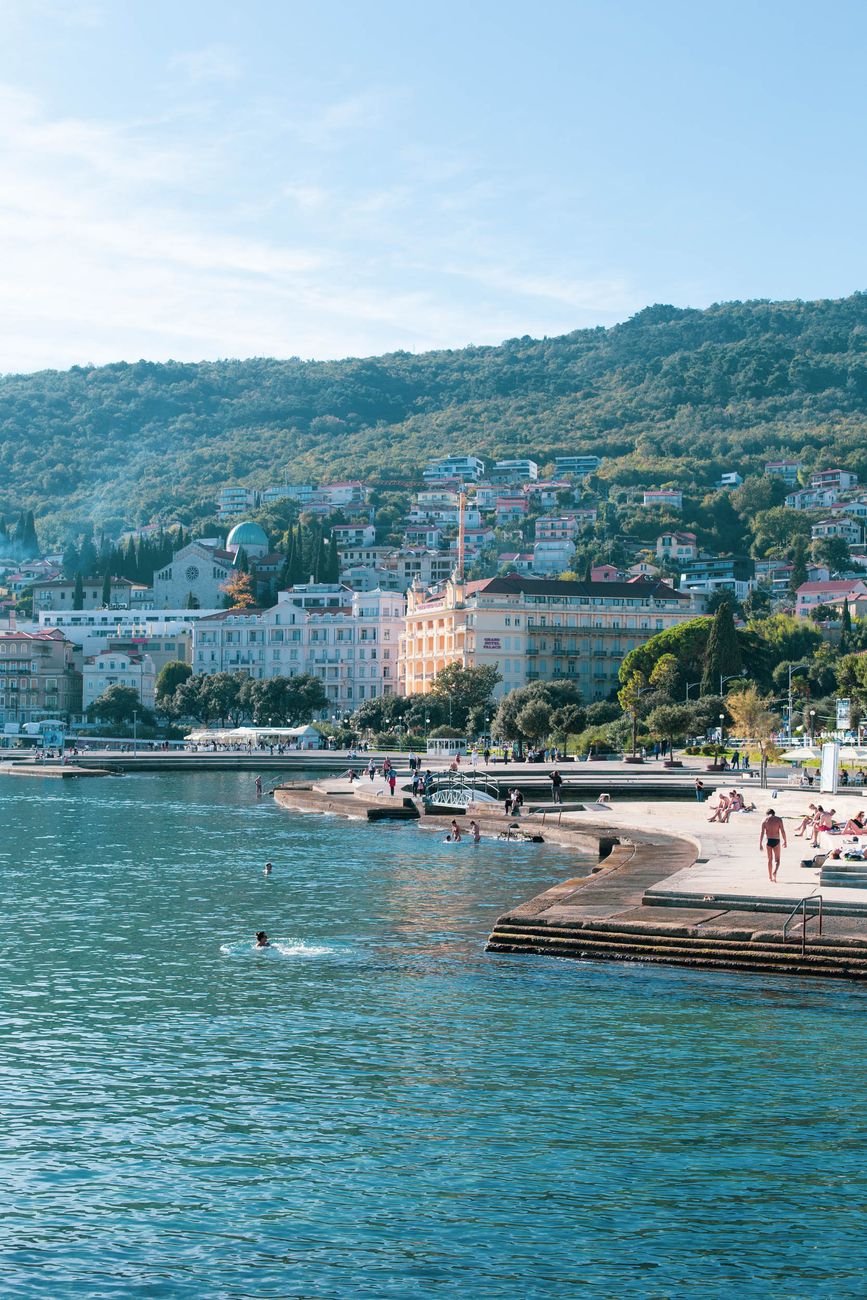
If you just want a swim close to the centre, the city beaches at Kantrida, Ploče and Pećine on the eastern side are clean, popular with locals and easy to reach by bus. They are mixed, not gay, but nobody pays much attention to who you are with.

Hotels
There are no gay hotels in Rijeka, but everywhere in the centre is used to international guests, and same-sex couples checking into a double room is unremarkable. Some options from our listings:
Staying in the centre makes sense if you will use Rijeka as a base for day trips. If you mainly want the coast, Opatija, 15 to 20 minutes west, has far more hotels with sea views.
Events and Pride
Rijeka does not hold its own Pride march. What it has instead is a long-running queer culture festival and a tradition of visibility days.
For a Pride march, locals travel to Zagreb Pride (held every June since 2002), Split Pride (June) or Pula Pride, which started in 2024 and held its third march on 20 June 2026. Next year's dates are usually announced in spring.

Getting there and getting around at night
The centre is walkable, and most evening plans are within 15 minutes on foot of the Korzo. City and suburban buses are run by Autotrolej. Line 32 runs along the coast road to Preluk and Opatija and is the easiest way to the beach. Buses thin out late in the evening, so for a ride back from Opatija or Preluk after midnight, use a taxi or a ride-hailing app, and agree the price first if you flag a taxi down on the street.
Coaches link Rijeka with Zagreb (about two hours), Pula and Split, and ferries and catamarans to the Kvarner islands leave from the harbour. Rijeka Airport is on the island of Krk, about 30 km away, with a bus transfer timed to flights. Many visitors fly into Zagreb, Pula or Trieste and continue by road.
Apps
With no bar to go to, apps do most of the work in Rijeka. Among men, Grindr is the most used, then Romeo (PlanetRomeo), which is popular with the German, Austrian and Slovenian visitors who make up a large share of summer tourists on the Kvarner coast. In July and August the grid fills up with tourists along the Opatija Riviera and on Krk. Standard precautions apply: meet somewhere public first, tell a friend where you are going, and be wary of profiles that quickly ask for money or push for a private address.

The law
Same-sex relations have been legal in Croatia since 1977. A 2013 referendum wrote a man-woman definition of marriage into the constitution, so same-sex marriage is not available. Instead, the Life Partnership Act of 2014 (Zakon o životnom partnerstvu osoba istog spola) gives same-sex couples a registered life partnership with almost all the rights of marriage, including inheritance, property, healthcare decisions, social security and tax. Court rulings in 2020 and 2022 opened foster care and then adoption to life partners, and in 2023 the Constitutional Court confirmed that life partnerships are fully constitutional and read sexual orientation into the constitution's equality clause.
The Anti-Discrimination Act has covered sexual orientation, gender identity and expression since 2009, and hate crimes on those grounds are criminal offences. Legal gender change was simplified in 2013. The weak point is public opinion rather than the law: a 2023 Eurobarometer survey found only 35 percent of Croatians in favour of equal rights, and the coast is noticeably more relaxed than the rural interior.
Health
Safety
Rijeka is generally safe and easy-going for LGBTQ+ visitors. In the centre, on the Korzo and among younger people, same-sex couples holding hands draw little attention, and the city has backed LORI's work for years. Croatia still sees occasional homophobic attacks, though, usually late at night and often involving groups of drunk young men or football crowds, so read the street as you would anywhere. Be more discreet on match nights around the Rujevica stadium, in outlying residential districts and in small inland villages. At the beaches, theft from unattended bags is the most common problem. If something happens, report it to the police (192 or 112) and tell LORI, which supports victims of discrimination and violence and can help with reporting.
Day trips and nearby
FAQ
Is there a gay bar in Rijeka?
No, not a permanent one. Queer nights happen on set dates, mostly organised by LORI or local collectives at venues such as OKC Palach. Caffe Bar Kosi Toranj is a relaxed gay-friendly café, not a gay bar.
Is there a gay beach near Rijeka?
Yes. Bunker Beach, a naturist cove at Preluk on the Rijeka-Opatija border, is the well-known gay and nudist spot. Bus 32 gets you there. It is busiest from June to September.
Does Rijeka have a Pride?
Rijeka has no Pride march. Its main queer events are the Smoqua festival in early October and IDAHOBIT on 17 May. The nearest Pride marches are in Pula and Zagreb, both in June.
Is Rijeka safe for gay travellers?
Yes, generally. It is one of Croatia's most liberal cities. Take normal late-night care, especially on football nights and outside the centre.
Can same-sex couples marry in Croatia?
No. Croatia has registered life partnerships under the 2014 Life Partnership Act. They carry nearly the same rights as marriage, including adoption following court rulings.
Is there a gay sauna in Rijeka?
No. The nearest gay sauna is in Zagreb.
What is LORI?
Lezbijska organizacija Rijeka, founded in 2000, is the city's LGBTQ+ organisation. It runs advocacy, youth and support programmes and organises Smoqua and the Queer-UP! parties. Its office at Janeza Trdine 7 in the centre is not a drop-in venue, so get in touch first.
Keep this page honest
Rijeka's queer scene changes from season to season: party nights move venues, collectives start and stop, and beach habits shift. If a place on this page has closed, moved or changed its crowd, or if we are missing a regular queer night, tell us through the report link on the venue page or the contact form, ideally with a link to a recent post or announcement. We check every report, and we would rather list a few places that are real than many that are not.
