


In this guide · 19 sections
- What the law says
- The 2023 Cybercrime Law
- The climate since 2017
- Why we don't list venues
- Apps, phones and your data
- Travel advice in 2026: the Iranian strikes
- What a visitor can safely enjoy
- Practical tips
- Pride
- If something goes wrong
- Want an open LGBTQ+ scene? Go here instead
- A few words of Arabic
- At a glance
- Frequently asked questions
- Is it illegal to be gay in Jordan?
- Are there gay bars or clubs in Amman?
- Is Amman safe for gay travellers?
- Does Grindr work in Jordan?
- What should I do if I'm arrested in Jordan?
Read this first: this is a Safety Mode guide. Jordan stopped criminalising sex between men in 1951. That doesn't make Amman a safe place to be openly LGBTQ+: the authorities use public-indecency, "immorality" and cybercrime laws against queer and trans people, Grindr has been blocked since 2023, and Human Rights Watch has documented entrapment, phone searches and the intimidation of activists until several left the country. There are no gay bars, clubs, saunas or Pride in Amman, and we deliberately name no venues, hotels or meeting places: any list of "gay-friendly" places can expose the people who go there. This guide is about visiting Amman as any traveller does, and keeping yourself out of trouble.
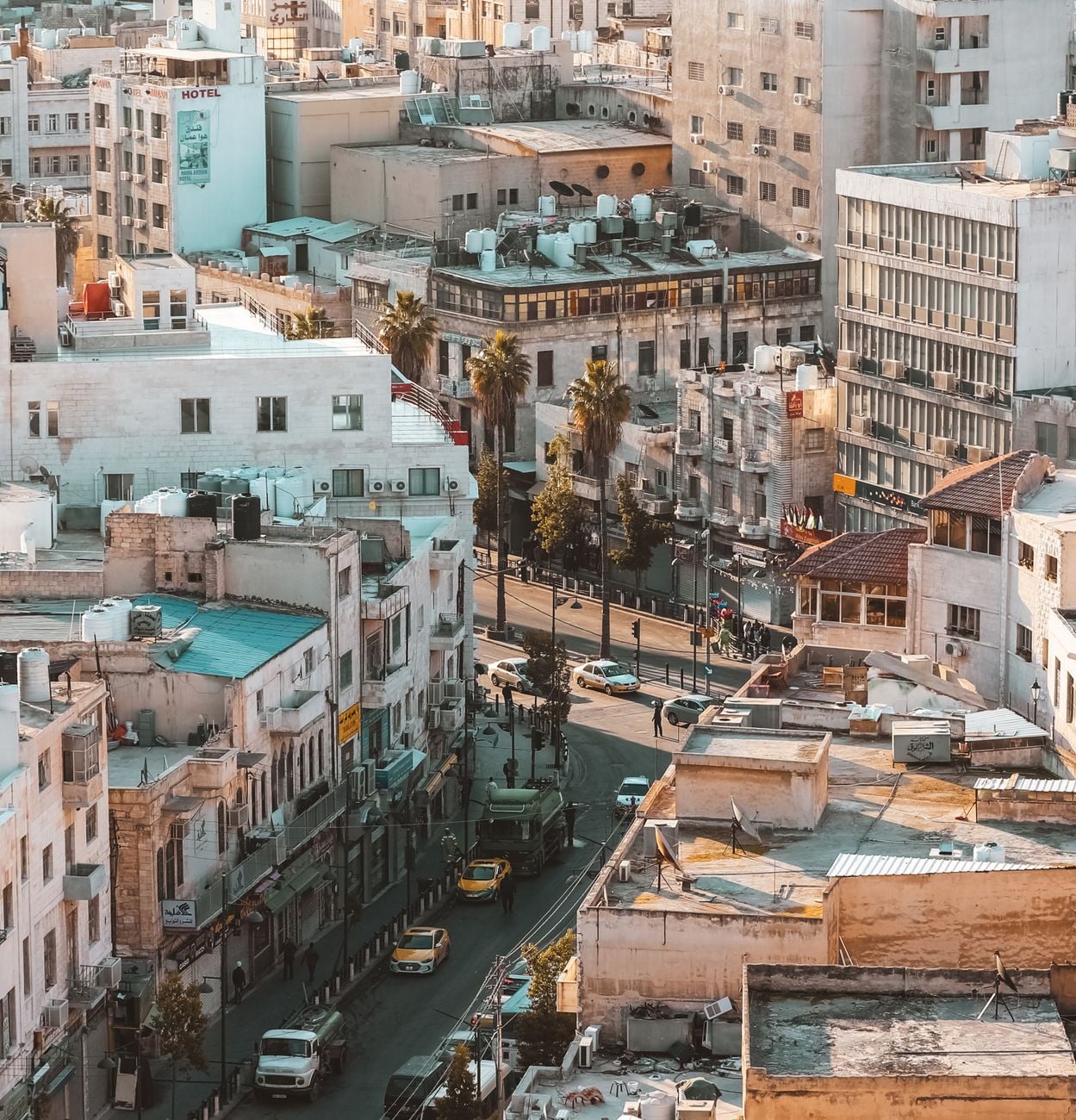
Amman is a city of hills and stairways. At dusk the pale limestone of its jabals turns honey-gold, the call to prayer rolls from one hillside to the next, and up on the Citadel the columns of the Temple of Hercules frame the old city below, where the Roman Theatre is cut into the opposite slope. Downtown, a queue forms in a narrow alley for squares of warm knafeh, cheese pastry soaked in syrup, and a waiter pours cardamom coffee from a long-spouted pot. It's a warm, hospitable city, and most visitors, gay or straight, see it and move on to Petra and Wadi Rum without incident. But it has no LGBTQ+ scene a visitor can safely find, the law is used against queer people even though being gay isn't itself a crime, and in 2026 Jordan has also been in the path of Iranian missiles and drones. Here's what you need to know.
Legal in one line: private, consensual sex between adults of the same sex hasn't been a crime since the 1951 Penal Code (the age of consent is 18 for everyone), but Article 320 of the Penal Code (indecent acts in public), vague "immorality" and prostitution provisions and the 2023 Cybercrime Law (Law No. 17 of 2023) are used against LGBTQ+ people; there's no recognition of couples, no protection from discrimination, and gender-affirming treatment is restricted by a 2018 medical law.
Emergency contacts – save these before you travel
- Local emergency number: 911 for police, ambulance and Civil Defence. The US government notes that the Family Protection Directorate, reached through 911, handles sexual assault and domestic violence 24 hours a day, with some English-speaking staff.
- United States: US Embassy Amman, Al-Umayyaween Street, Abdoun; main line +962 6 590 6000, after-hours emergencies +962 6 590 6500 (travel.state.gov).
- United Kingdom: the Foreign Office in London answers 24 hours a day on +44 20 7008 5000. For the British Embassy in Amman's current contacts, see gov.uk.
- Other nationalities: look up your own embassy's emergency number before you fly, and save it on your phone and on paper. Canadians can use Global Affairs Canada's 24-hour Emergency Watch and Response Centre via travel.gc.ca.
- If you're detained: the US government advises asking officials to notify your embassy immediately, and warns that Jordan treats dual nationals as Jordanians and may not notify their other embassy at all. Ask for a lawyer and an interpreter, don't sign anything in Arabic you can't read, and don't unlock your phone voluntarily.
- Not a crime since 1951. The Penal Code adopted in 1951 dropped the British Mandate-era ban, and private, consensual sex between adults has been legal since, with an age of consent of 18 regardless of gender. The US government says there are "no legal restrictions on same-sex sexual relations" in Jordan; the UK Foreign Office says the same, but adds that you "could be arrested under other Jordanian laws".
- Article 320, public indecency. This article punishes acts against public decency in public places. Human Rights Watch says its wording leaves room for subjective interpretation, and that vague provisions on procuring or promoting prostitution and "inciting immorality" are used specifically against LGBT people. The US government adds that laws against adultery or "breaches of modesty" may be used against gay and lesbian travellers.
- Public affection. In the US government's words, public displays of affection "between anyone, but especially of the same sex, are not considered culturally acceptable". The UK says same-sex couples showing affection in public "may cause offence".
- Trans people. The 2018 Medical Responsibility Law defined "changing" and "correcting" sex for the first time, and critics say its vague wording can be used against doctors who provide gender-affirming surgery. In 2019, according to Human Rights Watch, security forces entrapped a trans woman, searched her phone and held her pending trial over her own photos; she was released on bail after eight hearings.
- No organisations, no recognition. There's no recognition of same-sex couples and no anti-discrimination law, and no LGBTQ+ organisation operates openly in Jordan.
- What it is: Law No. 17 of 2023 was pushed through both houses of parliament in July 2023, approved by King Abdullah on 12 August 2023 and in force from September 2023. It replaced the 2015 cybercrime law, which Human Rights Watch had already seen used against LGBT people.
- "Immoral" content (Articles 13 and 14): producing, distributing or consuming undefined "pornographic" content, or content "promoting, instigating, aiding or inciting immorality", carries at least six months in prison and a fine, according to Human Rights Watch, which called the law "a disaster" for LGBT people.
- VPNs (Article 12): HRW says this article appears to prohibit the use of VPNs, proxies and Tor to hide your identity online.
- How it's used: Amnesty International reported that at least a thousand people were arrested and charged under the law between October and December 2023 alone, mostly over posts about Gaza. HRW has documented people entrapped online and charged with "promoting prostitution", including a gay man jailed for six months in 2021, under the earlier law, after he reported a blackmailer to the police.
- 2017. On 31 July Jordan's Media Commission ordered the queer-inclusive online magazine My.Kali blocked for lacking a licence under the Press and Publication Law, after a complaint from Islamist MP Dima Tahboub, according to the Committee to Protect Journalists. That year, in letters to the minister for parliamentary affairs, the interior minister wrote that Jordan "has not and will never endorse any charter or protocol acknowledging homosexuals", and the justice minister described LGBT people's "sexual deviance" as a violation of public decency.
- Summer 2023. Former MPs ran an online campaign against LGBTQ+ people, and the Islamic Action Front and its parliamentary bloc issued statements in support, according to the Atlantic Council's DFRLab. One former MP said on television that she supported "burning till death" for gay people. Grindr was blocked from 8 August, and the Cybercrime Law was approved four days later.
- Late 2023. In December, Human Rights Watch reported that the General Intelligence Department and Preventive Security had summoned and threatened LGBT activists with violence, arrest and prosecution; that the Amman governor interrogated activists after a screening of a film about gay men was cancelled; that a venue owner was made to sign a pledge to report his events to the governor; and that two directors of LGBT groups closed their offices and left the country. "Merely existing in Amman has become terrifying," one activist told HRW.
- Grindr is blocked. Network measurements by the censorship monitor OONI show Grindr blocked on all five Jordanian networks tested from 8 August 2023 (a day later on one), after local media reported the government would act against a gay dating app. Our advice: don't use gay dating apps in Jordan, and log out of them before you land.
- Don't reach for a VPN: given HRW's reading of Article 12, using one to get round the block puts you in a risky grey area.
- Fake profiles and extortion: the US government warns that criminals use dating apps to target people for robbery or assault, and that romance scams are common. Be wary of friendly strangers on Instagram, Snapchat or WhatsApp, and of anyone who quickly asks for photos or to meet in private. If someone threatens to expose you, stop replying, keep screenshots, and call your embassy before paying anything; reporting a blackmailer to the police has itself led to a prosecution in Jordan.
- Your phone: in documented cases, police made people unlock their phones and used chats and photos as evidence. Before you travel, move intimate photos and chats off the device and out of any synced cloud album, turn off lock-screen previews, and set a strong passcode.
- What you post: don't post anything LGBTQ+-related, political or critical of the royal family while you're in Jordan, and don't bring Pride flags, badges or rainbow merchandise.
- What happened: after hostilities between the US and Iran began on 28 February 2026, Iranian missiles and drones crossed or targeted Jordan. By 21 March the Jordanian armed forces reported 240 launched towards the country, 222 intercepted, 414 incidents of falling debris and 24 people injured, all of whom recovered (The Peninsula). Attacks resumed in the summer: on 24 July the army said it shot down seven missiles and six drones, with no casualties (QNA).
- UK advice (updated 10 September 2026, still current on 20 October): against all travel within 3km of the Syrian border. It reports Iranian strikes across the region, including in Jordan, since 8 July, renewed attacks and interceptions around Aqaba in early September, and the risk of flight cancellations and airspace closures. If told to shelter, go indoors, and never touch drone or missile fragments. It also reports that one person died and eight were injured at a public World Cup screening in downtown Amman on 23 June 2026 (gov.uk).
- US advice (29 August 2026): Level 3, "Reconsider travel", for terrorism and armed conflict, with an ongoing threat of drone and missile attacks and significant flight disruption. "Do not travel" to the Syrian and Iraqi border areas, the Syrian refugee camps, Rusayfah or the Baqa'a neighbourhood of Ayn Basha (travel.state.gov).
- Before you fly: check both advisories again that week, check with your airline, and keep away from demonstrations and military sites.
- Carry ID: the UK says police carry out random security checks; keep your passport or driving licence with you for checkpoints.
- Alcohol: the UK says it's illegal to drink on the street, but you can drink in bars, clubs, hotels and private homes. Take a taxi home rather than walking around drunk.
- Getting around: Amman is hilly and spread out. Taxis and ride-hailing apps such as Careem are the easiest way to get around, day and night.
- Affection: men greeting each other with kisses on the cheek or walking arm in arm is ordinary friendship in Jordan. Romantic affection in public is something else, for any couple: avoid it completely.
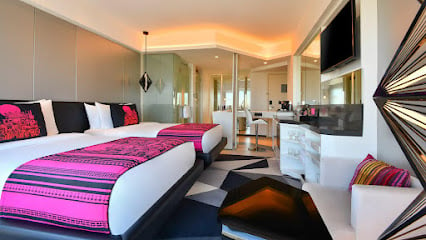
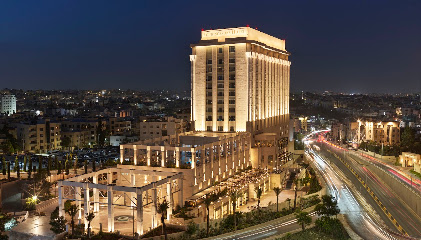
- Hotels: large international hotels are the most predictable choice. If two men are travelling together, simply state your bed preference when booking; you don't need to explain. Never bring someone you've just met back to your room.
- Health: Jordan has strict drug laws; the US government says to carry prescription medicines, including PrEP, in their original packaging with a doctor's prescription. Talk to a travel clinic about PEP before you go.
- Money: the currency is the Jordanian dinar (JD), divided into 1,000 fils. Cards work in hotels, malls and many restaurants; carry cash for taxis, downtown snacks and small shops.
- Ramadan (dates shift each year): expect quieter days and lively evenings, and avoid eating, drinking or smoking in public in daylight.
- Photography: never photograph military or security sites, and given the 2026 strikes, don't photograph interceptions or debris.
- Before you go: save your embassy's emergency number, sign up for your government's travel alerts, and share your itinerary with someone at home.
- If you're stopped or detained: stay calm and polite, show your ID, and follow the emergency box: ask for your embassy at once, ask for a lawyer and an interpreter, and don't volunteer anything about your private life. The US government notes that drug suspects can be held for up to two weeks without charge.
- If someone threatens to expose you: don't meet them again, keep the evidence, and contact your embassy before going to the police or paying anyone.
- If you're at risk as a resident: international groups such as Rainbow Railroad help LGBTQ+ people facing danger. Contact them from a safe device.
- Marhaba or as-salamu alaykum – hello (the reply to the second is wa alaykum as-salam)
- Ahlan wa sahlan – welcome; you'll hear it from shopkeepers and strangers alike
- Shukran – thank you
- Kifak? – how are you? (to a man)
- Addaysh? – how much?
- Yalla – come on, let's go; mashi – OK, fine
- Inshallah – God willing, used for anything from "yes" to "probably not"
- Habibi – my dear. Men use it with friends, waiters and taxi drivers all day long; it's ordinary warmth, not flirting.
- Biddi as-sifara – I want the embassy; biddi muhami – I want a lawyer
What the law says
The 2023 Cybercrime Law
This is the law most likely to touch a visitor, because it covers your phone and what you post.

The climate since 2017
Hostility has grown louder over the past decade.
We found no sign of change in 2026, and no reliable reports of foreign tourists arrested over their sexuality in recent years. That doesn't mean it doesn't happen: such cases are rarely published. The risk begins with anything public or recorded: affection in the street, an app, a message, a photo, a stranger met online.
Why we don't list venues
Over the years, directories and travel blogs have labelled particular Amman cafés, bars and hotels as "gay-friendly" or as the place the community meets. Those venues are mainstream businesses that don't present themselves that way, the labels are unverified, and the 2023 pledge forced on a venue owner shows what attention can follow. Don't go anywhere in Amman expecting a gay crowd, and don't rely on older listings. Cafés and bars are mainstream nightlife; two friends having a drink together is unremarkable, so keep it at that. A hammam or hotel spa is a place to steam and scrub, nothing more. Parks, gyms, baths and public toilets carry the risk of arrest for indecency, blackmail and violence; we never list cruising places in hostile countries, and in Amman there is no safe version of it.

Apps, phones and your data
Travel advice in 2026: the Iranian strikes
What a visitor can safely enjoy
Start high. The Amman Citadel (Jabal al-Qal'a) crowns the city's oldest hill, with the standing columns of the Roman Temple of Hercules, the domed Umayyad palace complex and views across a dozen hillsides; come in the late afternoon when the stone warms to gold. Below it, the Roman Theatre is carved into the slope facing the Citadel; climb to the top rows for the view back across downtown. Check opening hours and ticket prices before you go.
Rainbow Street in Jabal Amman runs east from the First Circle, lined with cafés, rooftop restaurants and shops, with the Souk Jara market nearby. Its popular name comes from an old cinema, not from the Pride flag, so don't read anything into it; officially it was Abu Bakr al-Siddiq Street. Across the valley, Jabal al-Weibdeh is a leafy, creative hillside of old stone villas, galleries and open-air cafés, good for a slow evening of mint tea and conversation.
Eat mansaf, the national dish: lamb cooked in jameed, a sauce of dried fermented yoghurt, served over rice and flatbread and scattered with nuts, traditionally shared from one big tray. For dessert, go downtown to Habibah, whose knafeh shop has stood in the alley leading to the Arab Bank since 1951, according to Jordan News; the municipality has since named the alley Mahmoud Habibah Street after its founder. Expect to eat standing up, from a paper plate. Wash it down with sweet sage tea (shai bil maramiya) or cardamom coffee.
Practical tips

Pride
There's no Pride and no public LGBTQ+ event in Jordan, in 2026 or announced for 2027, and rainbow imagery draws official and public hostility: in 2023 a former MP campaigned online over a photo of rainbow lights on an Amman bridge that the municipality said was fabricated.
If something goes wrong
Want an open LGBTQ+ scene? Go here instead
If you want a trip where you can be yourself, Athens and the Greek islands are easygoing, and same-sex marriage is legal in Greece; Bangkok has a big, open scene, and Thailand legalised same-sex marriage in 2025. Check each country's laws and your government's advice before booking.
A few words of Arabic
Arabic is the official language, in its Jordanian dialect, and English is widely spoken in hotels, restaurants and tourist areas.
At a glance
| Topic | The situation in 2026 | What to do |
|---|---|---|
| Same-sex relations | Not a crime since 1951; age of consent 18; no recognition or anti-discrimination law | Keep your private life private all the same |
| Indecency and "immorality" | Penal Code Art. 320 and vague prostitution and immorality provisions used against LGBTQ+ people | No affection in public, for anyone |
| 2023 Cybercrime Law | "Immoral" content: at least 6 months and a fine; Art. 12 appears to restrict VPNs | Post nothing LGBTQ+-related; clean your phone |
| Gay bars, clubs, saunas, Pride | None operate openly | Use mainstream cafés, restaurants and hotel bars |
| Dating apps | Grindr blocked since Aug 2023; entrapment documented | Don't use them in Jordan |
| Trans travellers | Gender-affirming care restricted since 2018; entrapment case documented | Weigh the risk carefully |
| Regional security | Iranian missiles and drones since Feb 2026; US Level 3; UK against travel near the Syrian border | Check both; follow shelter instructions |
| ID and alcohol | Random checkpoints; no drinking on the street | Carry your passport; drink indoors |
| If detained | Embassy not always notified | Ask for your embassy, a lawyer and an interpreter |
Frequently asked questions
Is it illegal to be gay in Jordan?
No. Private, consensual sex between adults of the same sex has not been a crime since the 1951 Penal Code. But public indecency, immorality and cybercrime provisions are used against LGBTQ+ people, and there is no legal protection.
Are there gay bars or clubs in Amman?
No. Nothing operates openly as a gay bar, club or sauna, and there is no Pride. We deliberately don't name venues described elsewhere as 'gay-friendly', because that can expose the people who go there.
Is Amman safe for gay travellers?
Most visitors see Amman without trouble, but only with discretion: no public affection, no dating apps, nothing LGBTQ+-related online. In 2026, also check UK and US advice on Iranian missile and drone attacks before you book.
Does Grindr work in Jordan?
Not normally: OONI measurements show Grindr blocked in Jordan since August 2023. Human Rights Watch has documented entrapment through dating apps, so we advise not using any gay dating app in Jordan.
What should I do if I'm arrested in Jordan?
Stay calm and ask officials to notify your embassy at once, as they may not do it themselves. Ask for a lawyer and an interpreter, and sign nothing in Arabic you cannot read.
Part of the GayOut city guides. See the Jordan country page for the national overview, and our Amman bars guide for going out safely. This guide is general information, not legal advice; laws and their enforcement can change quickly.