


In this guide · 11 sections
Read this first
Lebanon's Article 534 punishes "sexual intercourse contrary to the order of nature" with up to a year in prison. Courts have ruled repeatedly since 2007 that consensual same-sex relations don't fall under it — and prosecutors keep charging people anyway. Some judges convict but withhold the penalty, which still leaves a criminal record for up to five years. Article 521, which criminalizes a man "disguising himself as a woman," is a separate live risk for trans women and anyone connected to drag. Dating apps have been used as evidence. Vigilante attacks on queer venues have gone unpunished. The country is in economic crisis, and every ceasefire since November 2024 has been broken. The real danger in Lebanon isn't a clear statute — it's an arbitrary one: the risk is unpredictability, not consistent enforcement. Exercise significant discretion. No public displays of affection, anywhere, at any hour. Check your government's travel advisory on the day you book, not the week before you fly — several currently advise against all travel to Lebanon.
What was lost, what remains
Beirut was once the queer capital of the Arab world, and the fall from there has been long and deliberate. The crackdowns of the late 2010s thinned the scene; the port explosion of August 2020 gutted Mar Mikhael and Gemmayzeh, its geographic heart. Then the state joined in. In June 2022 the caretaker interior minister ordered security forces to ban any gathering "promoting sexual perversion," answering calls from religious authorities. Helem and Legal Agenda sued, and in November 2022 the State Council — Lebanon's highest administrative court — suspended the ban; the minister issued a new, broader one within hours and said he'd treat the court order as if it didn't exist. Summer 2023 was worse: boycott campaigns from the pulpit, a repeal bill for Article 534 met with harassment that pushed an MP to withdraw his signature, and two counter-bills proposing explicit criminalization plus prison for "promoting homosexuality." None of the three bills has passed. The repeal bill still waits.
On August 23, 2023, men from Jnoud el-Rab ("Soldiers of God") attacked a Mar Mikhael venue during a drag show — smashed the place, beat attendees trying to leave. Security forces arrived during the attack and, per Amnesty, didn't intervene; they questioned the owner and guests about the performance instead. No one has been arrested for it. Understand what this group is, because "bar hooligans" undersells it: an armed far-right militia, founded 2020, over a hundred members, based in Achrafieh — which they call "God's land." Rainbow-colored mannequins for a breast-cancer display, a flower billboard, a drag night: all attacked. In December 2024 a clash between the group and Lebanese Forces members left an LF official dead; calls for dissolution followed and nothing happened. Their turf covers Sassine Square and the whole of Achrafieh — the same streets as the nightlife.
And then the wars. Hezbollah and Israel began exchanging fire in October 2023; full war came in September 2024. A ceasefire took effect that November and didn't hold. In March 2026 more than six weeks of full war followed; a new ceasefire from April 17, 2026 has been violated continually since, with strikes across the south all summer and periodic strikes reaching Beirut's southern suburbs. Helem's community center has kept operating as a crisis hub through all of it — and its staff describe what war does to queer people specifically: exclusion from collective shelters, homelessness, violence, blocked healthcare.

The scene now: unmarked doors
No fixed public gay bars exist; the scene runs on unmarked speakeasies and private guest lists. That's not defeat — it's a deliberate choice venues made after August 2023, and it works. Mar Mikhael and Gemmayzeh still hold the survivors, behind doors that don't announce themselves, inside the district where the militia also operates. Respect the model that keeps people alive: don't geotag, don't post exteriors, don't publicly name places that don't name themselves.
Beirut's queer nightlife didn't disappear. It went back to its roots: private apartment parties, discreet spaces you reach by word of mouth, events announced in encrypted groups a day before they happen. Show up careful and respectful, and doors open.
How the hidden scene works
The parties aren't announced on Grindr or public Instagram — they move through closed Signal and Telegram groups and private lists run by local producers. Entry runs on vetting: organizers usually want an introduction from a known local contact, or they'll look over your profile before anything is shared. A polite, respectful approach to community people online can open that door. Pressing anyone for addresses closes it — and marks you as exactly the kind of stranger the vetting exists to filter out.

The honest picture, category by category
Dedicated venues: one club in the city still publicly calls itself gay, and it appears in our listings with its own full risk framing. Beyond it — zero. A few cafés around town have a quiet reputation as open spaces, and this guide will not name them: after the 2023 attackers used media descriptions of a "queer-friendly bar" to pick their target, any place we label that way inherits the risk.
Hammams: no gay saunas in the Western sense exist in Beirut — none. Traditional hammams once served as covert meeting places, and that history is precisely why they're dangerous now: in August 2014 the ISF's Morals Protection Bureau raided Hammam al-Agha in Hamra and arrested everyone present — 27 men held and questioned about their sexuality, 28 ultimately charged — with follow-up raids at two more hammams days later, 45 arrests in all. A hammam in Beirut is not a gay sauna and not a safe meeting place; the authorities have used them as arrest points before. We don't catalog them, and no one should navigate to one from an app. A regular tourist hammam visit for the architecture and the steam is a different activity — keep it that, entirely.
Cruising: functionally extinct. Undercover police presence, blackmail schemes and militia risk killed the parks and the Corniche. What survived moved entirely to the apps — with the rules below. Our cruising category for Beirut is empty deliberately: an empty category with an honest reason protects people; a padded one gets them arrested.
Community lifelines
Helem (helem.net) — the Arab world's first LGBTQ+ organization, still operating, still the right first call: community support, legal aid, mental-health referrals, and a crisis hub through the war years. Current executive director: Sandy Mteirik. We do not publish the center's address — link and phone only. Signs of life worth knowing: a queer library opened at the center in 2025, and Helem runs a shelter with MOSAIC at a location that is secret for a reason and stays that way.
Marsa Sexual Health Center (marsa.me) — the essential health address, in Badaro: free or subsidized HIV/STI testing, consultations, psychosocial counseling, PrEP/PEP information, working with the Ministry of Public Health's National AIDS Program. When the 2024 escalation shut services across the city, Marsa reorganized instead of closing. A traveler's health plan in Beirut starts and ends with Helem and Marsa.
Legal Agenda (legal-agenda.com) — the legal team that fought the 2022 bans to the State Council, twice; the best public record of where Article 534 prosecutions actually stand. Proud Lebanon — services plus the draft law to repeal Article 534. Qorras — trans-focused, active through the 2026 emergency. And a caution that applies across Lebanese civil society: emigration and the economic crisis have hollowed out staffing — a number that worked in 2023 may ring into nothing in 2026. Route yourself through Helem first in every case; they know who is currently operational.

Digital safety — what 'careful' actually means
Prosecutors build Article 534 cases on phone contents, and Beirut has physical checkpoints that can appear suddenly. The golden rule: if you use dating apps here, run them only inside a separately password-protected space (Secure Folder on Android, a locked hidden profile) — or carry a second, completely clean device when you leave the hotel. Wiping chat history before stepping outside is routine hygiene here, not paranoia. Decide before you land which setup you're using; improvising at a checkpoint is how people get caught.
Assume entrapment profiles exist: meet first in public, daylight, your choice of place, and tell someone where you are. Know the documented sequence: digital extortion often comes before any arrest — a screenshot of your profile is the evidence, and a VPN protects nothing if your gallery is full. Don't screenshot, don't forward profiles, don't out anyone: small city, long memory. Turn off exact distance — Beirut is dense enough for triangulation. SMEX, the Lebanese digital-rights organization, publishes current guidance on device safety at checkpoints.
The zone map
Dahieh (southern suburbs) — absolute red zone for visitors. This is where strikes have concentrated and security presence is tightest. That goes for the apps too: don't open them there, don't agree to meet anyone there. There is nothing in Dahieh for a traveler using this guide.
Achrafieh — the scene's home, and the militia's. The whole district: Sassine Square as much as Mar Mikhael and Gemmayzeh. The best nightlife and armed men share the same streets. Go, but go informed: unmarked doors, no exterior photos, an exit plan.
Hamra and Badaro — the safer bet for sleeping and low-key evenings. More liberal, more mixed, outside the militia's turf — and Badaro holds Marsa. "Safer zone" means safer streets and lodging; it has never meant safe cruising. Nowhere in this city does. One booking rule that overrides any deal: never take a room "near the airport" without checking a map — the airport road runs through the strike zone.

Where to sleep
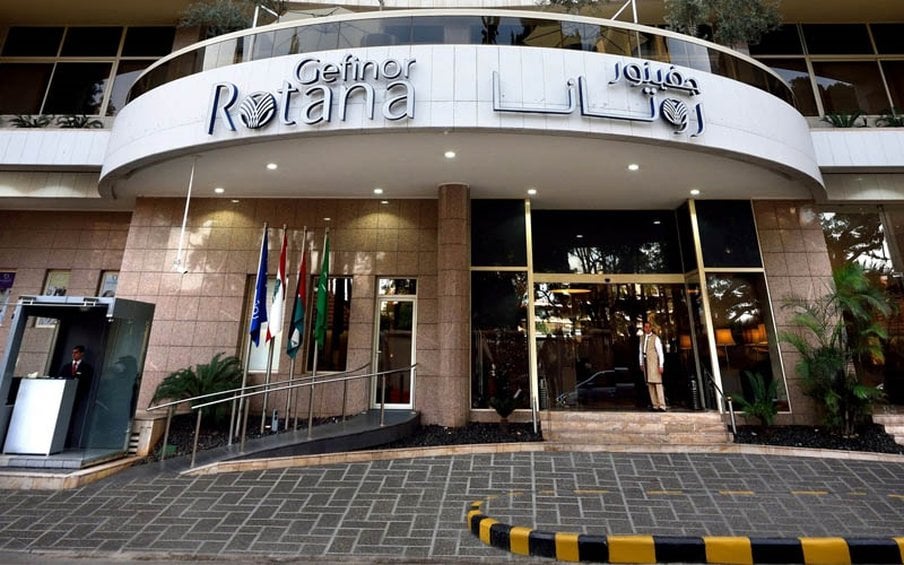
Base yourself in Hamra — Radisson Blu Martinez, Gefinor Rotana, 1866 Court & Suites — for university-district energy and cosmopolitan crowds, or in Badaro — The Smallville Hotel, Urban Central Suites — for the quiet café district with an educated civilian crowd, very comfortable for couples keeping a low profile. These are international-standard properties with non-discrimination reputations at the corporate level — not first-hand verified by couples on the ground; the citywide no-PDA rule applies inside lobbies too.
Practical survival list
Cash rules everything: credit cards barely exist outside luxury hotels — bring new, undamaged USD in small denominations ($10s and $20s); changers refuse torn notes, ATMs are unreliable. Electricity comes and goes; charge when you can. Save your embassy's number and Helem's. If the airport closes — it has during escalations — there is no land route out for you; have a plan to shelter in place.

The last word
The scene isn't dead. It moved back to the apartment, the private list, the encrypted group. Arrive careful and respectful, and you'll get in. Arrive with a camera and a geotag, and you close doors — not for yourself, for the people who have to keep living here after you fly home.
