Second country in the world to legalise same-sex marriage (2003). Comprehensive anti-discrimination law. Legal gender change via self-declaration since 2018.
Leuven's LGBTQ+ life, like the rest of Belgium, rests on one of the world's most progressive legal frameworks — Belgium legalised same-sex marriage in 2003 (the second country to do so) and has strong anti-discrimination protections. As the seat of KU Leuven, one of Europe's oldest universities, the city has long had a young, liberal and open atmosphere. Its organised queer community grew through the 1990s and 2000s around student groups and the provincial rainbow house, and today the scene is genuine but compact — woven into everyday city life rather than concentrated in a single gay district.
Neighbourhoods and Layout
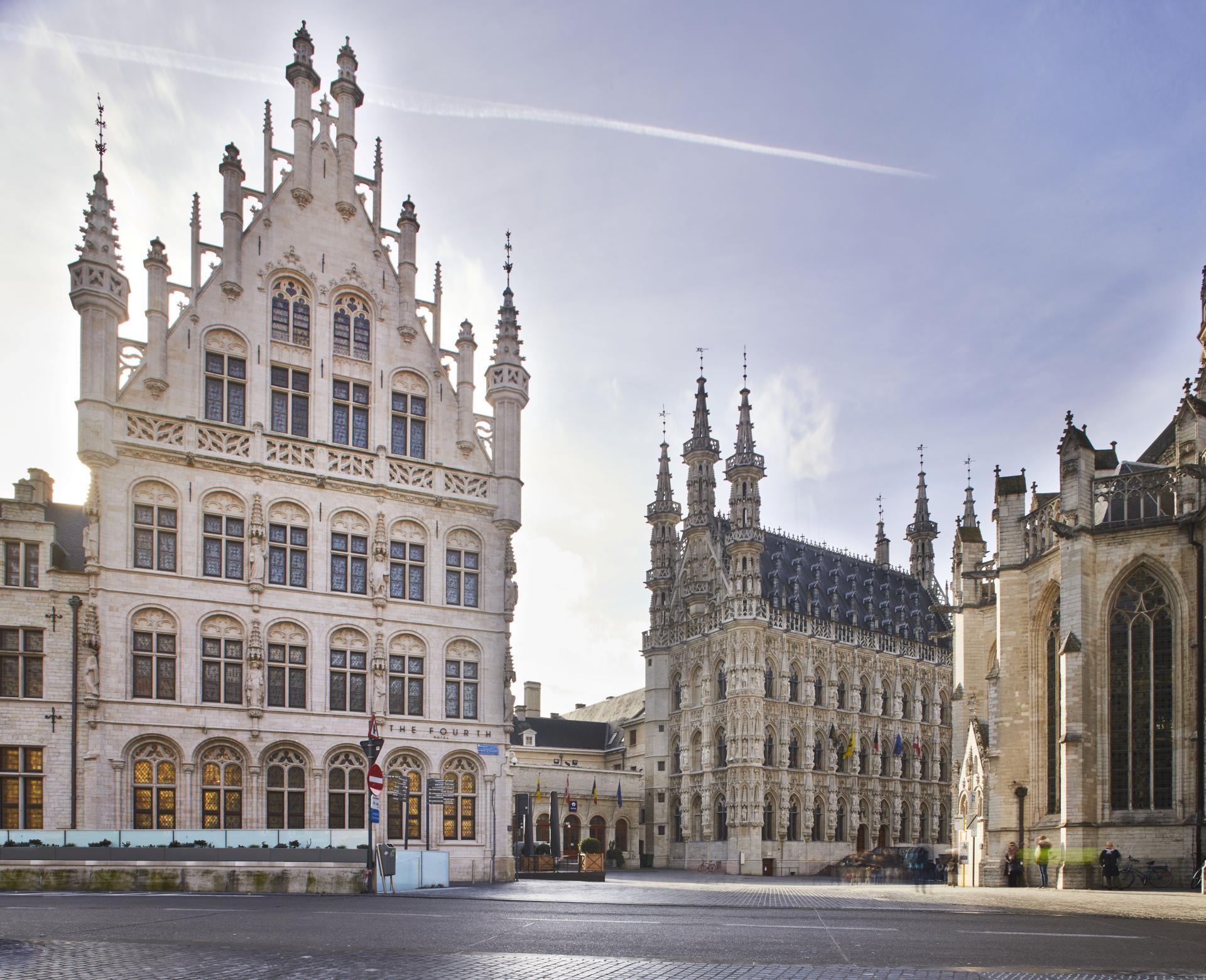
Leuven's centre is remarkably walkable, with almost everything within a 15–20 minute stroll. The medieval core around the Grote Markt, with its extraordinary Gothic Town Hall, is the heart of the city, while the adjoining Oude Markt — a square ringed end to end with student bars and nicknamed "the longest bar in Europe" — is the nightlife hub. These bars are mainstream and student-driven, but mixed and welcoming rather than specifically gay.
Leuven's dedicated LGBTQ+ hub actually sits a little away from the centre, in Kessel-Lo just behind the railway station, where the gay café Rocco and the UniQue rainbow house share a corner.
LGBTQ+ Venues and Scene
Leuven's gay scene is small but real. Its one dedicated venue is Café Rocco, a rainbow-flagged gay café on Diestsesteenweg in Kessel-Lo, behind the station. Rocco is an old-fashioned, conversation-focused café rather than a club — no dance floor, just a relaxed meeting place for the local LGBTQ+ community and students, and the informal base for several of Flemish Brabant's gay groups.
Right beside it is UniQue – Vlaams-Brabants Regenbooghuis, the province's rainbow house (formerly the Holebihuis Vlaams-Brabant). It offers information and intake sessions, a media library and a regular programme of activities, and acts as an umbrella for the region's LGBTQ+ associations, including the youth organisation &of. KU Leuven also has active queer student groups, among them Leonardo for international students, plus an official university LGBTQIA+ info point.
Beyond these, the Oude Markt student bars are open and friendly rather than gay-specific. For a larger dedicated club scene, Brussels is only 20–30 minutes away by train.
Pride and Special Events
Leuven Pride is an inclusive community march held over a weekend in late September — deliberately accessible, with no commercial floats or VIP sections. The 2026 edition runs 25–27 September, with the main march on Saturday 26 September setting off from the Ladeuzeplein and satellite events at the UniQue rainbow house and the Het Depot music venue. It is organised by volunteers connected to UniQue – Regenbooghuis Vlaams-Brabant.
Note that 17 May (IDAHOT) brings rainbow-flag raisings across Flanders but is separate from Pride. Belgium's two biggest Prides are also within easy reach of Leuven: Brussels Pride in May and Antwerp Pride in August.
Where to Stay
Leuven has plenty of hotels, guesthouses and B&Bs across and around the centre, and the whole city is comfortable and safe for LGBTQ+ travellers — there is no need to seek out a specifically gay hotel. The most convenient bases are near the Grote Markt for nightlife or near the station for transport and the Kessel-Lo scene. Prices are generally gentler than in Brussels.
Belgium has strong legal protections for LGBTQ+ people, and Leuven is among the country's more progressive cities. Visitors can hold hands and be open throughout town; the large student population keeps the atmosphere liberal. Normal city-centre precautions apply late at night, but these are not specific to LGBTQ+ visitors, and Leuven has a low crime rate.
Getting Around and Day Trips
Leuven is on the main line to Brussels, roughly 25 minutes and several trains an hour, making it easy either as a day trip from Brussels or as a quieter base for exploring Flanders. The city itself is entirely walkable, with De Lijn buses and plentiful bike rental. Antwerp, Mechelen and Brussels are all short train rides away for those wanting a bigger LGBTQ+ night out.
Frequently asked questions
Belgium has progressive social policies, including legalized same-sex marriage and adoption. Leuven's LGBTQ+ scene is embedded within general social life, suggesting an open and accepting environment.
Leuven's dedicated LGBTQ+ hub sits in Kessel-Lo just behind the railway station, where the gay café Rocco and the UniQue rainbow house share a corner. The city's general nightlife centres on the Oude Markt — a square lined end-to-end with student bars and nicknamed 'the longest bar in Europe' — which is mixed and welcoming rather than specifically gay.
Yes. Leuven Pride is an inclusive community march held over a weekend in late September (the 2026 edition runs 25–27 September, with the main march on Saturday 26 September from Ladeuzeplein). It is organised by volunteers connected to the UniQue rainbow house, with satellite events at UniQue and Het Depot. Note: 17 May is IDAHOT (flag-raisings), which is separate from Pride.
Yes — Café Rocco, a rainbow-flagged gay café behind Leuven's railway station in Kessel-Lo, is the city's dedicated LGBTQ+ bar and the informal meeting hub for local gay groups. It's a relaxed café rather than a mega-club. Beyond Rocco, the student bars on the Oude Markt are mainstream but open and welcoming. For a larger club scene, Brussels is 20–30 minutes away by train.
For a larger selection of clubs and established gay bars, visitors may consider venturing to Brussels, which is about 25 km south by train and takes roughly 20-30 minutes.
The guide does not specify LGBTQ+-friendly hotels. However, the scene is embedded within general social life, suggesting many hotels in the central areas would be welcoming.
Your privacy choices.
We use cookies to run GayOut and, with your consent, measure usage. Learn more
Your privacy choices
We use cookies to keep GayOut running, remember your preferences, and (with your permission) measure how the site is used. You can accept all, reject all, or pick what you allow. Learn more
Essential
Required for sign-in, fraud prevention, CSRF protection and remembering your language. Cannot be disabled.
Always on
Remembers your favourites, dark mode and other interface preferences across visits.
Helps us understand which pages people visit (Google Analytics, server-side stats) so we can improve.
Used by campaign tracking pixels. None are active right now, reserved for future use.
Install GayOut
Add GayOut to your home screen for faster access, offline favourites, and Pride alerts.



 Gay Bars & Clubs
Featured
(81)
Gay Bars & Clubs
Featured
(81)