




In this guide · 18 sections
- Ghosts and survivors
- Schöneberg: three blocks, a whole century
- Nollendorfplatz and the pink triangle plaque
- The Eldorado
- Christopher Isherwood's boarding house
- Bowie and Iggy's Hauptstraße
- Tiergarten: the memorials
- Memorial to the Homosexuals Persecuted under National Socialism
- Magnus-Hirschfeld-Ufer
- Kreuzberg and Neukölln: where it kept living
- SchwuZ
- SO36
- Berghain, briefly
- Museums and archives
- Schwules Museum
- Beyond the city
- Sachsenhausen
- Practical notes
Gay Heritage in Berlin: Walking Through the First Queer City
Berlin was the world's queer capital before the term existed. In the 1920s the city had around a hundred gay and lesbian bars, the world's first gay rights organization, the first gay magazine, the first institute for sexual science, and the first known gender-affirming surgeries. Then, within a few years, the Nazis burned the research, closed the bars, and sent the patrons to camps. What you walk through today is a city that remembers being first and remembers what it cost, often on the same street corner.
Nobody should pretend those two Berlins stay politely separated. This is a city where you can spend the morning in front of a concrete memorial to murdered men and the same night in a dark room wearing a harness, and Berliners will tell you, without irony, that the second is how you honor the first. The grief and the hedonism are not opposites here; they're the same argument, continued. And since half this city's identity is a soundtrack, do yourself a favor: Marlene Dietrich and Weimar cabaret for Schöneberg, Bowie's Berlin albums for Hauptstraße, a long techno set for the walk along the Spree.
Ghosts and survivors
| Site | Status today | What you'll do there |
|---|---|---|
| Nollendorfplatz memorial plaque | On the U-Bahn station wall | Read the first German memorial to gay Nazi victims |
| Eldorado site, Motzstraße 24 | Now an organic supermarket | Buy groceries where Dietrich watched drag shows |
| Isherwood's house, Nollendorfstraße 17 | Residential, plaque outside | Stand where "Cabaret" was born |
| Memorial to Persecuted Homosexuals | Tiergarten, open always | Look through a window at two men kissing, and sit with it |
| Magnus-Hirschfeld-Ufer | Spree riverbank memorial | Learn about the man who invented the field |
| Schwules Museum | Open, Lützowstraße | The world's first gay museum, still one of the best |
| SchwuZ | Closed Nov 2025 after 48 years | Pay respects to Germany's oldest queer club |
| SO36 | Working club in Kreuzberg | Queer nights in Bowie and Iggy's old haunt |
| Weimar's hundred bars | Almost all gone | Playlist stops across Schöneberg |
Schöneberg: three blocks, a whole century

Nollendorfplatz and the pink triangle plaque
Start at the U-Bahn station. On its facade is a granite plaque in the shape of a pink triangle, placed in 1989, the first memorial in Germany for the homosexual victims of the Nazis. It reads "Totgeschlagen, totgeschwiegen" (beaten to death, silenced to death). It went up while the Wall still stood and while paragraph 175, the law the Nazis used, was technically still on the books in West Germany. That timing tells you a lot about how recent this history is.The square itself was the heart of queer Berlin in the 1920s and is again today. The streets south of it, Motzstraße and Fuggerstraße, hold the current [gay bars of Schöneberg](/europe/germany/berlin/bars), and every July the Lesbisch-schwules Stadtfest takes over the whole quarter, Europe's largest queer street festival, the weekend before Pride.
The Eldorado
Motzstraße 24, corner of Kalckreuthstraße. The most famous queer nightclub of the Weimar years, where drag performers shared the floor with tourists, artists, and Marlene Dietrich at her regular table. The Nazis didn't just close it in 1933; they turned the building into a local SA headquarters and draped it in swastika banners. Today it's a Bio Company, a perfectly ordinary organic supermarket, and there is something brutally Berlin about buying oat milk exactly where Dietrich sipped champagne through the wildest drag shows in Europe. Don't look for a monument. Pull up a photo of the 1930s facade on your phone, stand by the shopping carts, and feel the chill. Homework for the flight over: "Eldorado: Everything the Nazis Hate" on Netflix, three years old now and still the best 90 minutes on how this one room connects to everything that followed.
Christopher Isherwood's boarding house
Nollendorfstraße 17. Isherwood lived here from 1929 to 1933, writing the stories that became "Goodbye to Berlin," which became "Cabaret." A plaque marks the building. His famous line "I am a camera" was written about the view from this street, and the sleazy, doomed glamour of every Cabaret production since traces back to this address. The building is private housing, so this is a look-from-outside stop, best combined with a coffee on the square.Bowie and Iggy's Hauptstraße
Hauptstraße 155, a ten-minute walk south. David Bowie and Iggy Pop shared this apartment building from 1976 to 1978, and Bowie recorded "Heroes" nearby at Hansa Studios. Bowie isn't gay heritage in the strict sense, but his Berlin years ran on the city's queer club scene (he and Iggy were regulars at gay bars in the neighborhood, including reportedly the same Eldorado block), and his bending of every gender rule on stage gave a generation permission. A memorial plaque went up after his death in 2016. Play "Heroes" here. Everyone does. It still works.
Tiergarten: the memorials
Memorial to the Homosexuals Persecuted under National Socialism
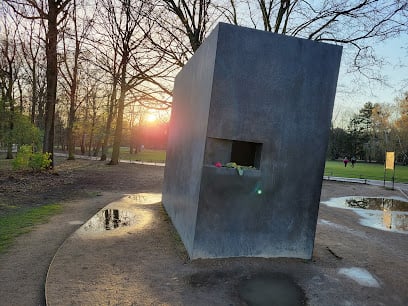
In the Tiergarten park, across the road from the Memorial to the Murdered Jews of Europe. A single grey concrete cube, slightly tilted, by artists Elmgreen and Dragset, unveiled in 2008. Walk up to the small window and you see a film of two men kissing (the film alternates over the years to include women). The pairing of brutal concrete outside and tenderness inside is the point, and it hits harder than any text panel could. Between 1933 and 1945 around 50,000 men were convicted under paragraph 175; thousands were sent to concentration camps, where pink-triangle prisoners were often at the bottom of the camp hierarchy. The memorial is open, free, always accessible, and worth visiting at a quiet hour.> Worth sitting with before you walk on: West Germany kept convicting men under the Nazi-era version of paragraph 175 until 1969, and the law only left the books entirely in 1994. Men punished under it were still waiting for rehabilitation and compensation into the 2010s. This history is not as far away as the concrete makes it look.

Magnus-Hirschfeld-Ufer
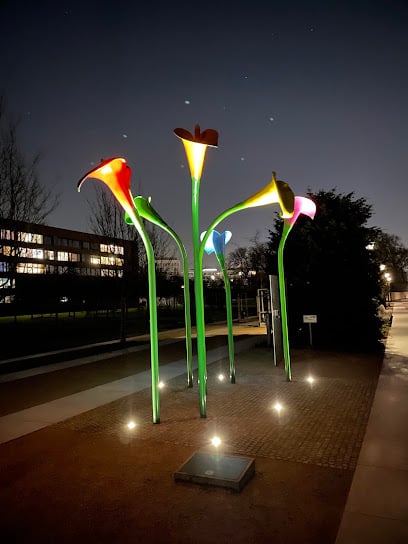
The Spree riverbank north of the Reichstag, marked with rainbow flags and information panels. Magnus Hirschfeld founded the Scientific-Humanitarian Committee here in Berlin in 1897, the world's first gay rights organization, under the motto "justice through science." His Institute for Sexual Science, opened 1919 in a villa nearby (In den Zelten, the building is gone), held the world's largest library on sexuality and gender, employed trans staff, and performed some of the first documented gender-affirming surgeries, including Dora Richter's in 1931. On May 6, 1933, Nazi students looted the institute; its books fed the famous bonfire at Opernplatz four days later. Most photos you've seen of Nazi book burning show Hirschfeld's library in flames. He was abroad on a lecture tour, saw the newsreel in a Paris cinema, and never came back. The riverbank memorial was dedicated in 2008; his name is also on the German federal foundation for queer history, which would have amused and astonished him in equal measure.Kreuzberg and Neukölln: where it kept living

SchwuZ
Rollbergstraße 26, Neukölln. Founded in 1977 as an offshoot of West Berlin's gay activist movement, SchwuZ was Germany's oldest and largest queer club — three floors of parties that ranged from pop to drag to techno. After 48 years it closed for good on 1 November 2025, undone by insolvency amid Berlin's wider club crisis. Plenty of clubs claimed heritage; [SchwuZ](/europe/germany/berlin/gay-heritage/schwuz) actually was the movement, with nearly fifty years of flyers to prove it. The Rollbergstraße rooms stand dark now, but the club's history is inseparable from the story of queer Berlin.SO36
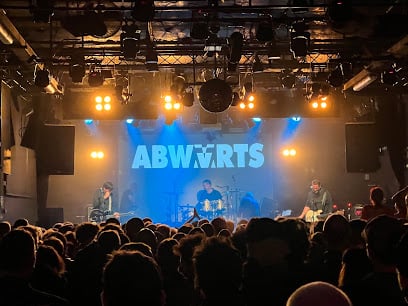
Oranienstraße 190, Kreuzberg. Punk club, queer club, Turkish gay night pioneer, all in one sweaty room named after the old postal code. The legendary "Gayhane" parties mixing queer club culture with Turkish and Arabic pop started here in the late 1990s and still run monthly. In the late 70s the Bowie and Iggy crowd drank here; in the 80s it was squatter punk; today [SO36](/europe/germany/berlin/gay-heritage/so36) is one of the last rooms in Berlin where all of those layers coexist on one dance floor.
Berghain, briefly
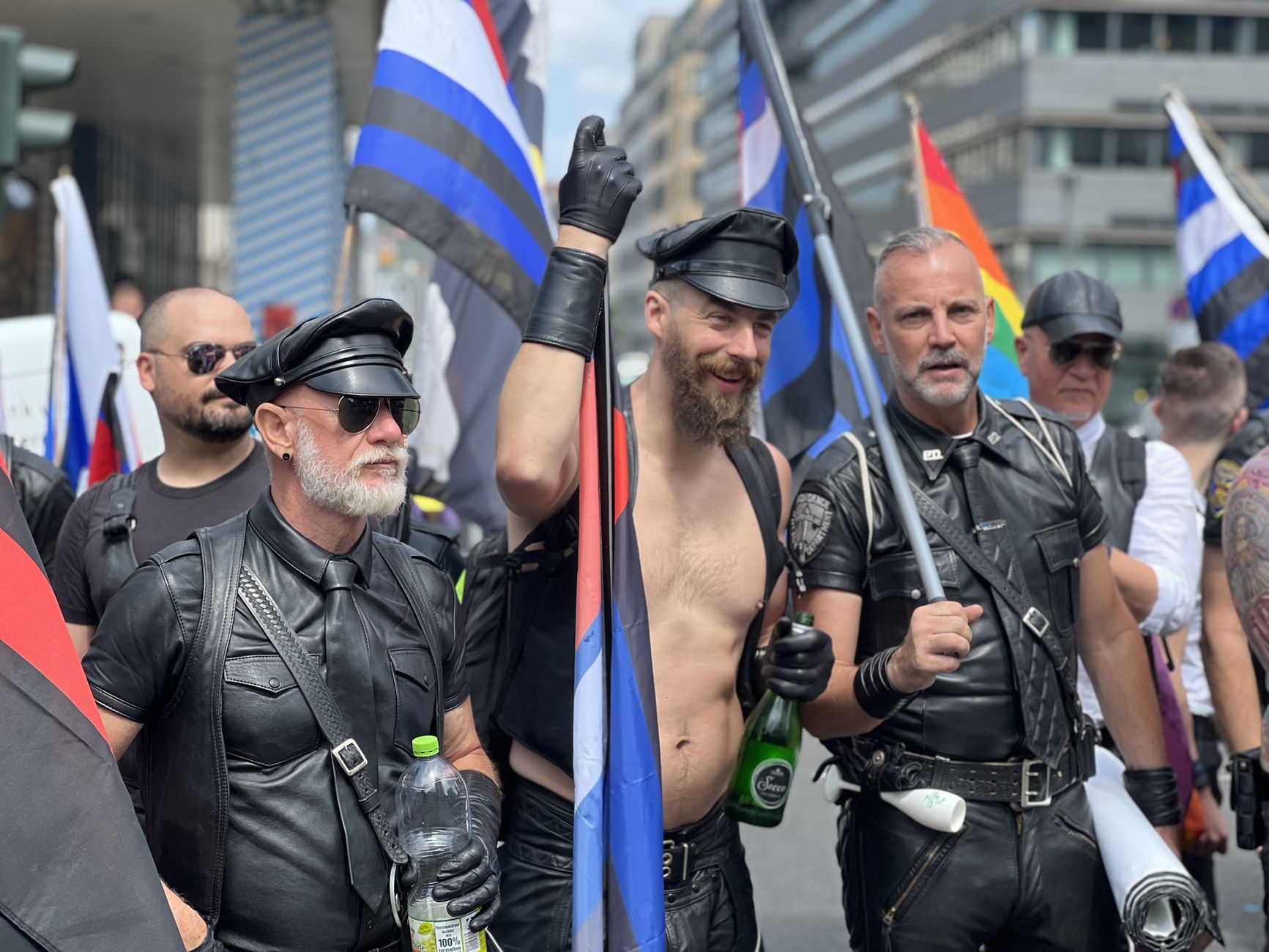
Am Wriezener Bahnhof, Friedrichshain. Not a heritage site in the plaque sense, but Berghain grew directly out of Ostgut and the gay Snax parties of the 90s, and the male-only Snax weekender still happens twice a year. If you want to argue that Berlin's techno cathedral is the Eldorado's great-grandchild, the lineage holds up. A reality check, though, because this is where visitors get hurt feelings: Berlin club culture in 2026 runs on strict codes. Berghain wants you in black and unbothered; KitKat wants you in fetish gear, leather, latex, or considerably less, and they will turn you away for showing up in a nice shirt. Queuing for three hours and catching a flat "Nein" from the selector is, at this point, part of the heritage too; half the city has that story and tells it with weird pride. Our [Berlin clubs](/europe/germany/berlin/clubs) page covers the doors that are easier to get through.Museums and archives

Schwules Museum
Lützowstraße 73, Tiergarten. Opened in 1985, the first museum in the world dedicated to gay history, and it has spent the last decade deliberately outgrowing its own origins. What started as an archive of white gay men's history is now one of the most restless queer institutions in Europe, with rotating exhibitions centering trans lives, queer people of color, lesbian history, and whatever fight is happening right now. You come for the archive (over a million documents) and leave arguing about the newest show, which is exactly what the curators want. Two to three hours, and the [Schwules Museum](/europe/germany/berlin/gay-heritage/schwules-museum) bookshop is dangerous for your luggage weight.Beyond the city

Sachsenhausen
Oranienburg, about 45 minutes by S-Bahn. The concentration camp memorial north of Berlin held hundreds of pink-triangle prisoners, many assigned to the punishment companies with the highest death rates. A memorial to the camp's homosexual victims was placed there in 1992. This is not a casual add-on to a nightlife-and-plaques itinerary; it's a full, heavy day. But if you want to follow the story of the Eldorado's patrons to its end, this is where many of them were sent, and the site treats their memory seriously.Practical notes
Schöneberg's sites cluster within fifteen minutes' walk and pair naturally with an evening in the same neighborhood's bars, which is fitting, since drinking on Motzstraße is itself the heritage. The Tiergarten memorials work best as a quiet morning. July is peak season, with the Stadtfest and CSD (Berlin Pride) in the same month; the city is at its queerest and its most crowded. For the full Weimar mood before you arrive, watch "Cabaret," then "Eldorado" on Netflix, then listen to actual Dietrich. For where to stay near Nollendorfplatz, see our [Berlin hotels](/europe/germany/berlin/hotels) page, and for everything happening this week, the [Berlin events calendar](/europe/germany/berlin).
