Marriage equality since May 2013 (Loi Taubira). Decriminalised 1791 — oldest in the world. ART/IVF for lesbian couples since 2021. Conversion therapy banned February 2022. Trans legal gender change without surgery since 2017, but requires court order (not self-certification). Non-binary gender not legally recognised. Blood donation restrictions fully lifted 2022. March 2024: state recognised persecution of gay men pre-1980. Paris is one of the world's top LGBTQ+ destinations; Le Marais is a…
Rennes is the capital of Brittany and one of the largest cities in western France, with roughly 220,000 residents in the commune and around 450,000 across the metropolitan area. Its LGBTQ+ scene is smaller and more low-key than Paris, Lyon or Marseille, but it is genuine, well-organised and firmly welcoming. Rennes held its first Pride march in 1994 — when some participants still wore masks to protect their anonymity — and the annual Marche des Fiertes has grown ever since into a confident, multi-thousand-strong event. France decriminalised homosexuality early (1791), created civil partnerships (PACS) in 1999 and legalised same-sex marriage in 2013, so a full framework of legal equality applies throughout the country, Rennes included.
A large student population — the universities of Rennes count tens of thousands of students — keeps the city young, open and progressive. Rather than being concentrated in a single "gay district", LGBTQ+ life in Rennes is woven through the compact, walkable city centre and anchored by a strong community centre, Iskis.
Neighbourhoods and Geography
Rennes's medieval core is small and easy to explore on foot. The historic centre around Place des Lices and the half-timbered streets of the old town is the main hub for visitors. Rue Vasselot, just south of Place des Lices, is home to Le Batchi, the city's principal gay club. A short walk north-east, the Sainte-Anne quarter and Rue Saint-Michel — nicknamed the "Rue de la Soif" (Street of Thirst) for its dense run of student bars — form the busiest, most queer-friendly stretch of nightlife.
The area around Place de la Republique and the Vilaine river, which runs east-west through the centre, holds more bars and restaurants and is a natural axis for an evening out. The Thabor, Rennes's grand public garden east of the centre, is a favourite green space for locals. Iskis, the LGBTI+ centre, sits just north of the river in the Parc des Tanneurs.
Bars and Nightlife
Rennes does not have a dense cluster of gay venues, and the scene became noticeably quieter in 2026 when L'Attrape-Reve — for several years the city's only dedicated LGBT bar, known for its drag shows and safe-space atmosphere — closed its doors in March 2026. That leaves Le Batchi (34 rue Vasselot) as the enduring anchor of gay nightlife. Affectionately called "le Bat'", it has run since the 1980s and opens late on Friday and Saturday nights, drawing a friendly, mixed-generation crowd to its compact dancefloor for pop and electro.
Beyond Le Batchi, nightlife is a matter of gay-friendly rather than exclusively gay venues: several bars around Sainte-Anne, Rue Saint-Michel and Rue Dupont-des-Loges host drag nights and queer-friendly parties, and the student scene means there is always something on. For the most current listings it is worth checking Iskis's programme or local social-media groups, since the small-city scene shifts from season to season.
Rennes has a genuine gay-sauna tradition. Sauna Carre Rouge (15 rue de la Doneliere), open since 2014, is the flagship: two floors of wet and play areas, a hammam, dry sauna, cabins, sling and maze, a licensed bar, themed nights and — unusually for Brittany — a large south-facing naturist terrace. It welcomes a mixed male crowd (gay, bisexual and curious men). Sauna California, near the railway station on rue de Leon, is a long-established three-floor bathhouse; recent activity has been uncertain, so it is worth confirming opening hours directly before visiting.
The heart of LGBTQ+ Rennes is Iskis – Centre LGBTI+ de Rennes (6 rue Saint-Martin), founded in 2001 and partnered with the city since 2010. It runs drop-in sessions, support and discussion groups, cultural events and HIV-prevention work, hosts other associations, and organises the Marche des Fiertes. Other active groups include AIDES (its Grand Ouest delegation, offering free rapid HIV testing and sexual-health support on rue de Suede), Ouest Trans (a trans peer-support association covering Brittany since 2015) and GLS Rennes (an LGBTQ+ multisport club founded in 2008 with several hundred members).
Pride and Events
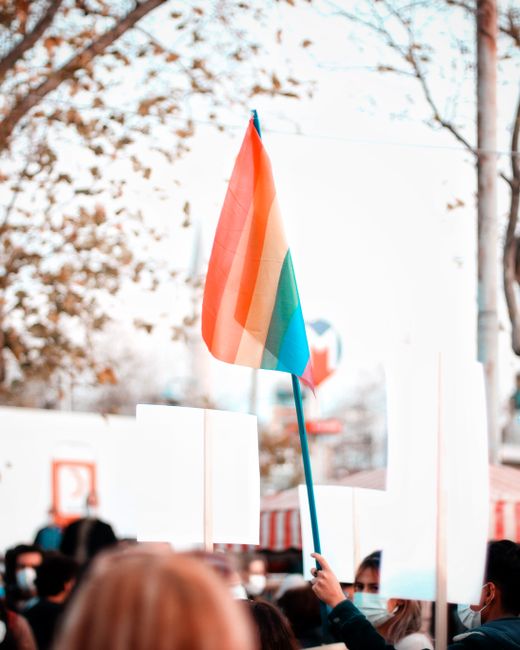
The Marche des Fiertes LGBTI+ de Rennes is the city's flagship LGBTQ+ event, organised by Iskis and held in June. In 2026 it takes place on Saturday 20 June, gathering at the Esplanade Charles de Gaulle before a festive march through the city centre; recent editions have drawn crowds in the thousands. Around Pride and throughout the year, Rennes's rich cultural calendar — a city famous for the Trans Musicales festival and a lively arts scene — regularly features LGBTQ+ artists, film screenings and community events. Accommodation fills up around Pride weekend, so book ahead.
Where to Stay
Rennes offers hotels across every price range, most of them welcoming by default in a city where discrimination is rare. The city centre and the area near the train station (Place de la Gare) give the best access to nightlife and sights, from design-led options like Mama Shelter to comfortable mid-range and boutique hotels and well-run hostels. Staying within the medieval centre maximises walkability; the compact size means you are never far from Rue Vasselot or Sainte-Anne.
Rennes is very walkable, especially the medieval centre. The city runs an efficient VAL automated metro (lines a and b) alongside buses, all operated by STAR; a single ticket costs a little over two euros. Le Velo STAR, the city's bike-share, is a pleasant way to explore, and taxis and ride-hailing are available. The Gare de Rennes puts Paris around 1 hour 25 minutes away by TGV, with fast connections to Brittany's coast; Rennes–Saint-Jacques airport handles domestic and European flights.
Food and Dining
Breton cuisine is a highlight: crepes and galettes (savoury buckwheat pancakes) are everywhere and inexpensive, alongside excellent seafood, salted-butter caramel and cider. The Marche des Lices, held Saturday mornings on Place des Lices, is one of France's largest food markets. The centre around Rue Saint-Michel and Place Sainte-Anne is thick with restaurants, cafes and bars, many of them openly gay-friendly.
Safety
France is among the safest countries in Europe for LGBTQ+ travellers, with strong legal protection and widespread social acceptance, and Rennes — a progressive university city — is no exception. Public displays of affection between same-sex couples are unremarkable. As anywhere, apply normal urban common sense at night. The local community is visible and well-supported, and Iskis is a reliable first point of contact if you need information or help.
Day Trips
Rennes is an ideal base for exploring Brittany. Saint-Malo, a walled corsair city with ramparts and beaches, is about an hour away by train. Dinan, a beautifully preserved medieval town, is a similar distance. The forest of Broceliande (Paimpont), steeped in Arthurian legend, lies just south-west of the city and offers woodland walks and myth-soaked scenery. Mont-Saint-Michel, the UNESCO-listed island abbey on the Normandy border, is roughly 1.5 hours away.
Conclusion
Rennes is a welcoming, culturally rich Breton capital that offers an authentic taste of LGBTQ+ life in provincial France. The scene is compact — one enduring gay club in Le Batchi, a flagship sauna, a strong community centre and a spirited June Pride — but the city is safe, progressive and easy to love, and its food, architecture and access to the Breton coast make it well worth the trip.
Frequently asked questions
Yes. France offers full legal equality — same-sex marriage since 2013 and civil partnerships (PACS) since 1999 — and Rennes is a progressive, welcoming university city. Public displays of affection are unremarkable and the local community is visible and well-supported, with the Iskis LGBTI+ centre as a reliable point of contact. Apply normal urban common sense at night, as anywhere.
LGBTQ+ life in Rennes is woven through the compact historic centre rather than a single district. The main gay club, Le Batchi, is on Rue Vasselot near Place des Lices, while the Sainte-Anne quarter and Rue Saint-Michel — nicknamed the 'Rue de la Soif' for its student bars — form the busiest, most queer-friendly nightlife. Iskis, the LGBTI+ centre, sits just north of the Vilaine in the Parc des Tanneurs.
Le Batchi (34 rue Vasselot), running since the 1980s, is the city's principal gay club, open late on Friday and Saturday. Rennes's last dedicated LGBT bar, L'Attrape-Reve, closed in March 2026, so the wider nightlife is now gay-friendly rather than exclusively gay. There are also two gay saunas — the flagship Sauna Carre Rouge and Sauna California near the station.
Pride in Rennes is the Marche des Fiertes LGBTI+, organised by the Iskis centre and held in June. In 2026 it takes place on Saturday 20 June, gathering at the Esplanade Charles de Gaulle. Rennes has marched since 1994 — one of the earliest in Brittany — and recent editions draw crowds in the thousands.
The historic centre is walkable and full of cafes, restaurants and gay-friendly venues. Rue Vasselot (home to Le Batchi), the Sainte-Anne quarter and Rue Saint-Michel, and the Place de la Republique area along the Vilaine are the main gay-friendly zones. There is no single gay district — the scene is integrated across the centre.
Rennes's LGBTQ+ community is modest but active. It is smaller than Paris, Lyon or Marseille, yet well-organised around the Iskis centre and a spirited June Pride that draws thousands. The large student population keeps the scene young, open and progressive year-round.
Your privacy choices.
We use cookies to run GayOut and, with your consent, measure usage. Learn more
Your privacy choices
We use cookies to keep GayOut running, remember your preferences, and (with your permission) measure how the site is used. You can accept all, reject all, or pick what you allow. Learn more
Essential
Required for sign-in, fraud prevention, CSRF protection and remembering your language. Cannot be disabled.
Always on
Remembers your favourites, dark mode and other interface preferences across visits.
Helps us understand which pages people visit (Google Analytics, server-side stats) so we can improve.
Used by campaign tracking pixels. None are active right now, reserved for future use.
Install GayOut
Add GayOut to your home screen for faster access, offline favourites, and Pride alerts.








![Chloé [All Night Long]](https://static.weezevent.com/ticket/images/O9515/5ac6f0ba-3cfc-4094-950f-004577304289.jpeg)
















 Gay Bars & Clubs
Featured
(125)
Gay Bars & Clubs
Featured
(125)


