









In this guide · 23 sections
- The law and politics in 2026
- Neighbourhoods
- La Mariscal and Plaza Foch
- La Floresta
- Guápulo
- The historic centre
- Nightlife
- Saunas
- Cruising
- Pride: Quito and Guayaquil
- Where to stay
- What to see
- Food and drink
- Safety in 2026
- Practical tips
- A few words of Ecuadorian Spanish
- At a glance
- Frequently asked questions
- Is Quito gay-friendly?
- Where is the gay area of Quito?
- Is same-sex marriage legal in Ecuador?
- When is Quito Pride?
- Is Quito safe for gay travellers in 2026?
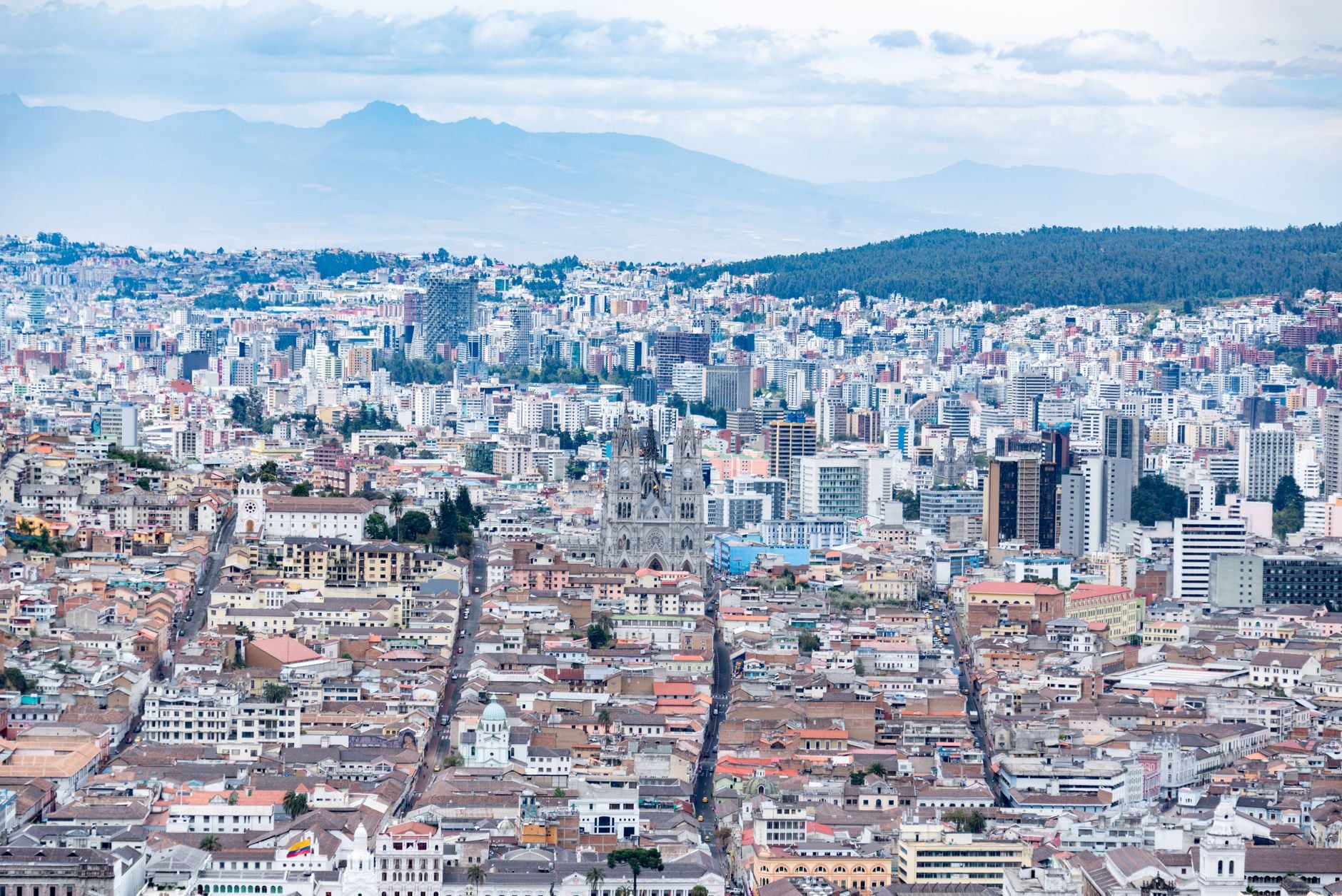
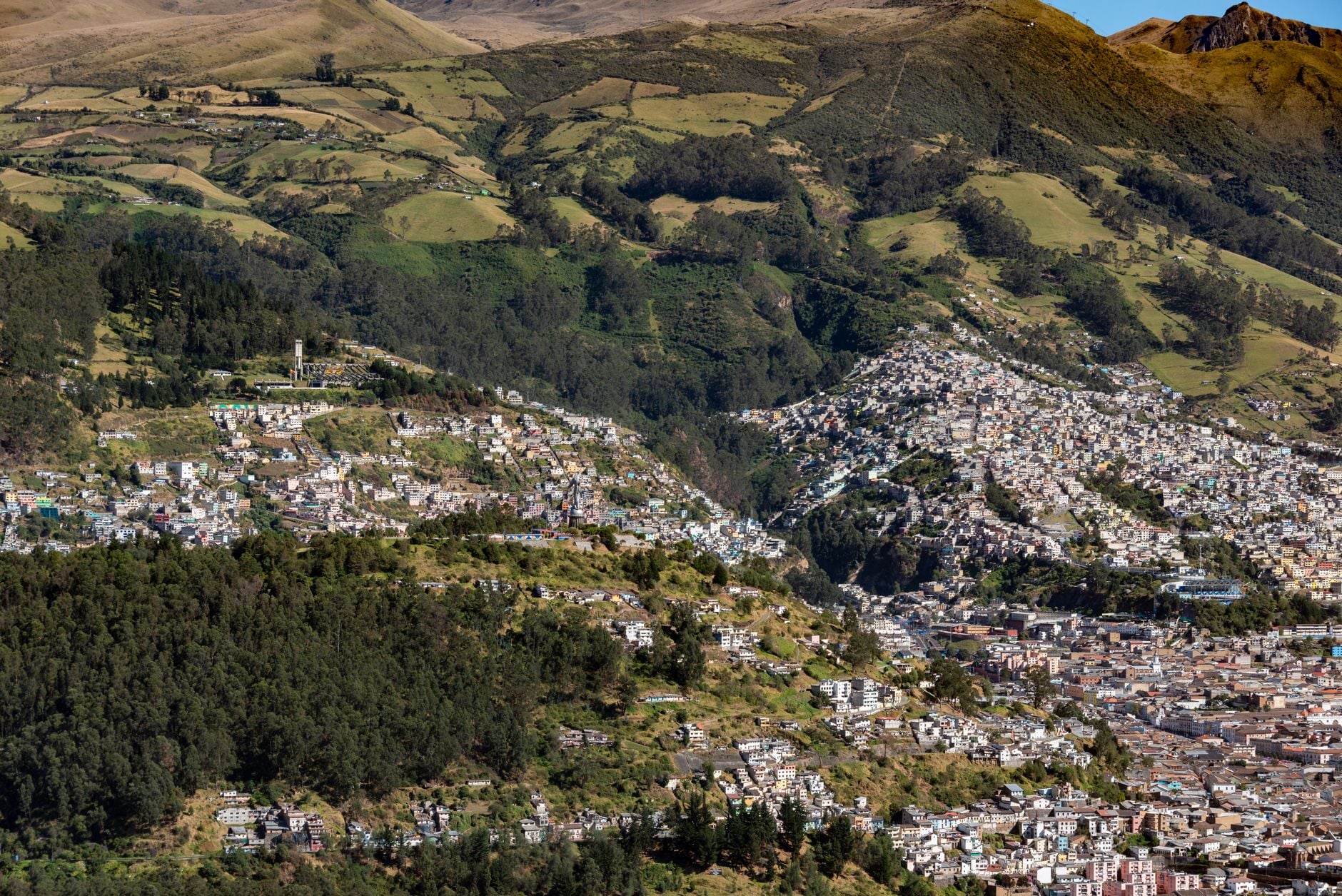
Quito wakes up bright and cold, 2,850 metres up in a long Andean valley, with the green flanks of the Pichincha volcano rising straight behind the rooftops. By mid-morning the sun is fierce, by mid-afternoon the clouds roll down the mountain, and by night you'll want a jacket and a hot canelazo. In between there are gilded colonial churches, steep streets of whitewashed houses with blue balconies, and the smell of roast pork from the market stalls. The gay scene is smaller than Bogotá's or Lima's and spread across the new town: a handful of dance clubs with drag and reggaeton, a queer cocktail bar, three men's saunas that close at dinner time, and one big Saturday in June when Avenida Amazonas fills with flags. Ecuador's laws are among the more progressive in South America; the bigger issues for a visitor in 2026 are altitude and street crime, and both are manageable.
Legal in one line: Ecuador decriminalised homosexuality in 1997, banned discrimination by sexual orientation in its 1998 constitution, recognised same-sex civil unions in the 2008 constitution, has let adults record their gender identity on their ID card since 2016 and has had marriage equality since a 2019 Constitutional Court ruling; adoption is still limited to different-sex couples.
Altitude first: Quito sits at about 2,850 metres. For the first day or two expect to be breathless on stairs and steep streets, and to feel alcohol harder and faster than at sea level. Take your first evening slowly, drink plenty of water, alternate drinks with water, and save the TelefériQo, which climbs to nearly 4,000 metres, for later in your stay.
The law and politics in 2026
Ecuador's road to equality ran through its courts. In November 1997 the Constitutional Tribunal struck down the penal-code article that punished sex between men. The 1998 constitution then banned discrimination on grounds of sexual orientation, and the current 2008 constitution keeps that ban and recognises de facto unions for same-sex couples, though it still defines marriage as between a man and a woman. In June 2019 the Constitutional Court ruled that this definition had to be read alongside the Inter-American Court's 2017 opinion on equal marriage, and same-sex couples have been marrying since. A 2016 civil-registry law allows adults to replace "sex" with "gender" on the cédula, the national ID card.
President Daniel Noboa's government has made security its priority, governing through repeated states of exception against organised crime. In a referendum on 16 November 2025 voters rejected all four of his proposals, including a constituent assembly to write a new constitution (61.8% against) and foreign military bases (60.8% against). None of the questions was about LGBTQ+ rights, but the result means the 2008 constitution, with its anti-discrimination clause and same-sex union recognition, stays in force.
Neighbourhoods

La Mariscal and Plaza Foch
The new town's old nightlife and backpacker district, between Avenida Patria and Avenida Orellana, with Plaza Foch at its centre: bars, hostels, Spanish schools and street food. Radar and Black White are here, and Sauna Robles Spa is on its eastern edge. It's lively and pleasant by day, but after midnight it's the area police name most often for pickpocketing and drugged-drink robberies, so taxi in and out at night.
La Floresta
Just east of La Mariscal, a quieter, leafy residential district with an artsy crowd, independent cafés, craft beer and street murals. It's home to Ocho y Medio, an arthouse cinema and café popular with Quito's creative crowd. A good base if you want calm streets close to the bars.

Guápulo
Below La Floresta, the city drops away down a steep cliff to Guápulo, a village-like neighbourhood of cobbled lanes centred on a white colonial sanctuary church. Bohemian, scenic and slow. The walk down is lovely by day; the climb back up at 2,850 m is hard, and at night take a taxi.
The historic centre
Quito's old town was one of the first two cities named a UNESCO World Heritage Site, in 1978, and it remains a remarkably intact colonial centre: Plaza Grande, the gold-covered Jesuit church of La Compañía, the vast monastery of San Francisco, and the restored lane of La Ronda, with its craft shops and canelazo stands. Visit by day, and keep to busy streets after dark, when the centre empties fast.

Nightlife
Quito's scene is clubs rather than quiet bars. Most venues open Thursday to Saturday, fill after 23:00 and close around 03:00. Full details are in our Quito bars guide.
- Kika Danzatoria, Av. Francisco de Orellana & Yánez Pinzón, near Parque La Carolina: the city's long-running favourite, with a mixed crowd from their 20s to 40s, two rooms (drag, Latin pop and reggaeton in one, electronic sets in the other) and late nights from Thursday to Saturday. Visitors in 2026 paid around $15–20, with an open bar early in the night.
- La Disco Bitch, Av. 6 de Diciembre N30-59: the party spot for the youngest crowd, Friday and Saturday from about 21:00 to 03:00; Fridays are busiest.
- Radar, José Calama & Juan León Mera, La Mariscal: a relaxed bar and small club with karaoke, a DJ and occasional drag; the easiest first stop for visitors.
- Pose by Ph, Jerónimo Carrión & Antonio de Ulloa: a newer club on the western edge of La Mariscal with DJs and a local crowd, open some Tuesdays as well as weekends.
- Mimi Bar Fluido, Av. Paúl Rivet N30-99: a queer cocktail bar and kitchen founded by three queer women, with drag, DJs and community nights. Cocktails are on the pricey side.
- Black White, La Mariscal: a small, cheap, local karaoke bar with theme nights.
- Sauna Robles Spa, Robles E7-34 & Av. 6 de Diciembre, La Mariscal: modern and central, with jacuzzi, dry sauna, steam and a bar; its website lists daily 14:00–20:00 and $10 entry.
- Sauna Jinetes, Berlín 147 & 9 de Octubre: open since 1999 according to misterb&b, with a mature, bear-friendly crowd; its website lists daily 13:00–20:00 and $9 entry, with massages from $15.
- Baco Spa, S. Quintero 158: a well-reviewed men's spa with steam, hydromassage, a video room and cabins. Hours aren't published, so message ahead (099 858 2242).
- Quito had two marches. The main Orgullo Quito Oficial began with a fair and placard-making from 07:00 at the Plataforma Gubernamental Norte, set off at 11:30 north along Avenida Amazonas with floats, and ended at the Parque Bicentenario events platform with a free concert. The alternative Orgullofff left at 09:00 from Avenida Eloy Alfaro and Amazonas and ended at Jorge Washington and Amazonas in La Mariscal. Press reports focused on demands for trans people's employment rights.
- Guayaquil marched the same afternoon, gathering at 15:00 in Parque Centenario and walking along Avenida 9 de Octubre to the Malecón 2000, where the first PRIDELY FEST, with a free concert, was held at the Palacio de Cristal. Note that parts of Guayaquil are under the US government's "do not travel" advice.
- Hotel Casa Alquimia, Rocafuerte Oe3-13 & Guayaquil, historic centre: an 11-room boutique hotel with a rooftop terrace and garden, a couple of minutes' walk from Santo Domingo church and Plaza de San Francisco, rated 9.6 out of 10 by guests on Hotels.com. Lovely for the old town, though you'll need a taxi to the bars.
- Hotel Boutique La Circasiana and the budget Hostal Quito Terrace are also on our list; check recent reviews before booking.
- See all gay-friendly hotels in Quito. La Floresta and the streets around Parque La Carolina put you closest to the clubs; La Mariscal is central but noisy and less safe late at night.
- TelefériQo: the cable car climbs the slopes of Pichincha from the edge of the city to nearly 4,000 metres, for views over the whole valley and, on clear mornings, the snow cone of Cotopaxi. Go early, before the clouds, and not on your first day: at that height even a short walk leaves you breathless.
- Mitad del Mundo: the Equator monument and visitor park is north of the city, roughly an hour by road, depending on traffic. GPS puts the true line a couple of hundred metres away; the small Intiñan museum nearby makes a show of it. Fun, touristy, and best done in a morning.
- The old town: climb the towers of the Basílica del Voto Nacional, see La Compañía's gold interior, and finish on La Ronda at dusk.
- The national picture: Ecuador has been living through a security crisis driven by drug gangs, with states of exception renewed in many provinces during 2026 (travel-advice services listed Pichincha, Quito's province, among them in August). A nationwide night-time curfew (23:00 to 05:00) was in force for part of the spring, and the Metro cut its hours until it ended. Check the current rules before you travel, as they change at short notice, and carry ID: police and military checks are common.
- Travel advice: in its August 2026 update the US State Department kept Ecuador overall at Level 2 ("exercise increased caution"), with "do not travel" warnings for parts of Guayaquil, Durán, Esmeraldas, El Oro and Los Ríos. Quito is not among those areas.
- Drugged drinks: Quito police recorded 297 robberies using drugs such as scopolamine in drinks or food up to late August 2026, against 181 a year earlier, with La Mariscal and Iñaquito among the hotspots. Of the people reported missing after being drugged between January and July, almost all were young men. Never accept a drink you didn't see poured, and never leave yours unattended.
- Dating apps: in July 2026 police reported gangs using dating apps to set up robberies, moving the chat to WhatsApp, then changing the meeting place or inviting themselves home. Meet first in a busy public place, arrive and leave on your own, insist on a video call, and share your live location with a friend.
- Taxis and secuestro exprés: the classic Quito risk is an unregistered taxi in which you're robbed or driven between cash machines. Don't hail cabs on the street at night; use Uber or InDrive, or ask your bar or hotel to call one, and go door to door.
- Emergencies: call 911.
- Altitude: see the box at the top of this guide. Locals call the hangover chuchaqui.
- Metro de Quito: Line 1, which began full passenger service in December 2023, runs north to south from El Labrador to Quitumbe through 15 stations in about 30 minutes. The standard fare is $0.45, payable by bank card, QR code or the city's Tarjeta Ciudad. Normal hours are 05:30 to 23:00 on weekdays, 07:00 to 23:00 on Saturdays and 07:00 to 22:00 on Sundays, so it won't get you home from a club.
- Money: Ecuador uses the US dollar. Carry small notes; $100 bills are hard to break.
- Weather: "four seasons in a day". Pack layers, sunscreen and a rain jacket, all year.
- Apps: Grindr is the main app; see the safety box above.
- Health: if a condom breaks, PEP must start within 72 hours: go to a hospital emergency room (emergencia).
- Community: Fundación Pakta is a Quito-based legal-advocacy organisation working on LGBTIQ+ rights, and a useful first contact if you face discrimination.
- ¡Chévere! – cool, great.
- Ñaño, ñaña – brother, sister; also bro, close friend.
- Pana – friend, mate.
- ¡Achachay! – brrr, it's cold! (from Kichwa; you'll say it every night).
- Chuchaqui – hangover.
- Ambiente – "the scene"; bar de ambiente is a gay bar.
Clubs check ID at the door, and for a visitor that means your passport. Keep it in a zipped front pocket.
Closed or unconfirmed: the clubs Tercer Milenio ("El Hueco") and Touch UIO are listed as permanently closed, and we couldn't confirm the saunas Sauna Azul, La Isla and Mikonos as open.
Saunas
Quito's men's saunas are afternoon venues: most open around 13:00 or 14:00 and close at about 20:00, so go before dinner and the clubs. Entry is around $9–10. See our Quito saunas guide for the details.

Cruising
Most cruising in Quito happens indoors, in the saunas above. Two outdoor spots are also listed: Parque El Ejido, between the old town and La Mariscal, and Parque La Carolina, the big park further north. Both are busy family parks by day, with playgrounds, sports pitches and weekend markets. Our Quito cruising guide has more.
The law and safety in the parks: under Ecuador's 2014 penal code (COIP), consensual sex between adults in a public place is not in itself a crime, but the municipality can impose administrative sanctions, anything near children is a serious offence, and recording someone's intimate images without consent is a crime under article 178. Robbery is the bigger risk: visitors and local press report robberies in both parks, especially in the evening and at night, and in 2023 a regular told the newspaper Expreso he now only goes in the morning. Carry little cash and a basic phone, don't go after dark, and leave if police ask you to.
Pride: Quito and Guayaquil
Ecuador's two big cities hold their Pride marches on the same day, usually the last Saturday of June. In 2026 that was Saturday 27 June.
The clubs hold their biggest parties on Pride weekend. Expect the 2027 marches in late June again; the date is usually confirmed a few weeks ahead.

Where to stay
What to see

Food and drink
Quito eats hearty mountain food. Order locro de papa, a thick potato soup with cheese, served with avocado; hornado, slow-roasted pork, usually with llapingachos (cheesy potato patties) and mote, best from the market stalls; and empanadas de viento, huge puffed fried pastries filled with cheese and onion and dusted with sugar, perfect with a hot drink. And the city's signature warmer is the canelazo: water boiled with cinnamon, often with naranjilla juice and panela (raw cane sugar), then spiked with aguardiente and served hot. You'll find it on La Ronda and in plenty of bars on a cold night. In late October and early November, bakeries sell colada morada and guaguas de pan for the Day of the Dead on 2 November.
Safety in 2026

Practical tips
A few words of Ecuadorian Spanish
At a glance
| Place | Type | Area | When | Note |
|---|---|---|---|---|
| Kika Danzatoria | Gay club, drag | Av. Orellana, near La Carolina | Thu–Sat, late | Main night out; around $15–20 |
| La Disco Bitch | Club, young crowd | Av. 6 de Diciembre N30-59 | Fri–Sat ~21:00–03:00 | Fridays busiest |
| Radar | Bar-club, karaoke | Calama & J. L. Mera, La Mariscal | Wed–Sat evenings | Easy first stop |
| Pose by Ph | Gay club, DJs | J. Carrión & A. de Ulloa | Weekends, some Tuesdays | Local crowd |
| Mimi Bar Fluido | Queer cocktail bar | Av. Paúl Rivet N30-99 | Evenings | Food, drag, community nights |
| Sauna Robles Spa | Men's sauna | Robles E7-34, La Mariscal | Daily 14:00–20:00 | $10 listed |
| Sauna Jinetes | Men's sauna | Berlín 147 | Daily 13:00–20:00 | $9; mature crowd |
| Baco Spa | Men's spa | S. Quintero 158 | Afternoons; message ahead | Well reviewed |
| Hotel Casa Alquimia | Boutique hotel | Historic centre | Year-round | 11 rooms, rooftop terrace |
Frequently asked questions
Is Quito gay-friendly?
Fairly, by Andean standards. Ecuador has had marriage equality since 2019 and constitutional protection against discrimination, and Quito has a small but lively scene of clubs, bars and saunas. Society outside the scene is still fairly traditional, so most locals are discreet in public.
Where is the gay area of Quito?
There's no gay village. Radar and Black White are in La Mariscal, the nightlife district around Plaza Foch, while Kika Danzatoria, La Disco Bitch and Mimi Bar Fluido are further north towards Parque La Carolina. The saunas are in and around La Mariscal, and they open in the afternoon.
Is same-sex marriage legal in Ecuador?
Yes. The Constitutional Court opened marriage to same-sex couples in June 2019, building on the civil unions recognised in the 2008 constitution. Homosexuality was decriminalised in 1997, and since 2016 adults can record their gender identity on their ID card.
When is Quito Pride?
On the last Saturday of June or close to it. In 2026 it was on Saturday 27 June: the main march went north along Avenida Amazonas to Parque Bicentenario, an alternative march ended in La Mariscal, and Guayaquil marched the same afternoon.
Is Quito safe for gay travellers in 2026?
With care, yes. Quito is outside the coastal areas where the US government says not to travel, but robberies using drugged drinks and dating-app set-ups rose in 2026, especially around La Mariscal. Use app taxis door to door, meet dates in public places and never leave a drink unattended.
Part of the GayOut city guides. See our Quito bars, saunas and cruising guides, or browse all Ecuador cities.
