


In this guide · 13 sections
Gay Nairobi — Your Complete Guide
Everything worth knowing before you go.
LGBTQ+ status: HIGH RISK
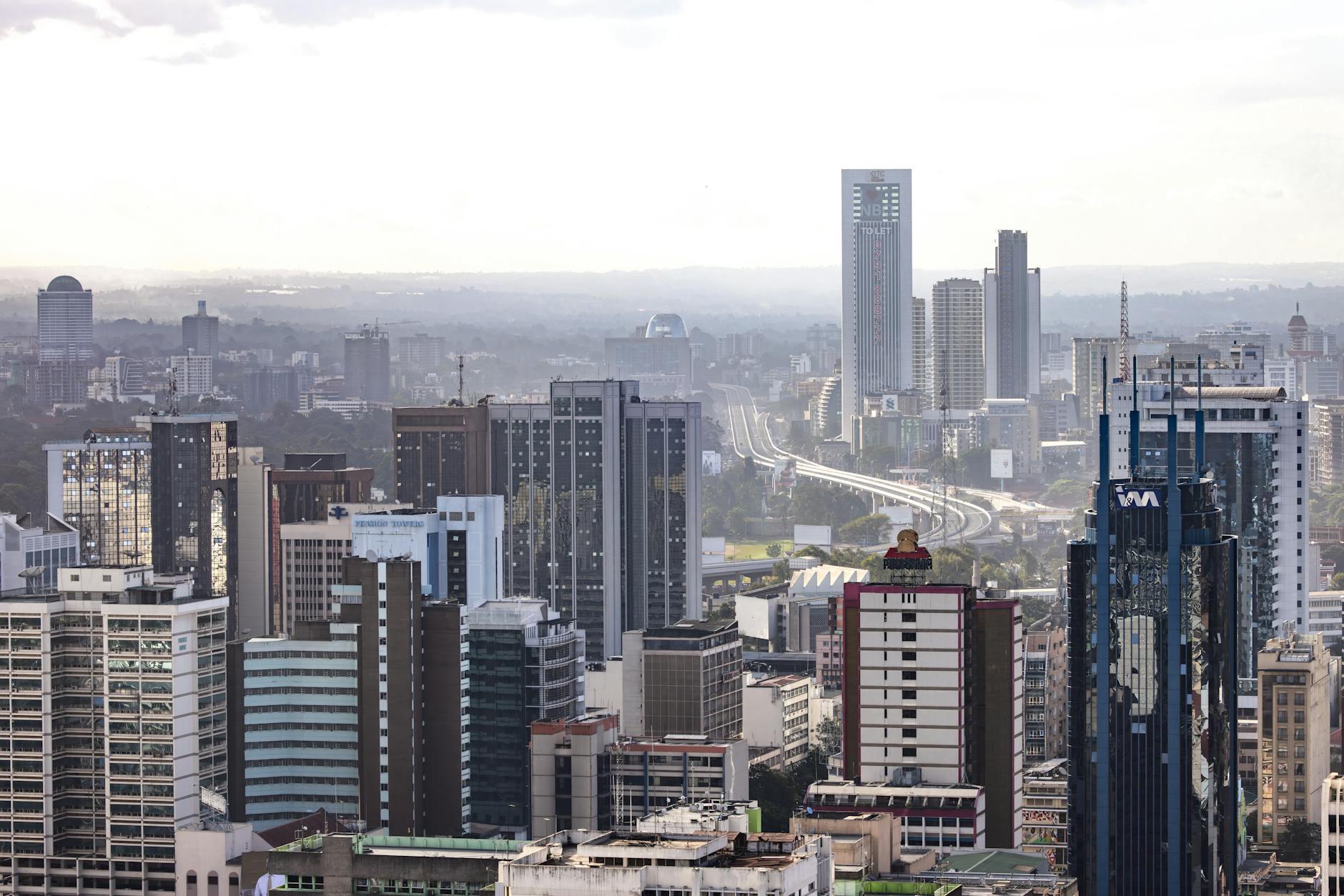
Nairobi — the "Green City in the Sun" — is East Africa's financial, artistic and safari capital, and a city of remarkable contrasts: world-class specialty coffee, a thriving contemporary art scene, and lions roaming against a skyscraper skyline, all operating alongside a complex, conservative political environment. Kenyans are famously warm hosts — karibu (welcome) is the word you'll hear most — and the caution this guide asks of you is not about the people. It's about one specific subject, and about keeping that subject private.
Thousands of LGBTQ+ travellers visit Kenya safely every year. Doing it well isn't about hiding in fear; it's a clear, sensible model: enjoy the city's cosmopolitan energy openly, and keep your personal life entirely private.
Legal status
Kenya criminalises same-sex sexual activity between men under the Penal Code, a direct inheritance from British colonial law. Section 162 ("carnal knowledge against the order of nature") carries up to 14 years' imprisonment, Section 163 criminalises attempts with up to 7 years, and Section 165 ("gross indecency between males") carries up to 5 years. As written, these provisions apply only to men; sex between women is not explicitly criminalised, though lesbian and bisexual women face the same social hostility and police harassment.
The courts have kept the laws in place. In May 2019, Kenya's High Court rejected a constitutional challenge to Sections 162 and 165; the appeal has been working through the Court of Appeal since. In 2023 the Supreme Court delivered a landmark ruling of a different kind — affirming that the National Gay and Lesbian Human Rights Commission (NGLHRC) has the constitutional right to register as an NGO. That was a genuine win, and it also triggered the most hostile political climate in years.
The backlash matters for travellers. In April 2023, MP Peter Kaluma introduced the Family Protection Bill, modelled on Uganda's Anti-Homosexuality Act: minimum 10-year sentences for same-sex conduct, the death penalty for "aggravated homosexuality," and prison terms for promoting LGBTQ+ rights. As of mid-2026 the bill has not been tabled before Parliament — it is a proposal, not law — but its existence has licensed harsher public rhetoric, and rights researchers working in Nairobi report mounting violence against queer Kenyans since the Supreme Court ruling. Anti-LGBTQ+ "family values" conferences have been held in Nairobi with government officials in attendance.
There are also small, genuine bright spots: in January 2026 the Court of Appeal lifted the ban on the Kenyan lesbian film Rafiki, and courts have issued significant pro-transgender rulings in 2025. Kenya is not Uganda — its judiciary is independent and civil society is organised and legally recognised. But the criminal law stands, and the direction of public sentiment is currently negative.
The law vs. what actually happens
Understanding the gap matters more here than almost anywhere:
Prosecutions of consensual adult conduct are rare — convictions under 162/165 for private consensual sex are hard to secure and infrequent. The laws' real function is as leverage. Police more often use lesser charges (public nuisance, solicitation, loitering) or simply the threat of arrest.
The practical risks, in order of likelihood:
- Extortion and blackmail — by police and by criminals. Human rights organisations have documented a consistent pattern: officers threatening arrest under the sodomy laws to extract bribes, and gangs using dating apps to lure men to meetings where they are robbed, beaten, or blackmailed, knowing victims won't report. This — not prosecution — is the number-one threat to a gay visitor in Nairobi.
- Outing and mob hostility — being visibly identified in the wrong context can attract crowd hostility, particularly outside upscale areas.
- Arrest on pretext charges — typically resolved with embassy involvement for foreigners, but a frightening and expensive process.
- Actual prosecution under 162/165 — rare for foreigners, but the 14-year maximum is what gives every other threat on this list its power.
Foreign nationals are not a priority target, and tourism is a pillar of Kenya's economy. But travellers cannot assume immunity, and wealth makes you a more attractive extortion target, not a protected one.
Police and authorities
If you are threatened or arrested, contact your embassy immediately — this is the single most effective protection a foreign national has. Do not volunteer information, do not hand over your phone willingly, and be very cautious about paying bribes: payment marks you as payable, and demands often escalate rather than end.
Know that forced anal examinations, previously used as "evidence," were ruled unlawful by Kenya's Court of Appeal in 2018 — no one can legally be subjected to them.
International hotels are a real layer of protection: professional staff, security, and no interest in involving police over guest conduct. Treat your hotel as your safe perimeter.
Digital safety
This deserves its own section because the apps are where most incidents start:
- Assume Grindr, Scruff and similar apps are monitored and actively used for entrapment. The documented pattern: a match builds trust over days, proposes meeting, and the meeting is an ambush — robbery, beating, or blackmail ("pay or we report you / post your photos").
- Use a VPN before opening any LGBTQ+ app or site, and set it up before arrival.
- Never meet at a stranger's place or an isolated location. First meetings only in busy public venues (international hotel lobbies and cafés are ideal); tell someone where you are.
- No face photos linked to identifying details. Don't share your full name, hotel, workplace, or itinerary before real trust is established — and understand that "verified locals" can be part of a scheme.
- Keep your device clean at borders and checkpoints. Use disappearing messages, keep apps behind a hidden/locked folder or delete and reinstall as needed, and store sensitive photos in cloud storage rather than the camera roll.
- Turn off precise location in any app that shows distance — triangulation by distance is a known technique for locating users.
Practical safety
- Zero public affection. Hand-holding, kissing, lingering touch — nothing, anywhere, including upscale Westlands venues. Two men sharing a hotel room reads as ordinary travel; two men kissing in a bar does not.
- Presentation: dress unremarkably. This is a tactical choice about not drawing attention, not a judgment.
- Airport exit (JKIA): the most hustled moment of the trip is stepping out of arrivals at Jomo Kenyatta International. Ignore the taxi touts working the terminal — use the airport Wi-Fi or local data to order an Uber/Bolt, or pre-arrange a transfer through your hotel.
- Money hygiene: carrying serious cash makes you a target for street crime and a juicier extortion mark. Foreign cards work fine across Westlands, Kilimani and Karen, and Kenya runs on mobile money — grab a Safaricom SIM at the airport and you can pay for nearly everything digitally via card or M-Pesa without touching cash.
- Transport: use Uber/Bolt or hotel-arranged cars, not street taxis or matatus at night. Share your route with someone. Nairobi has ordinary big-city crime ("Nairobbery" is the local joke) that applies to everyone; standard urban caution covers most of it.
- Alcohol and judgment: most bad outcomes involve leaving a venue with someone new after drinks. Decide your rules sober.
Where to stay
International chains accommodate same-sex couples in one room without issue, and their staff professionalism is your best day-to-day perimeter of safety:
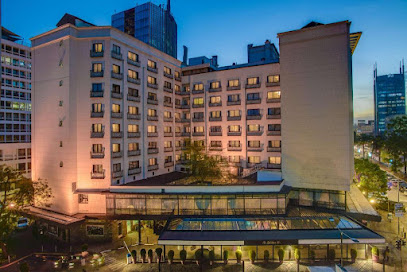
- Serena Nairobi & Fairmont The Norfolk — classic luxury, central, highly discreet, world-class security.
- JW Marriott Nairobi — opened 2024, the tallest hotel in Kenya, in the heart of Westlands; polished, international, and 20 minutes from JKIA via the expressway.
- Sankara Nairobi & Mövenpick — modern Westlands luxury, accustomed to global business travellers.
- Villa Rosa Kempinski — five-star standard between Westlands and the centre.
- Tribe Hotel (Gigiri) — design hotel in the diplomatic quarter near the UN complex; extremely safe, serene, and sophisticated.
- Safari Park Hotel — good value with strong security.
(Note: the old Hilton Nairobi in the CBD closed permanently in 2022 — some guides still list it. The Hilton brand now operates as Hilton Garden Inn near the airport and Kwetu Nairobi by Karura Forest.)
Mid-range and budget guesthouses are the risk zone: many will refuse two men in one room or make the stay uncomfortable. If your budget requires mid-range or Airbnb, opt for modern developments in Westlands or Kilimani, book twin rooms, read recent reviews with this specific question in mind, and keep communication neutral.
Discreet socialising
Nairobi has no open LGBTQ+ bars or clubs — none exist legally or openly. What exists instead:
- Daytime culture — the easy part. While nighttime requires strict boundaries, Nairobi's daytime café and cultural scene is welcoming and cosmopolitan. Coffee spots like Artcaffe and Java House, leafy dining in Karen and Westlands, the contemporary galleries (Circle Art Gallery, One Off Contemporary, The GoDown Arts Centre), and a walk or bike ride through Karura Forest are completely relaxed, low-friction ways to enjoy the city. This is where you'll actually spend most of your non-safari hours, and it's genuinely pleasant.
- Private networks. Queer Nairobi socialises in trusted homes, dinner parties, and invite-only gatherings. If you connect with locals through genuine mutual contacts, you may be welcomed in — verify invitations carefully; this is exactly the channel extortion gangs imitate.
- The expat and cultural layer. Theatre (Kenya National Theatre), film screenings, literary events and international restaurants draw mixed, cosmopolitan crowds where a same-sex couple attending together is unremarkable — as long as it stays unremarkable.
- High-end hotel bars and restaurants. The Serena, Fairmont, Sankara rooftop and Kempinski lounges host every kind of clientele; presence is normal, affection is not.
- Online communities (closed WhatsApp/Telegram/Facebook groups) exist and are how much of the community organises — but they carry surveillance and infiltration risk. Treat membership as sensitive data.
One more thing worth knowing: Kenya has a real, brave, legally recognised civil society — NGLHRC provides legal aid to LGBTQ+ people and won its registration case at the Supreme Court. If something goes wrong beyond what your embassy handles, legal help exists in-country.
Mainstream travel highlights
The reason to come, and it's a good one:
- Nairobi National Park — lions, giraffes and rhinos against a capital-city skyline; half-day game drives arrange easily through any hotel.
- Sheldrick Wildlife Trust — the orphaned-elephant sanctuary; the daily public hour books out, reserve ahead.
- Giraffe Centre — hand-feeding endangered Rothschild giraffes in Karen.
- Karen Blixen Museum — the Out of Africa farmhouse and gardens.
- Nairobi National Museum — natural history, culture and art, well curated.
- Beyond the city: Nairobi is the gateway to the Maasai Mara, Amboseli and the coast — safari operators are professional and used to every kind of traveller. Book private vehicles if you want your travel companion dynamics to be nobody's business.
Food & drink
The restaurant scene is genuinely excellent — nyama choma and Kenyan classics through to high-end international dining in Westlands, Karen and Upper Hill. Mainstream nightlife (Westlands, Kilimani) is energetic and mixed; same-sex groups blend in fine as friends. The line is the same everywhere: presence yes, affection no.
Neighbourhoods
- Westlands — upscale, expat-heavy, the best restaurants and bars; the most cosmopolitan atmosphere in the city.
- Karen — leafy, affluent, quiet; near the Giraffe Centre and Blixen Museum.
- Kilimani / Upper Hill — modern, business-oriented, good hotels and amenities.
- CBD — practical and central but crowded; budget hotels here are where room-sharing questions arise.
Who should visit / who should reconsider
Reasonable fit:
- Experienced travellers comfortable with sustained discretion who want the wildlife and culture.
- Couples able to present as friends in public without it corroding the trip.
- Travellers with the budget for international hotels and private transport.
Poor fit:
- Anyone seeking gay venues, community or visibility — they are not accessible to visitors.
- Newly out travellers seeking affirmation; the constant self-monitoring is genuinely taxing.
- Tight-budget backpackers dependent on guesthouses.
- Anyone unwilling to run a VPN, lock down their apps, and skip the hookup — the shortcuts are where the danger is.
Bottom line
Nairobi offers some of the best wildlife and cultural travel in Africa, and thousands of LGBTQ+ travellers pass through safely every year by following one simple model: be a tourist in public, be yourself only behind the door of an international hotel or among verified friends. The legal risk to a discreet foreign visitor is low; the extortion and app-entrapment risk is real and current, and the political climate since 2023 has grown harsher, not softer. If you can compartmentalise for a week, the Mara is worth it. If constant vigilance would poison the trip — and that's a legitimate answer — spend your safari budget in South Africa, where you can hold hands at dinner.
Check our Kenya country page for the current legal status before you travel — the political climate here can shift quickly.