



In this guide · 23 sections
- Gay Heritage in New York: The Places Where It Happened
- What's actually there: the quick version
- Greenwich Village: the obvious starting point
- The Stonewall Inn
- Stonewall National Monument and Christopher Park
- Julius'
- Christopher Street and the piers
- The Oscar Wilde Bookshop site
- The Lesbian, Gay, Bisexual & Transgender Community Center
- Caffe Cino site
- The West Village to Chelsea: the AIDS years
- New York City AIDS Memorial
- The GAA Firehouse
- Harlem: the part most tours skip
- Hamilton Lodge Ball site (Rockland Palace)
- Langston Hughes House
- Gladys Bentley's Harlem
- Beyond Manhattan
- Lesbian Herstory Archives
- Marsha P. Johnson State Park
- Alice Austen House
- Nightlife ghosts: sites worth knowing even though they're gone
- Practical notes
Gay Heritage in New York: The Places Where It Happened
New York doesn't have one gay history. It has at least four or five, layered on top of each other: the drag balls of 1920s Harlem, the bohemian Village of Whitman and Baldwin, the riot outside a Mafia-run bar in 1969, the plague years that emptied whole apartment buildings in Chelsea, and the slow, strange process of all of it becoming official history with plaques and a national monument. You can walk most of it in two or three afternoons.
Fair warning: a lot of gay New York happened in places that no longer exist. Bars closed, buildings came down, piers were demolished. Standing in front of a Duane Reade that used to be a legendary club is sometimes its own kind of experience. Sometimes it's just a Duane Reade. The table below sorts the ghosts from the living, and one trick makes even the empty addresses come alive: build a playlist before you go. Gladys Bentley for Harlem, Bette Midler's live recordings for the Upper West Side, a Larry Levan set for King Street. The buildings may be gone, but the sound survives, and hearing it on the actual block changes everything.
What's actually there: the quick version
| Site | Status today | What you'll do there |
|---|---|---|
| Stonewall Inn | Working bar, half the original space | Drink, catch a drag show, queue in June |
| Julius' | Oldest gay bar in NYC, still pouring | Living history plus a very good burger |
| Stonewall Visitor Center | Open, free | 45 minutes of exhibits in the other half of the original bar |
| The Center | Busy community hub | Cafe, archives, explicit Keith Haring mural in a bathroom |
| Leslie-Lohman Museum | Open, free | The world's first LGBTQ+ art museum |
| Lesbian Herstory Archives | Open on scheduled days | Touch actual letters, banners, photographs |
| Alice Austen House | Museum on the Staten Island waterfront | An 1890s same-sex love story, told honestly |
| Hamilton Lodge site | Demolished, now parking | Stand and imagine 7,000 people at a 1930s drag ball |
| Continental Baths, Paradise Garage, Studio 54 | Gone or repurposed | Playlist stops, not destinations |
Greenwich Village: the obvious starting point
The Stonewall Inn
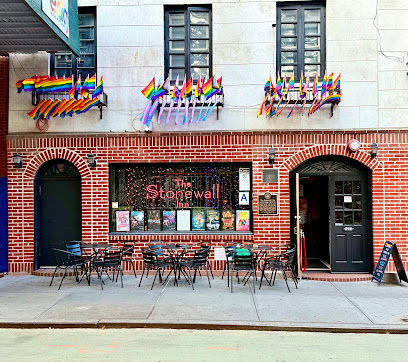
53 Christopher Street. Yes, it's touristy, and yes, there will probably be a line, but Stonewall earned every bit of its cliché. When police raided this Mafia-run dive in the early morning of June 28, 1969, they expected the usual quiet compliance. Instead the crowd threw coins, then bottles, then spent six nights rewriting history. Pride marches worldwide trace back to the anniversary of that first night.
The bar operating today as the Stonewall Inn occupies half of the original space (the 1969 bar spanned 51 and 53). It's still a working, slightly scruffy bar with drag shows, trivia nights, and a steady stream of pilgrims photographing the front window. Go on a Tuesday if you actually want to drink without a selfie stick in your frame.

Stonewall National Monument and Christopher Park
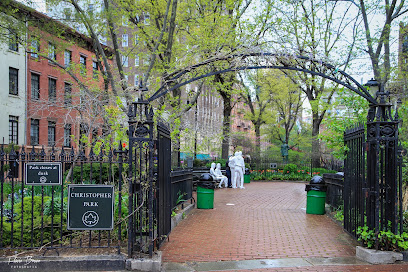
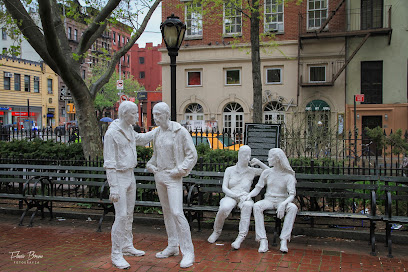
Directly across the street. In 2016 this became the first US national monument dedicated to LGBTQ+ history, which still feels slightly surreal to anyone who remembers when the police raid was the government's position on the matter. The small park holds George Segal's "Gay Liberation" sculptures: four white-painted bronze figures, two standing men and two seated women, installed in 1992 after a decade of arguments about whether they belonged there. People leave flowers on them after every setback and every victory. The Stonewall National Monument Visitor Center at 51 Christopher has settled into the block since opening in 2024, in the other half of the original bar. It's free, small, and worth 45 minutes.
Julius'
159 West 10th Street, one block away. Three years before Stonewall, in April 1966, members of the Mattachine Society staged a "Sip-In" here. They announced they were homosexuals and asked to be served, testing State Liquor Authority rules that let bars refuse gay customers. The bartender covered the glass, a photographer caught it, and the resulting court cases helped end the practice. Julius' is also simply the oldest gay bar in New York, pouring since the 1950s in a building from 1826, and the burgers off the tiny back grill are genuinely good. Of every site in this guide, this is the one where the history and the hangout are the same thing.

Christopher Street and the piers
Walk Christopher Street west from the park toward the Hudson. For decades this was the main artery of gay New York, lined with bars, bookstores, and leather shops. Most are gone; rents did what raids couldn't. At the river you reach the Christopher Street Pier, once a cruising ground and a refuge for homeless queer youth, many of them Black and Latino kids priced out of everywhere else. The pier today is landscaped parkland, and on summer evenings it still fills with queer kids voguing on the lawn, which feels like the rare case of continuity winning.
The Oscar Wilde Bookshop site
15 Christopher Street. The world's first bookstore devoted to gay and lesbian writers opened here in 1967, two years before Stonewall, when stocking those books meant regular harassment. It survived 42 years before closing in 2009. There's no store to visit now, only the address, but pair it with a stop at the Bureau of General Services Queer Division, the city's current queer bookstore, inside The Center on 13th Street.

The Lesbian, Gay, Bisexual & Transgender Community Center
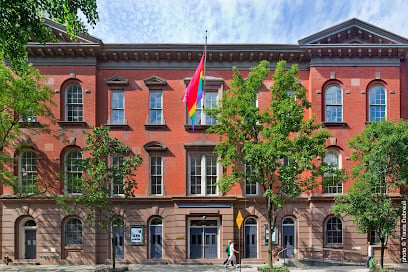
208 West 13th Street. "The Center" has run since 1983 in a former school building. ACT UP was founded at a meeting here in March 1987, and the building holds one of the strangest artworks in the city: Keith Haring's "Once Upon a Time" mural, an explicit celebration of gay sex painted in a second-floor bathroom in 1989, a year before his death from AIDS. You can see it during open hours. The Center also houses the national LGBTQ history archive and a working cafe.
Caffe Cino site
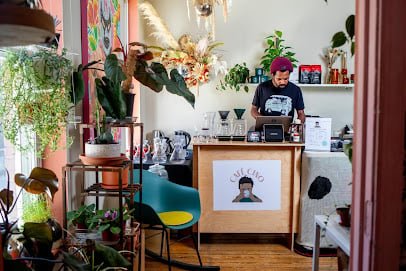
31 Cornelia Street. Joe Cino's tiny coffeehouse (1958-1968) is where Off-Off-Broadway started, and it staged openly gay plays a decade before that was survivable anywhere else in American theater. Playwrights like Lanford Wilson and Doric Wilson got their start here. The space is a restaurant now; a plaque marks it.

The West Village to Chelsea: the AIDS years
New York City AIDS Memorial
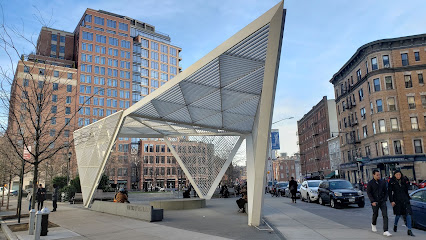
Corner of Greenwich Avenue and West 12th Street. The white steel canopy opened in 2016 in St. Vincent's Triangle, named for the hospital that stood across the street until 2010. St. Vincent's housed the first and largest AIDS ward on the East Coast; for a generation of gay men it was where friends went and did not come out. More than 100,000 New Yorkers have died of AIDS, a number that reads differently when you're standing at the memorial and can see the old hospital buildings, now converted to luxury condos. The Walt Whitman lines engraved in the granite underfoot were chosen well.

The GAA Firehouse
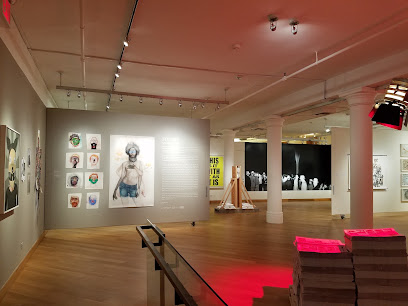
99 Wooster Street, SoHo. The Gay Activists Alliance bought this former firehouse in 1971 and made it the first gay community center in the country: dances on Saturdays, political meetings the rest of the week. An arson fire in 1974 ended its run. The cast-iron building still stands, and the Landmarks Preservation Commission designated it in 2019. While you're in SoHo, the Leslie-Lohman Museum of Art at 26 Wooster is the world's first museum dedicated to LGBTQ+ art, and admission is free.
Harlem: the part most tours skip
This is the section we'd argue is most underrated, and it predates everything downtown.

Hamilton Lodge Ball site (Rockland Palace)
280 West 155th Street. From the 1880s to 1937, the Hamilton Lodge threw an annual masquerade that grew into the largest drag event in the country. By the 1930s, seven thousand people attended, Black and white, gay and straight, with newspapers covering the "pansy parade" and celebrities in the boxes. Langston Hughes wrote about it. The building is gone (a parking structure now), but if you want to understand where ballroom culture, "Paris Is Burning," and half the vocabulary of Drag Race come from, it starts here.
Langston Hughes House
20 East 127th Street. Hughes lived and worked in this brownstone for his last twenty years. His sexuality stayed coded in his lifetime and scholars still argue about it, which is itself a lesson in how the closet worked for Black artists of his era. The house is a designated landmark and hosts occasional cultural programming.

Gladys Bentley's Harlem
Bentley performed in a white tuxedo and top hat at the Clam House on 133rd Street's "Swing Street" in the late 1920s, singing filthy versions of popular songs and flirting openly with women in the audience. She was one of the highest-paid Black entertainers of the decade and about as out as it was possible to be in 1928. The clubs of Jungle Alley are gone, but walking 133rd between Lenox and Seventh with her recordings in your headphones is a decent substitute.
Beyond Manhattan

Lesbian Herstory Archives
484 14th Street, Park Slope, Brooklyn. Founded in 1974 and run by volunteers ever since, this brownstone holds the world's largest collection of materials by and about lesbians: 11,000 books, thousands of photographs, t-shirts, protest banners, love letters. It's open to visitors on scheduled days, and unlike a museum, you can touch things. Check the Archives' open hours before making the trip.
Marsha P. Johnson State Park
Williamsburg waterfront, Brooklyn. In 2020 New York renamed East River State Park for Johnson, the Black trans activist and Stonewall veteran who co-founded STAR (Street Transvestite Action Revolutionaries) with Sylvia Rivera in 1970. STAR House, their shelter for homeless trans youth at 213 East 2nd Street, lasted less than a year but is remembered as the first of its kind. Johnson was found dead in the Hudson in 1992; the case was reopened in 2012 and remains unresolved. The park has her name in large letters facing Manhattan, and the view at sunset is one of the best in the city.

Alice Austen House
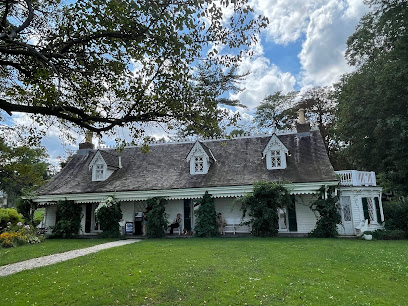
2 Hylan Boulevard, Staten Island. Austen, a photographer, lived in this cottage with her partner Trude Eccleston for nearly thirty years and left about 8,000 photographs, including playful, private images of women in men's clothing from the 1890s. The house is now a museum and one of the few in the country that interprets a same-sex relationship from that era honestly. It's a ferry ride plus a short bus, and the Alice Austen House sits right on the water with the Verrazzano behind it.
Nightlife ghosts: sites worth knowing even though they're gone
The Continental Baths ran in the basement of the Ansonia at 2109 Broadway from 1968 to 1976; Bette Midler played to men in towels with Barry Manilow at the piano, and her live album from those shows is your soundtrack for the block. Paradise Garage at 84 King Street (1977-1987) invented the sound and the ethos that modern dance clubs still chase; hours of Larry Levan's actual sets are online, and playing one while you stand on King Street is the closest thing to a séance this guide can offer. Studio 54 at 254 West 54th Street needs no introduction and is a Broadway theater again. None of these can be visited in any meaningful sense, but New York nightlife is a family tree and these are the grandparents. For the living descendants, our New York bars and clubs pages cover what's open tonight.

Practical notes
Most sites cluster in the Village and can be walked in an afternoon; Harlem needs a second trip and Staten Island a third. The Visitor Center, Leslie-Lohman, and The Center are free. Julius' and Stonewall are bars, so evening visits double as history and a night out. June is the busiest and most charged time to visit, with the Pride March passing the Stonewall itself; October (LGBTQ History Month) is the quiet-and-thoughtful alternative. If you only have one hour in the city, do the triangle of Stonewall, Christopher Park, and Julius'. It's three minutes of walking and about a century of history.
For where to stay near the Village sites, see our New York hotels page, and for what's on this week, the New York events calendar.