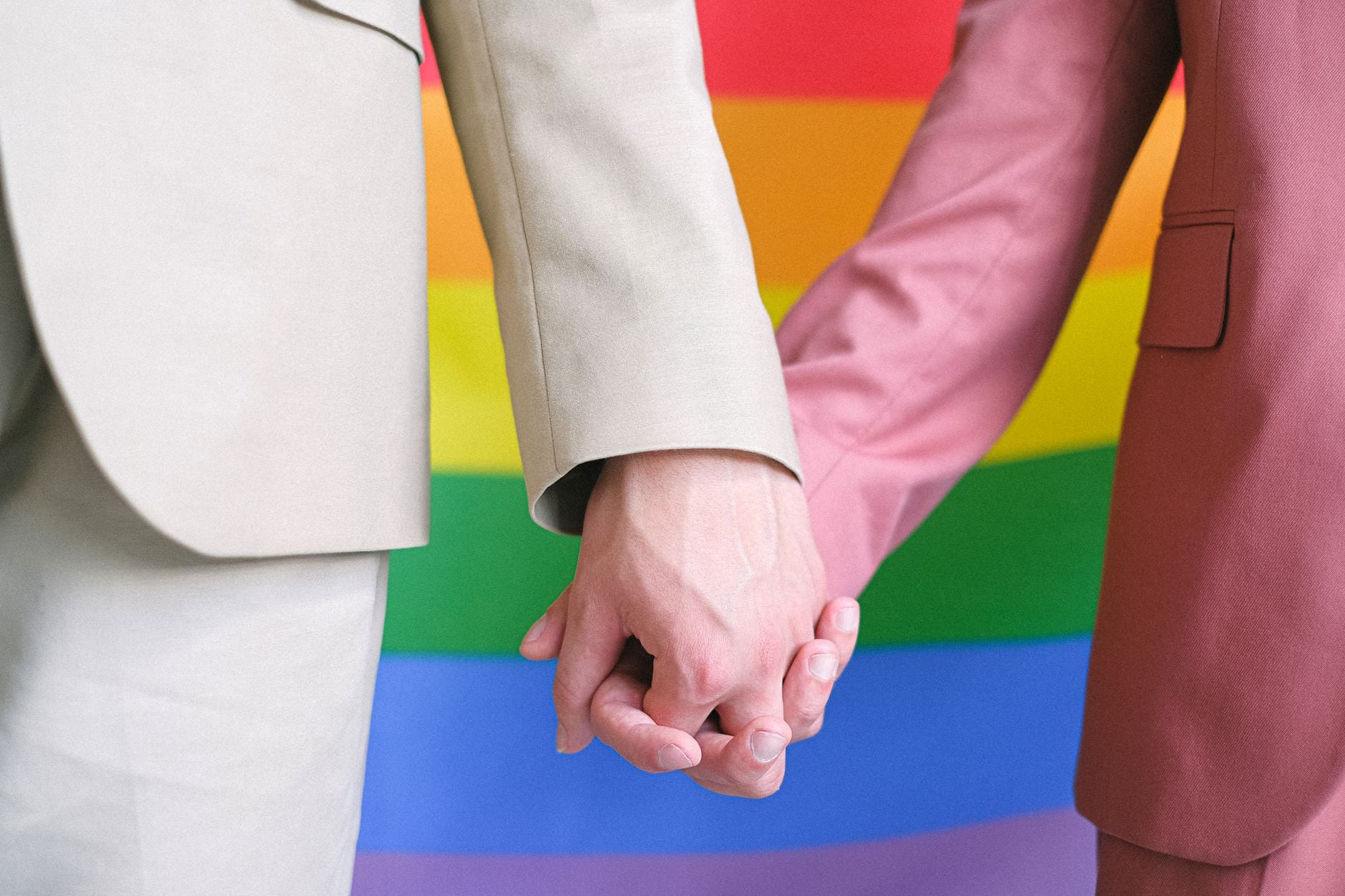
No national recognition of same-sex partnerships. Many municipalities issue partnership certificates. National same-sex marriage ruling is expected from courts. Social acceptance varies widely.
Kyoto was Japan's imperial capital for over a thousand years, and it still feels like the country's cultural heart. Japan's feudal past had famously fluid attitudes toward male same-sex love, from monastic traditions to the kabuki world. But modern Kyoto's queer community grew quietly in the late 20th century. Tokyo had an explosive gay boom in the 1980s and 90s. Nearby Osaka has a larger scene. Kyoto's stayed small, local, and low-key. The city's focus on tradition and discretion means its LGBTQ+ spaces are understated, not showy. But they are real and welcoming. Kyoto City introduced a same-sex partnership system in 2020. That, plus a large student population and arts institutions, keeps the community quietly active today.
Neighborhoods and gay areas
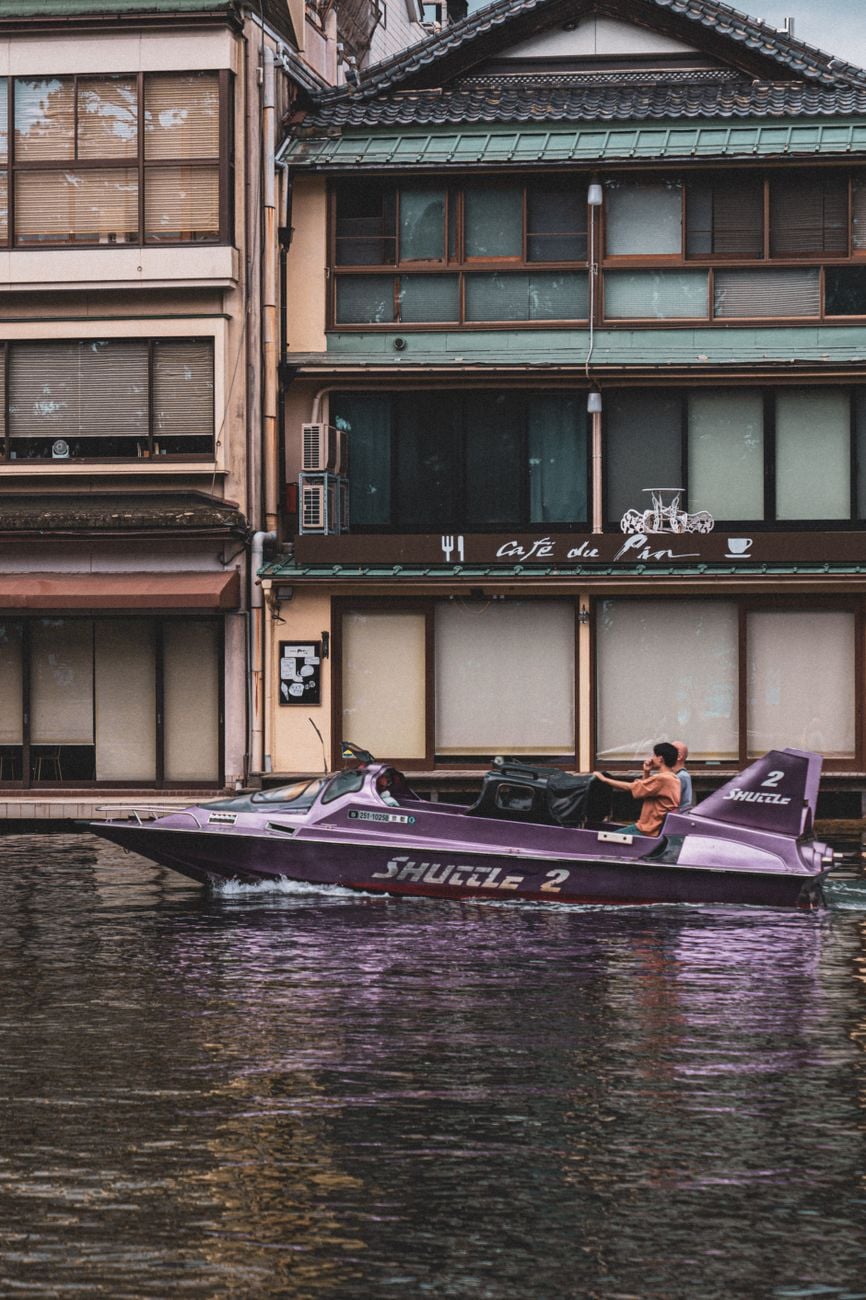
Kyoto's gay nightlife concentrates in one small area: Kiyamachi (木屋町) in central Kyoto's Nakagyo Ward. It runs along the Takase Canal, a block west of the Kamogawa River. This atmospheric strip of narrow lanes is packed with tiny bars, izakayas, and counter venues. The city's handful of gay and lesbian bars are scattered among them, usually one flight up an unmarked stairwell. Neon is minimal. Storefronts are often discreet. It helps to have the exact building and floor before you go. The neighboring lanes of Pontocho and Nishi-Kiyamachi have a few more queer-friendly spots. Kawaramachi, immediately west, is the main shopping and transit hub — not a gay area itself, but the natural gateway to the bar district. Gion and Higashiyama, across the river, are the famous geisha and temple quarters. They're culturally essential, and home to a couple of queer venues, but not a gay district as such.
Venues and nightlife
Kyoto's gay bars are intimate. Most seat only ten to thirty people at a counter. Many run as regulars-friendly rooms where the host sets the tone. Long-running men's bars include Azure and V ZONE (stacked in the same Nabeyacho building), Apple (going since 1985), bell KYOTO, Daikoku, and Masamasa, plus smaller spots like HAM, ORANGE STYLE, and Bar Gen. BAR LOOK ME is Kyoto's best-known lesbian/women's bar. Bar C'estbon runs a mixed, queer-friendly karaoke night in a classic Pontocho alley. For fetish and drag, Bizarre Lounge BARBARA in Higashiyama has been running since the 1990s. Many bars keep irregular hours. Some maintain a locals-first door policy. A little Japanese and a low-key manner go a long way.
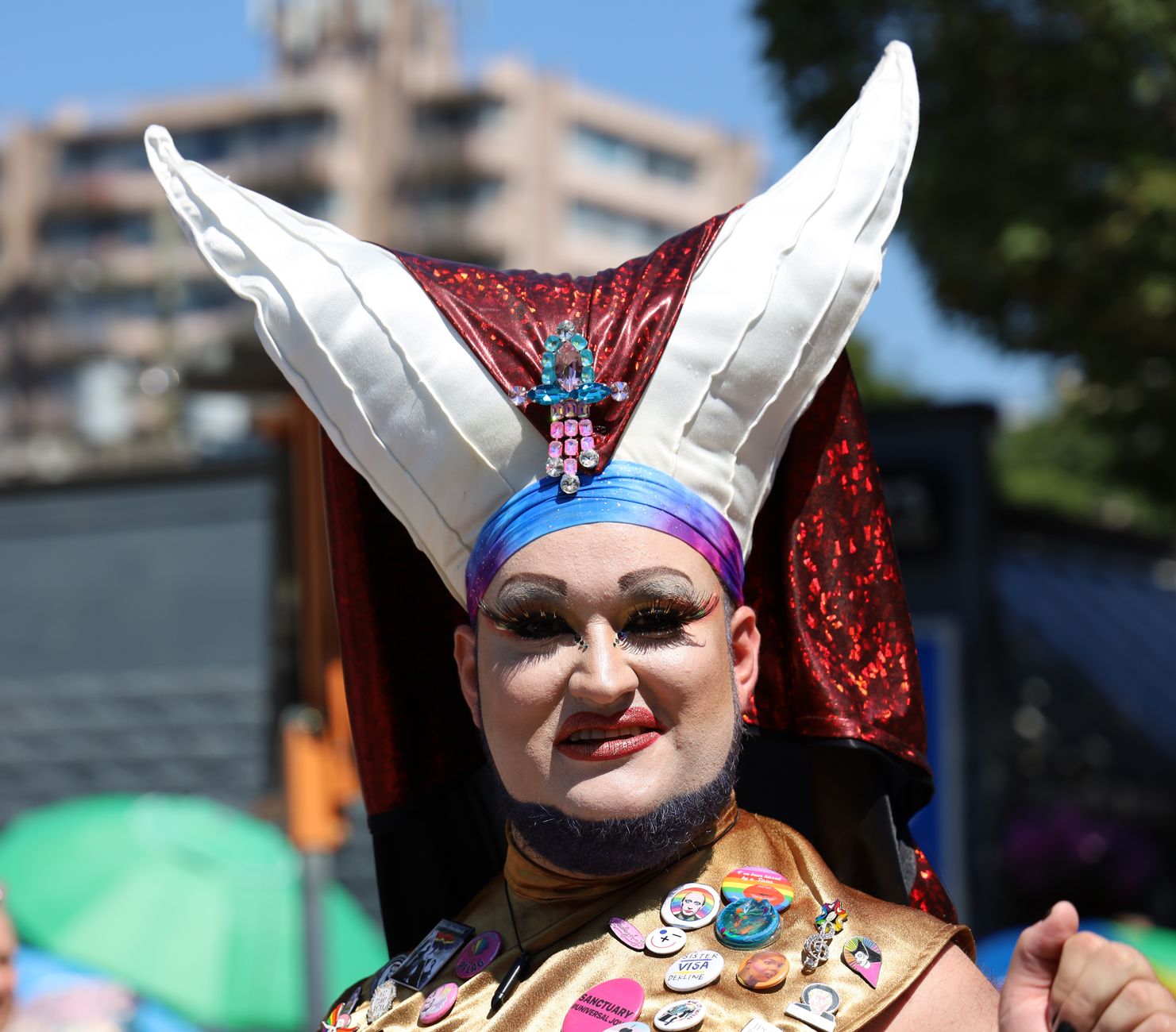
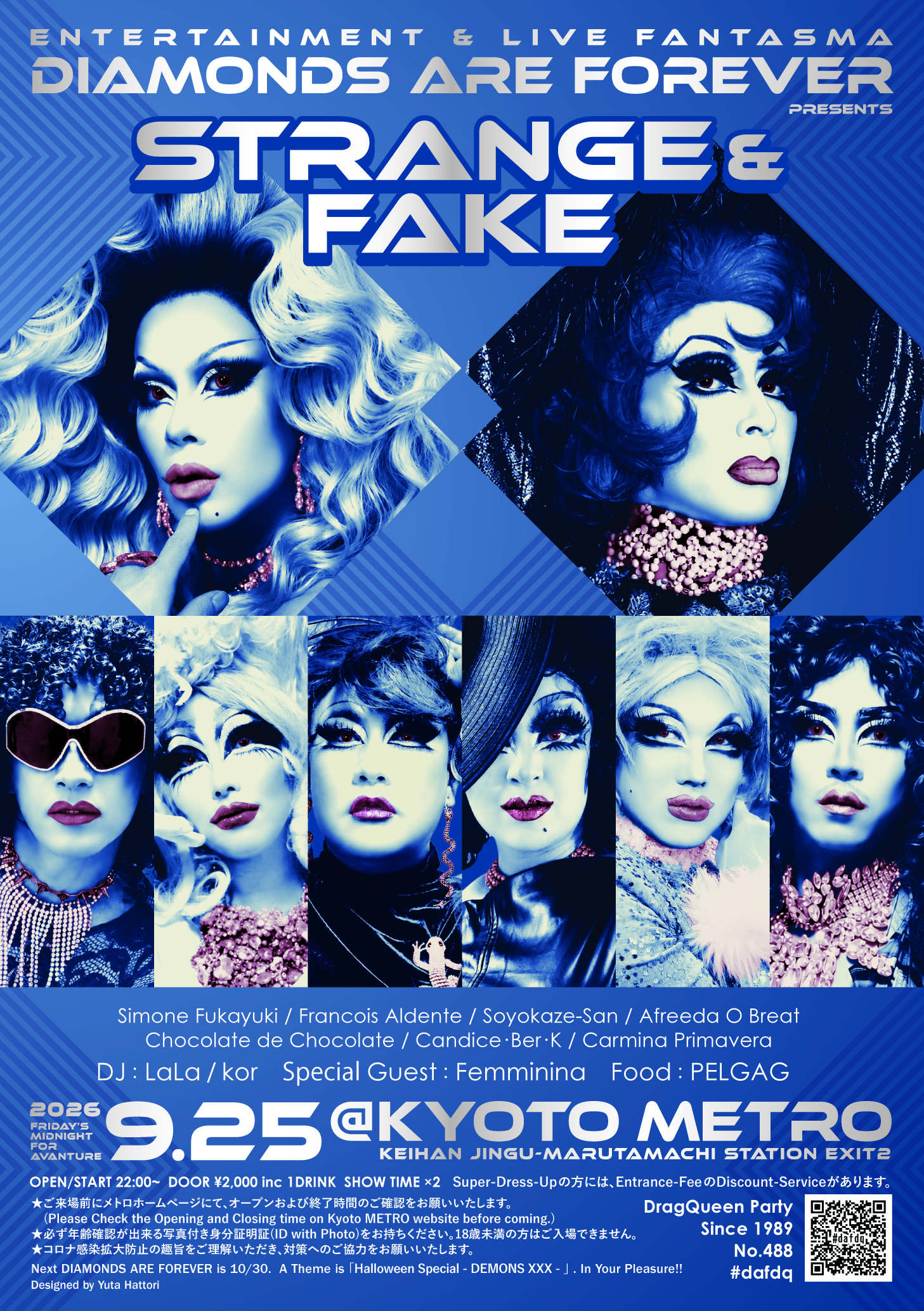
The city has no dedicated gay dance club, but it has something better-loved: DIAMONDS ARE FOREVER. This drag and queer dance party started around 1989. It's one of the longest-running LGBTQ+ club nights in Japan. It takes over Club METRO — a legendary music venue built into a former subway concourse near Keihan Jingu-Marutamachi Station — roughly once a month (traditionally the last Friday). It draws performers and a queer crowd from across the Kansai region. Check METRO's calendar for the next DIAMONDS date.
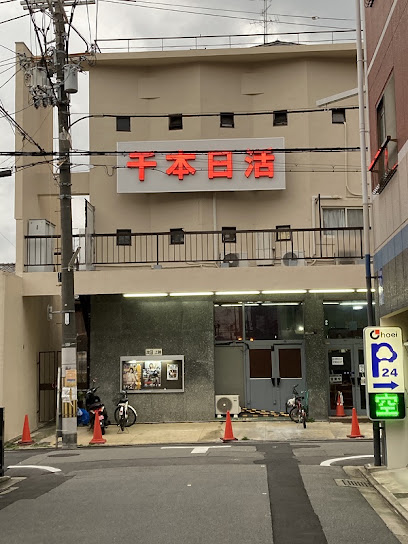
Kyoto has no dedicated gay sauna or bathhouse. Japan's recent "sauna boom" filled the city with stylish mixed and private-rental saunas. But these are general wellness venues, not gay cruising spaces. For a genuine gay sauna, take the 30-minute train to Osaka, where several operate. For those seeking it, Kyoto does have a couple of long-standing, discreet cruising spots, including Umekoji Park near Kyoto Station after dark and the Senbon Nichikatsu adult cinema in Kamigyo Ward. Japan does not criminalize homosexuality. Police rarely trouble consensual encounters. These are tolerated rather than official uses of public space. Keep things discreet and stay aware of your surroundings.
Pride and events
Kyoto's main LGBTQ+ celebration is Kyoto Rainbow Pride (京都レインボープライド), held in spring. The 2025 edition took place in April at Umekoji Park with a parade and community stalls. A separate, smaller autumn event, PRIDE IN KYOTO, runs in November. Both are modest by Tokyo standards but meaningful for the region. The larger Kansai Rainbow Festa and the Kansai Queer Film Festival are held down the line in Osaka (usually October), an easy day trip. Throughout the year, community groups host film screenings, cafe meet-ups, and gatherings promoted mainly through social media and LINE groups.
Community and organizations
Kyoto's queer community is welcoming but not highly visible. Connecting online first helps. Kyoto Marble (まぁぶるスペース) is an LGBTQ+ community space and consultation service supported by Kyoto City. Tsunagary Cafe runs relaxed, cafe-style community meet-ups across Kansai, including regular Kyoto sessions. Kyotoiro is a trans-inclusive local group holding periodic film and discussion events. University groups and arts organizations add further structure. Bar staff and guesthouse owners are often the best source of up-to-the-minute information on what is open.
Where to stay
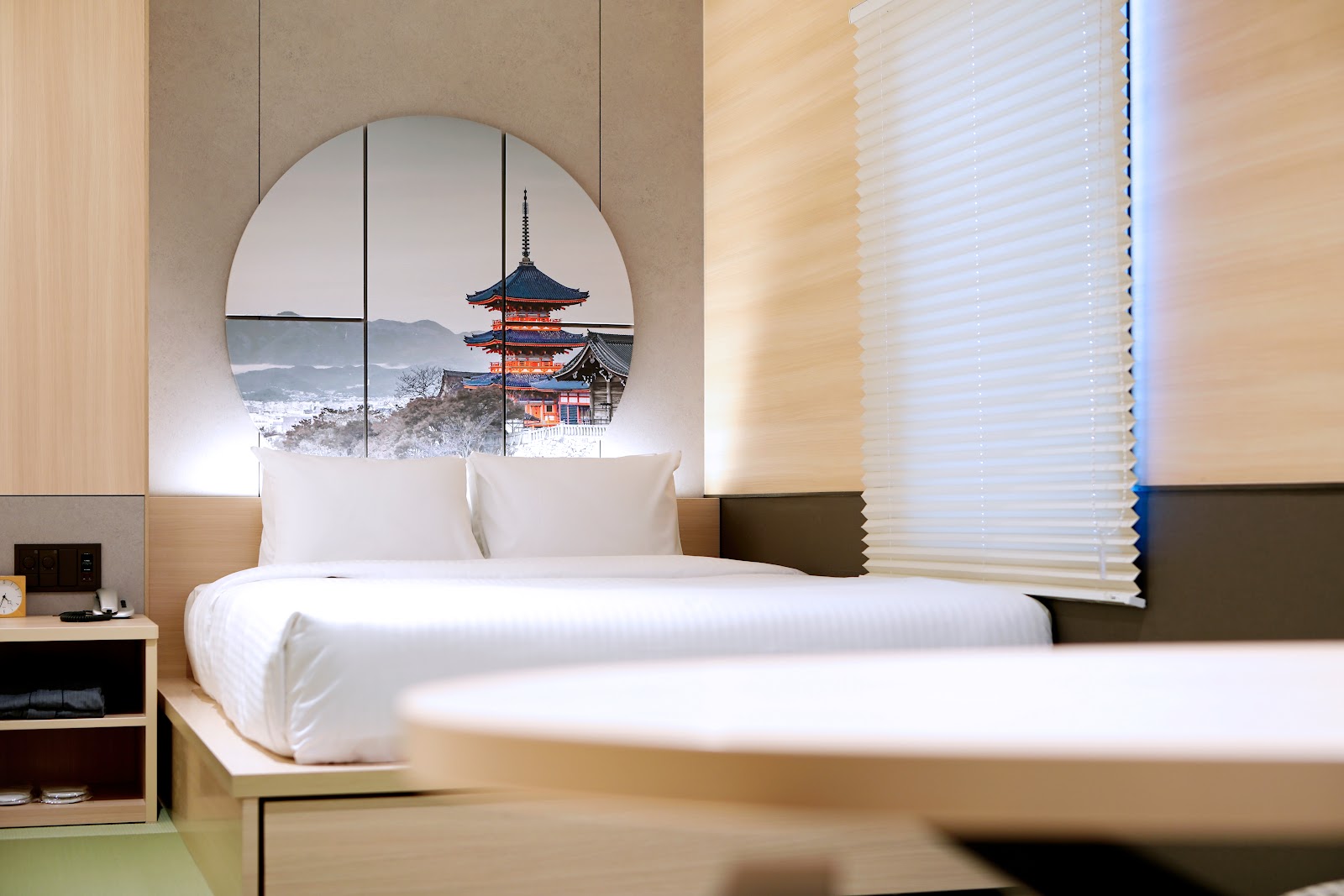
Kyoto is generally accepting of same-sex couples. Japanese hotels do not restrict room assignments. There is no single "gay hotel" district. Instead, choose by mood. Areas around Kawaramachi and Shijo put you within walking distance of the Kiyamachi bars. Gion and Higashiyama offer quieter, more traditional surroundings. The streets near Kyoto Station are the most convenient for day trips. Kyoto's many machiya townhouse inns and boutique ryokan offer a personal, welcoming alternative to the big chains. Same-sex couples booking a double room will find no friction at reputable properties.
Japan, including Kyoto, is very safe for LGBTQ+ travelers. Violent crime and anti-gay harassment are rare. Same-sex marriage is still not recognized nationally, but attitudes and local policy are shifting. Kyoto City launched a same-sex partnership declaration system on 1 September 2020 — the first municipality in the prefecture. It grants benefits such as public-housing eligibility and hospital visitation. Several other Kyoto-prefecture municipalities (Kameoka, Yawata, and others) have since followed. There is no prefecture-wide system and no nationwide anti-discrimination law, though a 2023 national "understanding promotion" act exists. Culturally, discretion is the norm. Public displays of affection of any kind are uncommon, so modest hand-holding is fine but kissing in public may draw glances.
Transit and getting around
Kyoto's public transport is excellent. City buses cover most sights. The subway and JR/private rail lines connect the center to Osaka (about 45 minutes) and Tokyo (about 2.5 hours by shinkansen). Buy an ICOCA IC card at any station to tap through buses and trains. The Kiyamachi bar district is a short walk from Hankyu Kawaramachi and Keihan Gion-Shijo stations. The city is compact and bicycle-friendly. Taxis are safe and easily hailed or booked by app.
Food and dining
Kyoto is a food destination in its own right: kaiseki multi-course dining, yudofu hot pot, Buddhist shojin vegetarian cuisine, and delicate wagashi sweets. Many of the gay bars sit among the izakayas of Kiyamachi, so an evening naturally drifts between food and drinks. Vegetarian and vegan options are unusually easy to find thanks to the temple culinary tradition. Reservations are wise at the better kaiseki restaurants.
Day trips and cultural highlights
Kyoto's real magic is pairing a warm little queer scene with some of Asia's greatest cultural sights: the thousand torii gates of Fushimi Inari, the Arashiyama bamboo grove, the gold-leafed Kinkaku-ji, the rock garden of Ryoan-ji, Nijo Castle, and the lantern-lit lanes of Gion. The Philosopher's Path is a lovely canal-side walk between temples. Osaka's larger gay scene and the deer park of Nara are each under an hour away, making Kyoto an ideal base.
Kyoto offers a distinctive LGBTQ+ experience built on cultural immersion and genuine local connection rather than big nightlife. Its queer spaces are small, discreet, and real — a handful of Kiyamachi counter bars, a legendary monthly drag party, and a community that welcomes curious visitors. Come for the temples and gardens. Stay for the quiet, heartfelt corner of queer Japan you'll find along the Takase Canal.
Frequently asked questions
Japan decriminalized same-sex relationships in 1882 and has no explicit legal prohibitions on homosexuality. Kyoto has seen growing LGBTQ+ visibility and local events, with several neighborhoods known as relatively safe and accepting.
The primary gay scene centers on the Kawaramachi and Kiyamachi districts. This area contains most of the city's dedicated gay bars and LGBTQ+-friendly establishments.
Kyoto's gay venues are smaller and more intimate than Tokyo counterparts. They may have unmarked doors or small signs, reflecting Japanese preference for privacy. It is recommended to verify current listings through Japanese gay travel sites or apps like Hornet and Grindr.
No, Kyoto has never developed a visible, concentrated gay district like Shinjuku's Ni-chōme in Tokyo. Instead, the community is more dispersed and integrated into general social life.
Kyoto has seen growing LGBTQ+ visibility in recent years, with local events. Information on specific events and their timing should be verified through local listings or LGBTQ+ resources.
The source guide does not specifically mention LGBTQ+ friendly hotels. However, the general atmosphere in areas like Kawaramachi and Kiyamachi is described as increasingly welcoming.
Your privacy choices.
We use cookies to run GayOut and, with your consent, measure usage. Learn more
Your privacy choices
We use cookies to keep GayOut running, remember your preferences, and (with your permission) measure how the site is used. You can accept all, reject all, or pick what you allow. Learn more
Essential
Required for sign-in, fraud prevention, CSRF protection and remembering your language. Cannot be disabled.
Always on
Remembers your favourites, dark mode and other interface preferences across visits.
Helps us understand which pages people visit (Google Analytics, server-side stats) so we can improve.
Used by campaign tracking pixels. None are active right now, reserved for future use.
Install GayOut
Add GayOut to your home screen for faster access, offline favourites, and Pride alerts.








 Gay Bars & Clubs
(57)
Gay Bars & Clubs
(57)